Wine Label Requirements — TTB Rules Under 27 CFR Part 4
Wine labels carry more percentage-based rules than any other alcohol category: 75 percent for a varietal, 85 or 95 percent for a vintage, 100 percent for estate bottled. Miss a threshold and the claim comes off the label — or the COLA comes back rejected.

Catherine Zhou
| Co-founder at Truli

Wine labeling is governed by 27 CFR Part 4, and it applies to wine containing 7 to 24 percent alcohol by volume (27 CFR 4.6). That floor matters: a wine under 7 percent ABV — many canned wine spritzers and low-alcohol wines — is labeled under FDA food rules instead, with an ingredient list and Nutrition Facts panel. Our TTB vs FDA guide covers that boundary. For everything in the 7-to-24 band, here are the rules.
The mandatory statements
27 CFR 4.32 requires the brand name and class or type designation on the brand label, plus the name and address of the bottler or importer, net contents, alcohol content, and — where triggered — a sulfite declaration. Add the Government Warning from 27 CFR Part 16 and you have the full mandatory set.
Type size has its own rules: most mandatory information must be at least 2 millimeters on standard bottles (1 millimeter on containers of 187 mL or less), and the alcohol content statement must sit between 1 and 3 millimeters and may not be visually accentuated (27 CFR 4.38(b)(3)).
Alcohol content — when it's required and how wrong it can be
Under 27 CFR 4.36, an alcohol content statement is mandatory for wines over 14 percent ABV. At 14 percent or below, you can state the number or instead print the type designation "table wine" or "light wine" on the brand label.
The stated number gets a tolerance, and it is generous by beverage standards:
Wines at 14 percent ABV or less: the actual content may vary up to 1.5 percentage points above or below the label.
Wines over 14 percent: tolerance tightens to 1 percentage point.
One hard wall: tolerance never lets a wine cross the 14 percent line between tax classes, and the format must read "Alcohol __% by volume" or an approved equivalent.
Part 4 also allows a range statement — "Alcohol __% to __% by volume" — under 4.36(b)(2). The spread is capped at 3 percentage points for wines at 14 percent or below and 2 points above it, and the actual content must land inside the printed range with no tolerance beyond it. One more brand-label trigger worth knowing: a blend of American and foreign wines that makes any reference to the foreign wine must state its exact percentage by volume under 4.32(a)(4).
The percentage rules that define wine labeling
This is the part of Part 4 that trips up even experienced winemakers. Every geographic or varietal claim carries a minimum-content threshold:
Label claim | Minimum requirement | Rule |
|---|---|---|
Varietal (e.g., "Merlot") | 75% of the wine from that grape | |
State or county appellation | 75% from grapes grown there | |
AVA appellation (e.g., "Napa Valley") | 85% from within the AVA | 27 CFR 4.25(e)(3)(ii) |
Vintage date with AVA appellation | 95% from the labeled year | |
Vintage date with state/county appellation | 85% from the labeled year | 27 CFR 4.27(a)(2) |
"Estate bottled" | 100% estate-grown, continuous process |
The 75 percent varietal rule
Naming a grape variety on the label requires at least 75 percent of the wine to come from that variety — and the entire qualifying percentage must be grown in the labeled appellation. A varietal name also requires an appellation of origin on the label; the two travel together. There is one notable carve-out: Vitis labrusca varieties like Concord qualify at 51 percent, with a "contains not less than 51 percent" statement unless the wine actually hits 75 percent (27 CFR 4.23(c)).
Vintage dates — 85 or 95, depending on the appellation
A vintage date is only as good as the appellation next to it. With an AVA appellation, 95 percent of the wine must come from grapes harvested in the labeled year. With a broader state or county appellation, the bar drops to 85 percent. No qualifying appellation, no vintage date at all.
Estate bottled is an all-or-nothing claim
"Estate bottled" under 27 CFR 4.26(a) requires an AVA appellation and a bottling winery that is located in that AVA, grew all of the grapes on land it owns or controls inside the AVA, and crushed, fermented, finished, aged, and bottled the wine in a continuous process that never left the premises. Buy a single ton of fruit from a neighbor and the claim is gone.
The sulfite declaration — 10 ppm
Under 27 CFR 4.32(e), any wine with sulfur dioxide or a sulfiting agent detected at 10 or more parts per million, measured as total SO2, must state "Contains sulfites" (or name the specific agent) on a front, back, strip, or neck label. Practically, this catches nearly all commercial wine — fermentation alone commonly produces sulfites above 10 ppm, so "no added sulfites" wines frequently still need the declaration. The only safe way to omit it is a lab result under the threshold.
The Government Warning
Every wine at 0.5 percent ABV or more carries the health warning statement of 27 CFR 16.21 — exact wording, "GOVERNMENT WARNING" in bold capitals, nothing else bold, separate and apart from other text, with minimum type sizes by container volume. It is the single most rejected element in COLA review; our rejection-reasons post covers the typography traps in detail. And a compliant label still needs a Certificate of Label Approval before bottling — see our COLA walkthrough — plus, eventually, the per-serving disclosures in TTB's pending Alcohol Facts rule.
Check every threshold before your label ships
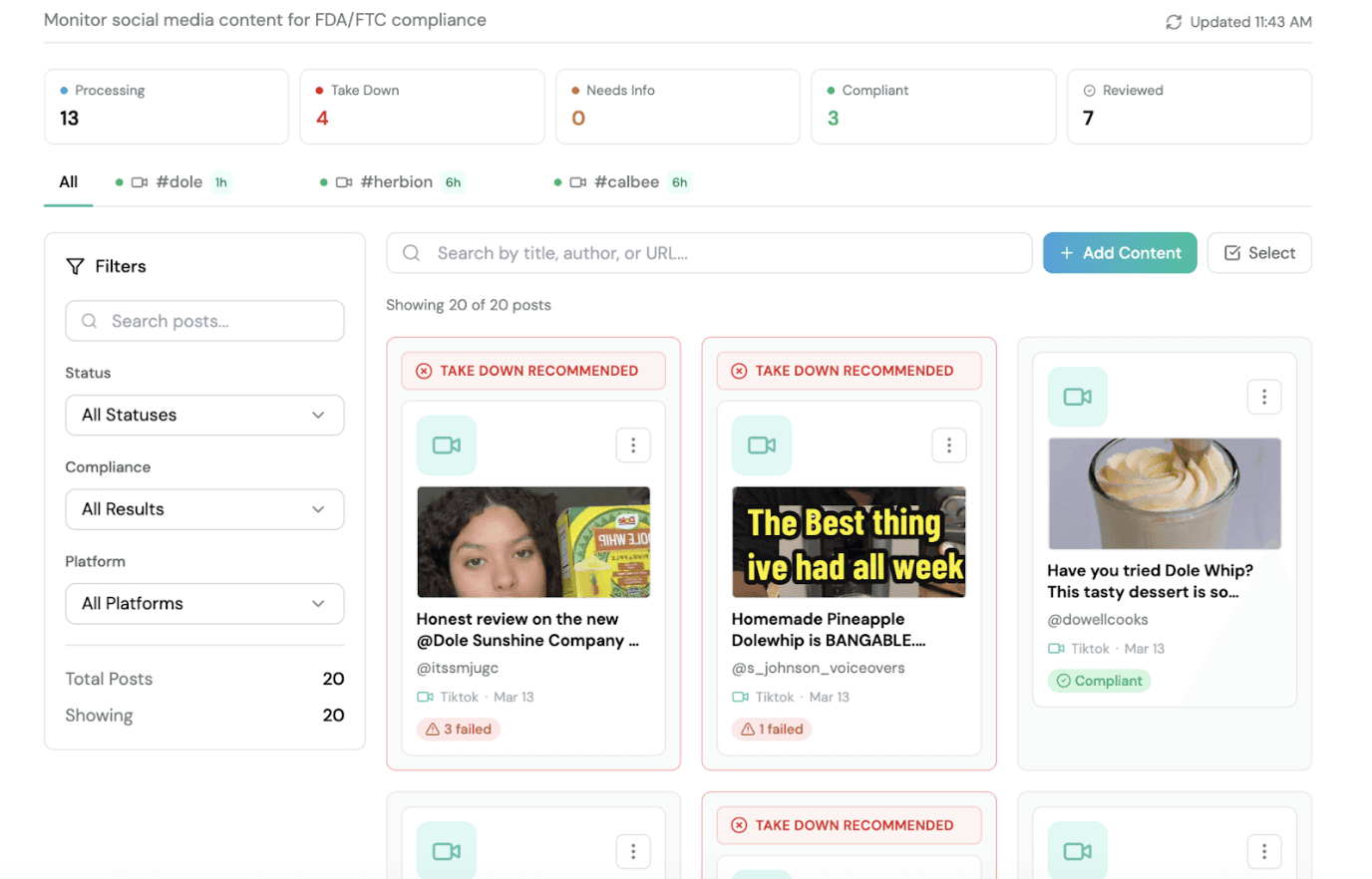
Truli's AI agents scan wine labels against the current text of 27 CFR parts 4 and 16 — mandatory statements, varietal and appellation logic, vintage and estate claims, ABV format and tolerance, sulfites, and the Government Warning — citing the specific rule for every finding, then do the same for your website and social content. Book a demo to see where your labels stand.
A note from Truli: Truli is not a law firm, and this article does not constitute or contain legal advice or create an attorney-client relationship. When determining your obligations and compliance with respect to relevant laws and regulations, you should consult a licensed attorney.
About

Truli is an AI compliance platform for food, beverage, and supplement brands. Automate FDA/FTC label reviews, claims validation, and post-market monitoring — 10x faster.

Platform
See Truli in action
If regulatory delays are consuming months and thousands in fees, see how Truli delivers fast and continuous compliance coverage at a fraction of the cost.
Book a demo