How a Protein Startup Caught Label Issues Before Their First Retail Buyer Meeting
The supplement industry is one of the most heavily scrutinized product categories the FDA oversees. For a two-person startup with no legal team and no compliance background, the gap between what sounds good on a label and what's actually permitted is enormous — and almost impossible to know without help.

Michael Wu
| Co-founder at Truli

The founders had been selling their whey protein direct-to-consumer for about eight months. Two SKUs, a Shopify store, a small following on Instagram. They were doing well enough to get a buyer meeting with a regional natural grocery chain — their first real shot at retail.
They'd written all their own copy. The label, the website, the product descriptions. It all sounded right to them. What they didn't realize was that the FDA has specific, detailed requirements governing how supplement claims can be worded, what has to appear on the label, how the Supplement Facts panel must be formatted, and what the line is between a permissible structure/function claim and one that implies the product treats or prevents a disease. None of that is intuitive. Most of it isn't even findable without knowing exactly where to look.
The regulatory reality for protein brands
The supplement industry operates under DSHEA — the Dietary Supplement Health and Education Act — which gives brands significant flexibility to make claims about how a product affects the body's structure or function. But that flexibility comes with strict guardrails. Claims that imply disease treatment or prevention are prohibited. Labeling must meet precise formatting requirements. And the FTC holds brands accountable for any claim they make in advertising or on social media, whether they wrote it or a creator did it on their behalf. For a small team moving fast, keeping track of all of it is genuinely hard.
Why They Couldn't Just Figure It Out Themselves
The obvious answer would have been to hire a regulatory attorney. But that's not a realistic option for a two-person startup with a buyer meeting in one week. A proper label review from a regulatory consultant means scheduling a call, explaining your entire product, waiting for a written opinion, going back and forth on revisions, and paying several hundred dollars an hour for the privilege — minimum. Regulatory attorneys who specialize in supplement law routinely bill $700/hr, and a thorough label review can easily run into the thousands. By the time that process plays out, the meeting has come and gone. And even then, what you get back is often a legal memo rather than something you can actually act on quickly.
A friend in the industry told them to get the label reviewed before the buyer meeting. So they signed up for Truli and uploaded their label and website copy.
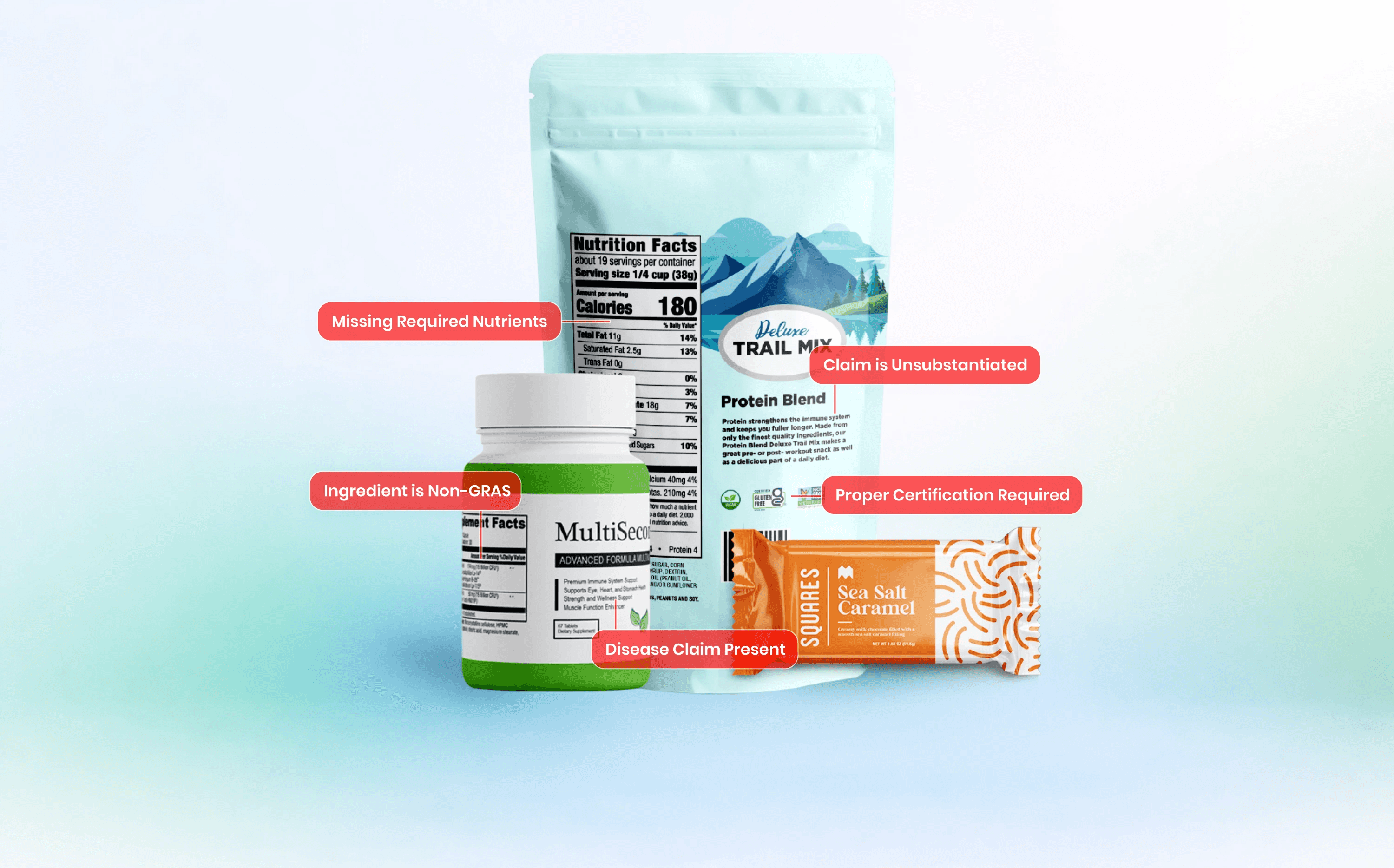
What came back wasn't a generic checklist. Truli scanned the actual content against FDA regulations and FTC guidelines, matched it to their specific product formulation, and returned a prioritized list of findings — each one with a plain-English explanation of the issue, the regulatory basis behind it, and suggested rewording that would still let them say what they wanted to say, just in a way that was defensible.
What the scan found
There were issues on the label and on the website. Some claims were worded in ways that could draw FDA scrutiny. Some formatting didn't meet the requirements for supplement labeling. None of it was intentional — the founders had just written what sounded natural and compelling. But that's exactly how most compliance problems happen. Nobody sets out to make a prohibited claim. They just don't know the rules well enough to catch it themselves.
Fixing everything took less than a day. Without Truli, they would have walked into that buyer meeting with a non-compliant label — and if the retailer's compliance team had flagged it, or if the product had drawn FDA attention post-launch, the consequences would have been far more expensive than the cost of fixing it upfront.
The Buyer Meeting
They walked in with a clean audit on file. The buyer asked about their compliance process — a question they genuinely hadn't expected. Having a documented answer, including what they'd found and addressed, made a real impression. They got a small test placement.
What retail buyers actually care about
Retailers, especially in the natural channel, are increasingly asking suppliers about compliance. A warning letter or an FDA enforcement action against a product on their shelf creates liability for them too. Brands that can show they've done the work — that they have a process, not just good intentions — are easier to say yes to.
What They Use Truli For Now
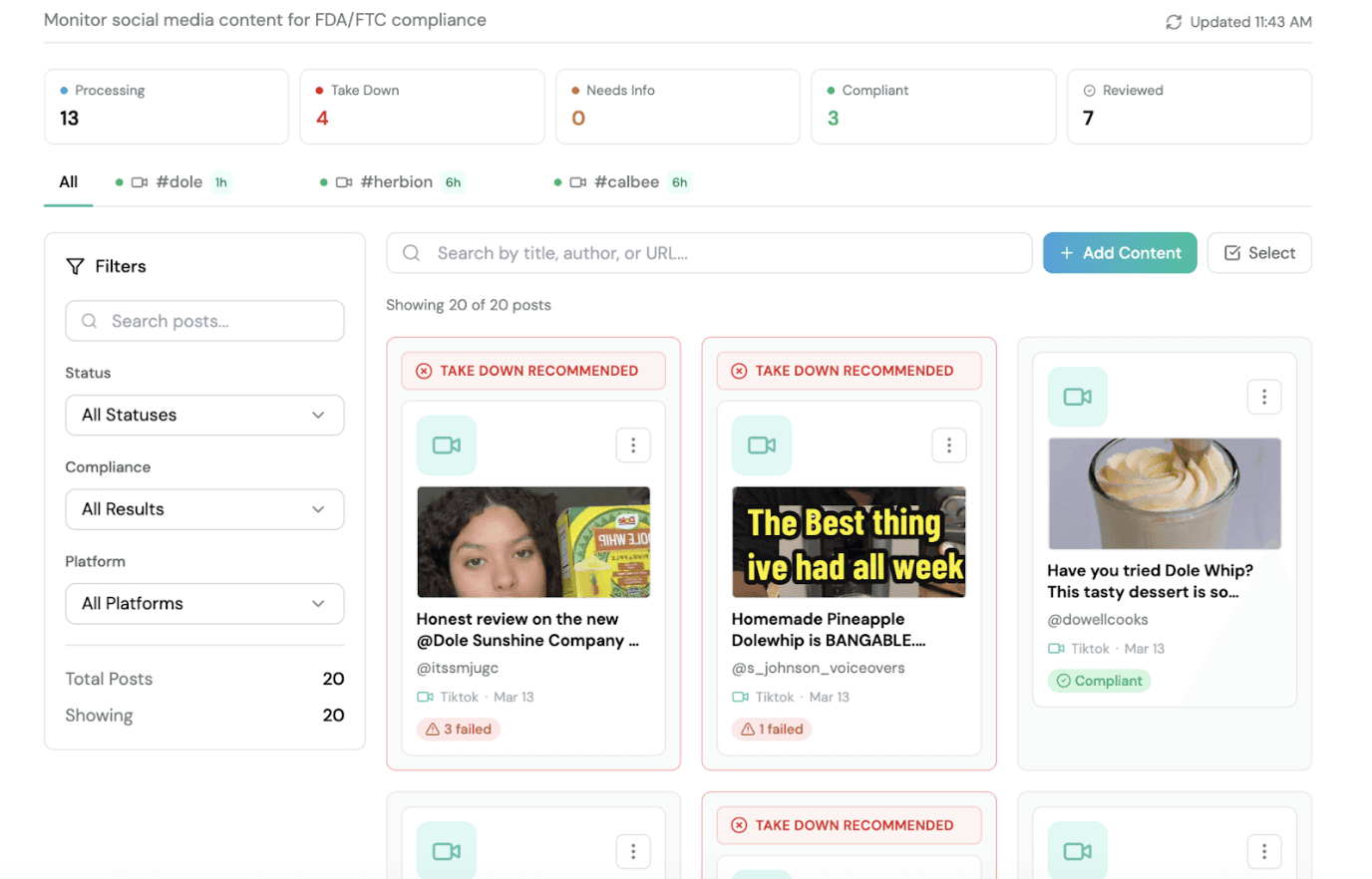
Since that first scan, the brand has launched a third SKU and run it through Truli before it went live. They've scanned updated website copy whenever the marketing changes. And they set up Social Monitoring after a creator they'd gifted product to posted a video making a claim about the product that they had never approved and didn't know was out there.
Why creator content is a compliance risk most startups ignore
The FTC is clear: brands are responsible for claims made by people promoting their products, including unpaid gifting relationships. A creator posting about your protein powder and making an unsubstantiated claim creates liability for your brand even if you had nothing to do with the content. Most small brands have no way of knowing what's being posted on their behalf until it's already out there.
Truli flagged the video the same day it went live. The founders reached out, the creator updated the caption, and that was the end of it. No warning letter, no brand damage. Without monitoring, they wouldn't have found it until someone else did first.
You don't need a compliance team
Most supplement startups can't afford a regulatory affairs consultant on retainer. What they can do is run their label before it prints, scan their copy before it goes live, and keep an eye on what's being said about their products on social. That's what Truli is built for — giving small brands the same compliance infrastructure that larger ones have, without the overhead.
A note from Truli: Truli is not a law firm, and this article does not constitute or contain legal advice or create an attorney-client relationship. When determining your obligations and compliance with respect to relevant laws and regulations, you should consult a licensed attorney.
About

Truli is an AI compliance platform for food, beverage, and supplement brands. Automate FDA/FTC label reviews, claims validation, and post-market monitoring — 10x faster.

Platform
See Truli in action
If regulatory delays are consuming months and thousands in fees, see how Truli delivers fast and continuous compliance coverage at a fraction of the cost.
Book a demo