FTC Health Claims - What Supplement Brands Need to Know in 2026
The FTC has been increasingly aggressive about health claim enforcement in the supplement space — and 2026 is shaping up to be the most active year yet. If your brand makes any claim about health, wellness, or disease on a label, ad, or social post, here's what the regulations actually require.

Michael Wu
| Co-founder at Truli

Most supplement brands know they need to be careful about health claims. Fewer understand exactly where the line is — and even fewer know that the FDA and FTC draw that line in different places, using different legal standards, with different enforcement consequences.
Here's what the rules actually say.
The FDA Side: Structure/Function vs. Disease Claims
Under 21 CFR 101.93(f), dietary supplement labels may bear statements that "describe the role of a nutrient or dietary ingredient intended to affect the structure or function in humans" — these are structure/function claims, and they're permitted. "Supports healthy joints" or "promotes muscle recovery" are structure/function claims.
What's not permitted is a disease claim. Under 21 CFR 101.93(g), the FDA defines a disease as "damage to an organ, part, structure, or system of the body such that it does not function properly." A claim becomes a disease claim if it explicitly or implicitly suggests the product can diagnose, mitigate, treat, cure, or prevent such a condition. The regulation lists specific criteria — including the product's name, its formulation, cited publications, and even the use of pictures or symbols — that can tip a statement into disease claim territory.
Where brands get tripped up
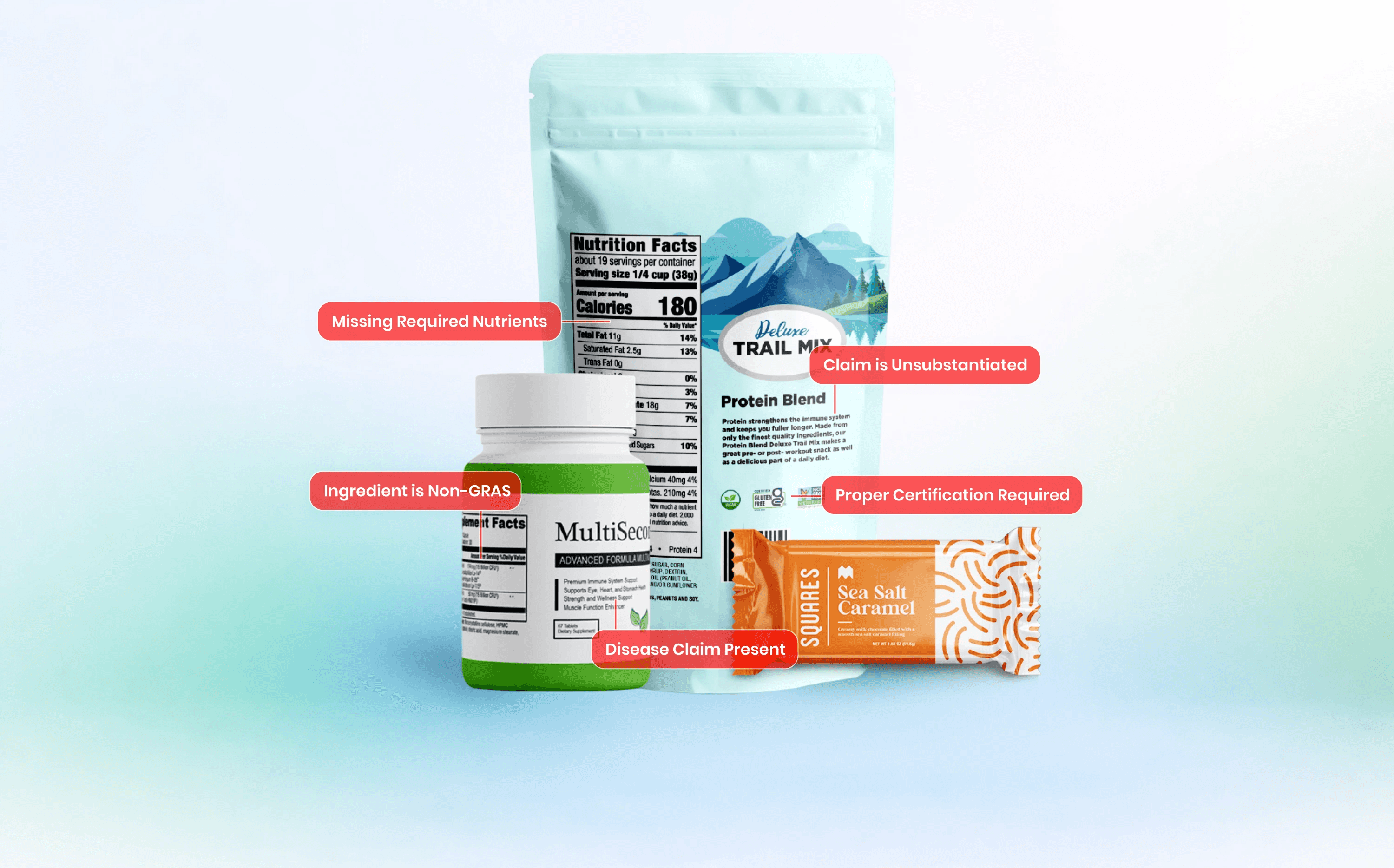
This is one of the most common issues Truli surfaces during label scans — claims that sound like structure/function statements but imply disease treatment in context. The line between a permitted structure/function claim and a prohibited disease claim is not always obvious. Under 21 CFR 101.93(g), a claim can be a disease claim even when it uses lay terminology rather than clinical language — if the implication is that the product affects a disease condition, the framing doesn't matter. "Helps unclog arteries" and "supports cardiovascular health" are not equivalent under the regulation, even if a brand intends them to mean the same thing.
Any supplement label bearing a disease claim is subject to regulation as a drug under the Federal Food, Drug, and Cosmetic Act — unless the claim is an authorized health claim the product qualifies for under 21 CFR Part 101 Subpart E.
The FTC Side: Substantiation
The FTC regulates supplement advertising — everything that isn't the label itself. Under the FTC Act Section 5, health claims in advertising must be truthful, not misleading, and substantiated by "competent and reliable scientific evidence" before the claim is made.
The FTC defines competent and reliable scientific evidence as tests, studies, or other evidence based on the expertise of professionals in the relevant field, conducted and evaluated in an objective manner using procedures generally accepted in the profession. For health claims about supplements, that standard typically means well-controlled human clinical trials — not animal studies, not in vitro research, and not one industry-funded study that happens to support your claim.
What the totality of evidence standard means
The FTC looks at the full body of research, not just the studies you choose to cite. This is where having a documented substantiation file for each claim matters — and where Truli's product scan helps, by cross-referencing your marketing claims against your product's ingredient and nutrient data to flag anything that isn't substantiated by your formulation. If the scientific literature on an ingredient is mixed — some studies support the claim, others don't — a brand cannot advertise as though the science is settled. The claim has to accurately reflect the weight of the evidence. This is directly parallel to the FDA's standard under 21 CFR 101.14(c), which requires "significant scientific agreement, among experts qualified by scientific training and experience to evaluate such claims" for authorized health claims.
Influencer and Creator Liability
One of the most consequential areas of current FTC enforcement is creator content. Under the FTC's Guides Concerning the Use of Endorsements and Testimonials in Advertising (16 CFR Part 255), brands are responsible for claims made by endorsers acting on their behalf — including creators who received free product, affiliate commissions, or any other material connection to the brand.
What you're responsible for
A creator who received a gifted product and posts a video claiming it "cleared my brain fog in a week" is making an advertising claim on your brand's behalf. The FTC can hold your brand liable for that claim regardless of whether you scripted it, reviewed it, or even knew it existed. The material connection — the gifted product — is enough to establish the relationship. Under 16 CFR 255, the brand is expected to have a system for monitoring endorser content and taking corrective action when claims fall outside what the product can substantiate.
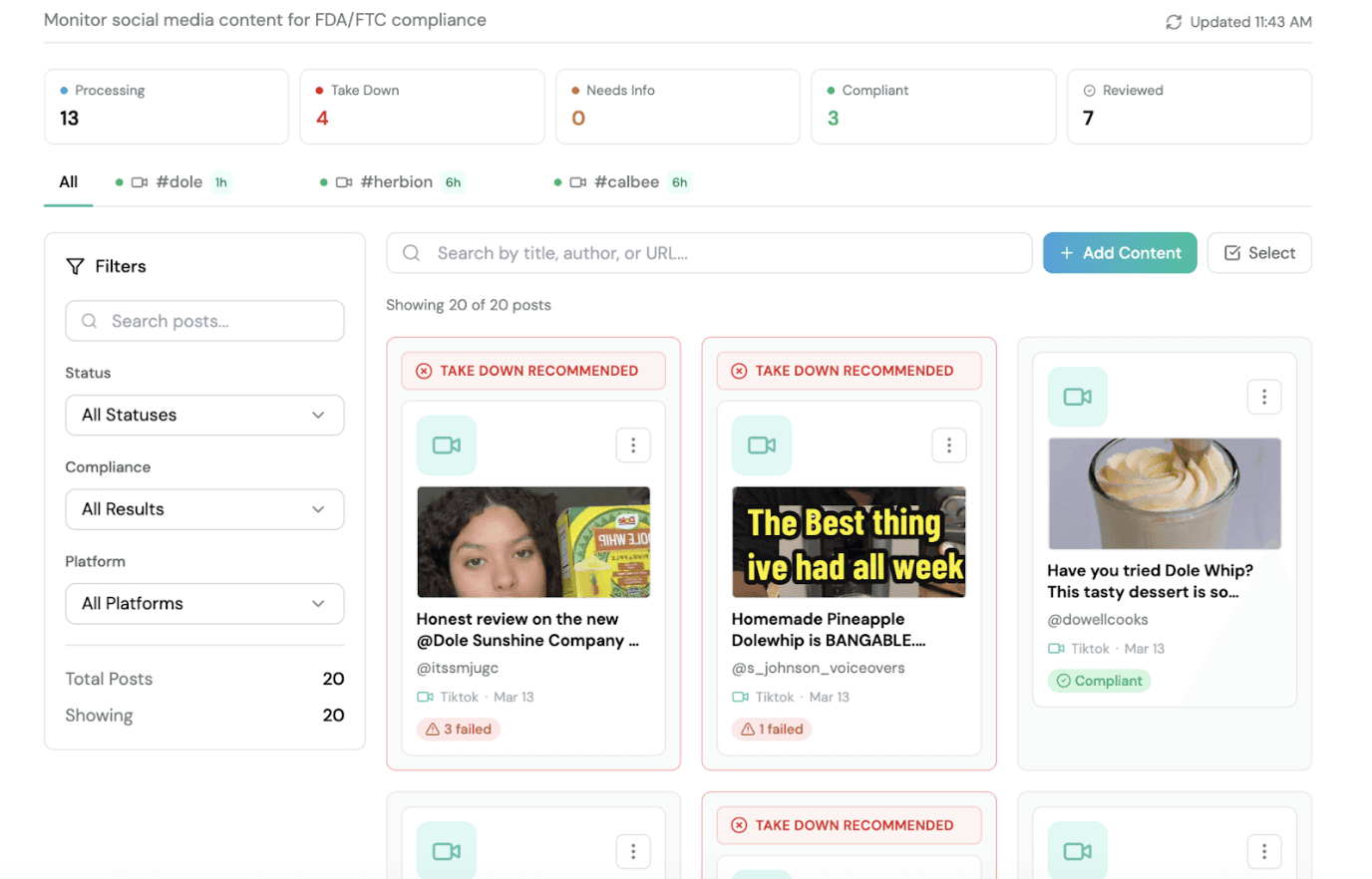
This is not a theoretical risk. The FTC has taken action against supplement companies specifically for failing to monitor and correct unsubstantiated claims made by their affiliate networks. Truli's Social Monitoring tool is built exactly for this — it automatically scans TikTok and Instagram content from creator accounts on a schedule, flags any post making a claim your product can't substantiate, and gives you the documentation to show you have a monitoring process in place.
What to do now
Audit every health claim your brand makes — on labels, on your website, in ads, and in creator briefs — against what your product can actually substantiate. For the label, the relevant standard is 21 CFR 101.93. For advertising, it's the FTC's competent and reliable scientific evidence standard. For influencer content, it's 16 CFR Part 255. These are three different frameworks, and a claim that clears one doesn't automatically clear the others.
Truli scans all three surfaces — label copy, marketing content, and social media — against FDA and FTC requirements, matched to your specific product formulation. If you're not sure where your brand stands, that's the place to start.
A note from Truli: Truli is not a law firm, and this article does not constitute or contain legal advice or create an attorney-client relationship. When determining your obligations and compliance with respect to relevant laws and regulations, you should consult a licensed attorney.
About

Truli is an AI compliance platform for food, beverage, and supplement brands. Automate FDA/FTC label reviews, claims validation, and post-market monitoring — 10x faster.

Platform
See Truli in action
If regulatory delays are consuming months and thousands in fees, see how Truli delivers fast and continuous compliance coverage at a fraction of the cost.
Book a demo