Weight Loss Claims on Supplements - FDA and FTC Rules Every Brand Must Know
Weight loss is the most aggressively enforced supplement claim category in existence. The FDA and FTC have jointly issued more warning letters, consent orders, and enforcement actions against weight loss supplement brands than any other subcategory. If your product touches weight, body composition, or metabolism, you need to understand both agencies' rules before you write a word of copy.

Catherine Zhou
| Co-founder at Truli

The weight loss supplement market generates billions of dollars annually — and attracts a proportionally enormous amount of regulatory scrutiny. The FTC and FDA have a dedicated joint program for weight loss product enforcement. The patterns in warning letters and consent orders reveal exactly where brands consistently get it wrong.
What FDA Permits on Weight Loss Supplement Labels
Under 21 CFR 101.93(f), weight-related structure/function claims must describe a role of an ingredient in normal body function — not the treatment of obesity (which the FDA classifies as a disease) or the guarantee of specific weight outcomes.
Permitted structure/function claims:
"Supports healthy metabolism"
"Helps maintain healthy body weight"
"Supports fat metabolism"
"Promotes healthy energy levels"
"Helps the body use carbohydrates for energy"
Prohibited (disease or unsubstantiated claims):
"Causes rapid weight loss"
"Burns fat"
"Clinically proven to help you lose 10 pounds in 30 days"
"Treats obesity"
"Eliminates excess body fat"
"Suppresses appetite to promote dramatic weight loss"
The distinction: permitted claims describe support for normal metabolic function. Prohibited claims describe specific weight outcomes, therapeutic effects on obesity, or unsubstantiated quantified results.
The FTC's Weight Loss Claim Standards
The FTC applies its own layer of rules to weight loss advertising — everything outside the label itself. Under FTC Act Section 5, all advertising claims must be truthful and substantiated. For weight loss claims, the FTC has published specific guidance on what level of evidence it requires.
For specific weight loss outcome claims ("lose 10 pounds in 4 weeks"), the FTC requires:
Competent and reliable scientific evidence — meaning well-controlled human clinical trials
Results that are typical for the general population, not just exceptional responders
Clear disclosure if results are atypical ("Results not typical")
The "results not typical" disclaimer doesn't fix an unsubstantiated claim
A common misconception: that adding "results not typical" to a testimonial or claim makes the claim permissible. The FTC's position, affirmed in enforcement actions, is that a disclaimer cannot render a false or misleading claim truthful. If the advertised outcome isn't achievable by most consumers using the product as directed, no disclaimer cures that.
Before/After Advertising
Before/after imagery is heavily scrutinized by both agencies. FTC guidance requires that before/after images:
Represent results achievable by typical consumers
Disclose what the subjects did during the depicted period (diet, exercise)
Not be digitally manipulated
Not use professional models photographed in ways that don't reflect real use
Many weight loss supplement brands use before/after content from affiliates and influencers. Under 16 CFR Part 255, those images and testimonials are advertising — and the brand is responsible for their accuracy and the adequacy of their disclosures.
Ingredient-Level Substantiation
The substantiation requirement under 21 CFR 101.93(a)(3) means your claims need to be supported by evidence at the dose and form of the ingredient you're actually using. Common weight loss ingredients and their evidentiary status:
Green tea extract (EGCG): Some clinical evidence for modest effects on metabolism. Structure/function claims about metabolism support may be defensible; claims about weight loss outcomes require stronger evidence.
Garcinia cambogia: The clinical evidence is mixed and largely does not support efficacy claims. The FTC has taken enforcement action against brands making weight loss claims for this ingredient.
CLA (conjugated linoleic acid): Some evidence for body composition effects, but studies vary significantly. Claims must reflect the actual state of the evidence.
Caffeine: Has evidence for acute metabolic effects. Energy and metabolism support claims may be supported; specific weight loss claims need stronger backing.
Fiber (psyllium, glucomannan): Some evidence for satiety effects. Specific weight loss claims remain difficult to substantiate.
The FTC and FDA both look at the totality of evidence — not just the studies that support your claim. If the literature is mixed, your claim must reflect that mix.
Endorsements and Influencer Content
Weight loss is one of the categories the FTC watches most closely for influencer compliance. Under 16 CFR Part 255, anyone who promotes your weight loss supplement in exchange for compensation, free product, or affiliate commissions must:
Disclose the material relationship clearly and conspicuously
Only make claims they can substantiate
Not make claims that go beyond what the brand itself can substantiate
A creator who posts "lost 15 lbs in a month using [your product]" is making a testimonial. That testimonial is subject to the same substantiation standards as your direct advertising — and your brand is liable for it.
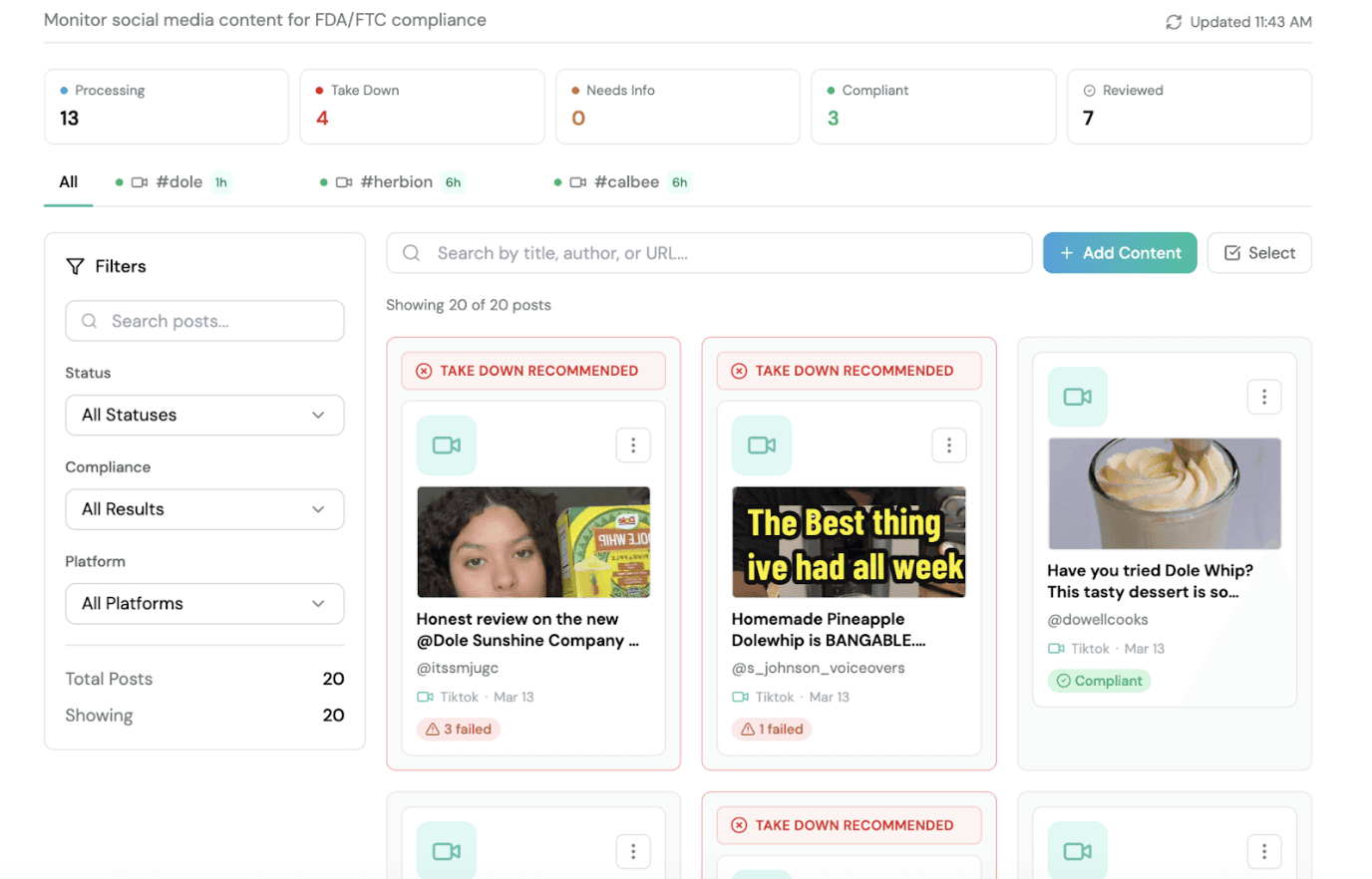
Truli's Social Monitoring tracks creator content across TikTok and Instagram specifically for this kind of unsubstantiated weight claim — flagging posts the same day they go live, before they attract FTC attention.
Weight loss claims are the highest-risk category in the supplement industry
Both agencies are actively looking at this space. The pattern in warning letters and consent orders is consistent: brands that make specific outcome claims, use misleading before/after imagery, or fail to monitor creator content face the most serious enforcement consequences. If your product touches weight or body composition, every claim on your label, website, and in influencer content needs to be reviewed against both FDA and FTC standards before it goes live.
A note from Truli: Truli is not a law firm, and this article does not constitute or contain legal advice or create an attorney-client relationship. When determining your obligations and compliance with respect to relevant laws and regulations, you should consult a licensed attorney.
About

Truli is an AI compliance platform for food, beverage, and supplement brands. Automate FDA/FTC label reviews, claims validation, and post-market monitoring — 10x faster.

Platform
See Truli in action
If regulatory delays are consuming months and thousands in fees, see how Truli delivers fast and continuous compliance coverage at a fraction of the cost.
Book a demo