Undeclared Allergens Are Driving the 2026 Food Recall Surge
When brands picture a food recall, they picture pathogens — Listeria, Salmonella, an outbreak. But the most common reason FDA and USDA are pulling food off shelves in 2026 isn't a bug. It's a label. Undeclared allergens now drive more recalls than any other single cause, and nearly all of them are preventable.

Catherine Zhou
| Co-founder at Truli

Food recalls are usually framed as a food safety problem. The recent data reframes it as a labeling problem. Across the past four months, the single most common reason for an FDA food recall wasn't a pathogen or a contaminant — it was an undeclared allergen. An ingredient that was in the product, was a major allergen, and simply wasn't on the label.
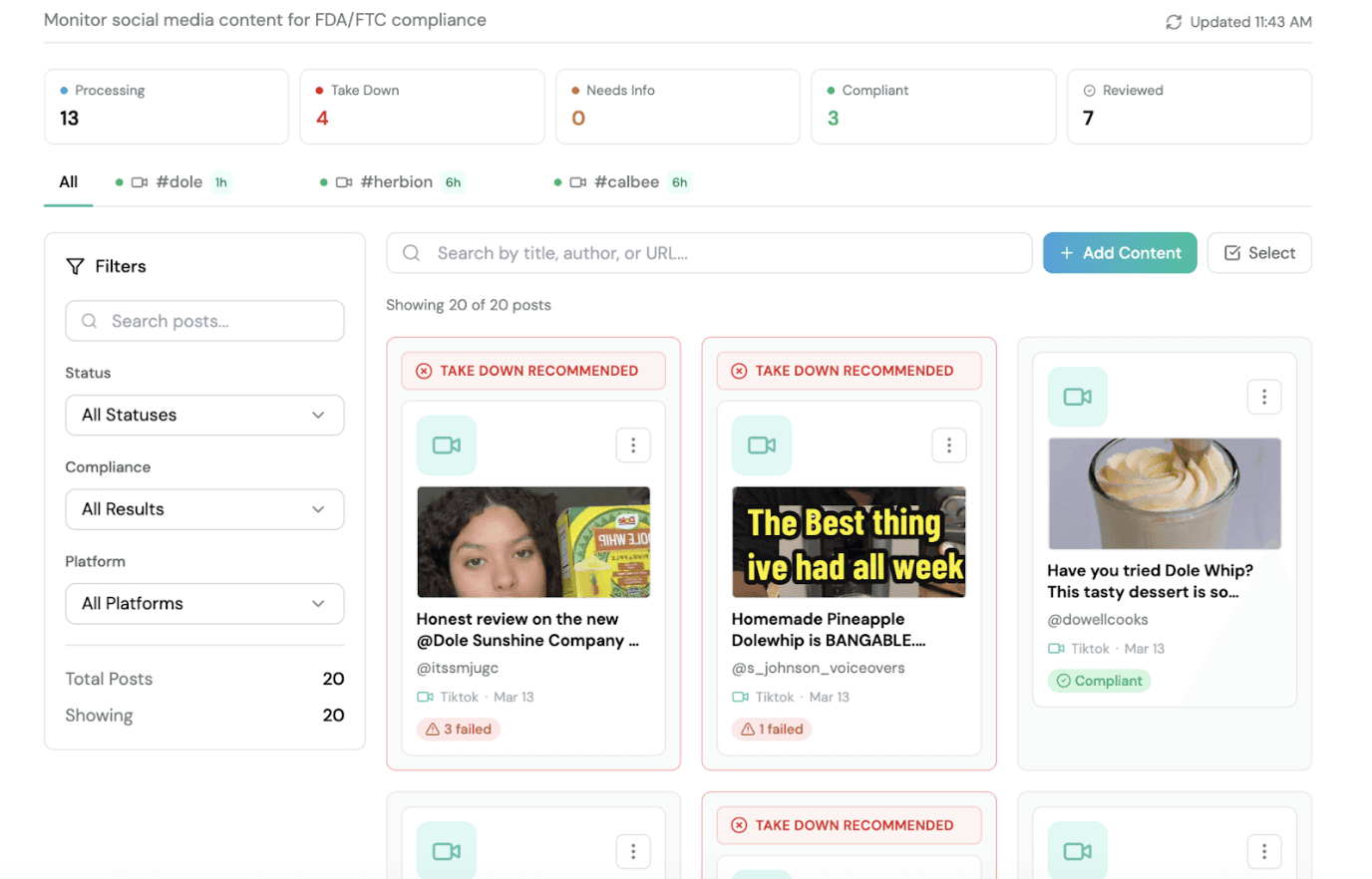
We monitor FDA and USDA recall activity through Truli's Regulatory Radar. This post breaks down what the mid-2026 recall data actually shows, why allergen mislabeling has overtaken contamination, and the process gaps that put a brand on the recall list.
What the Recent Recall Data Shows
Of roughly 160 FDA food recalls posted over the last four months, undeclared allergens accounted for about a third — more than any other cause. The rest of the picture:
Undeclared allergens — the leading cause, roughly 34% of recalls
Salmonella — the top pathogen, around 20% of recalls
Foreign material — plastic and metal fragments, a smaller but steady share
Listeria and heavy metals — fewer in count, but frequently Class I, the most serious classification
The USDA side of the ledger tells the same story. Recent USDA public health alerts and Class I recalls are dominated by "Misbranding, Unreported Allergens" — spanning prepared meals, sausage, beef jerky, and frozen foods from a range of establishments. Allergen mislabeling isn't a niche failure. It's the through-line across categories.
Why allergen mislabeling beats contamination
Pathogen contamination is random and episodic. Allergen mislabeling is systematic. It happens the same way almost every time: a supplier changes a formulation, a flavor system adds a new component, a co-packer runs an allergen on shared equipment, or a spec sheet goes stale — and no one re-checks the label against what's actually in the product. The allergen was there the whole time. The label just never caught up.
That's why these recalls are so preventable. They aren't failures of sanitation or sourcing. They're failures of information — the label falling out of sync with the formulation.
The Nine Major Allergens — and the One Most Brands Miss
Under the Food Allergen Labeling and Consumer Protection Act (FALCPA), the United States recognizes nine major food allergens that must be declared: milk, eggs, fish, crustacean shellfish, tree nuts, peanuts, wheat, soybeans, and sesame. Sesame became the ninth allergen under the FASTER Act, effective January 1, 2023.
Sesame is the one that still catches brands. Many products reformulated after the sesame rule took effect, and some manufacturers added sesame flour to previously sesame-free lines specifically because handling a declared allergen was easier than preventing cross-contact. Either way, sesame now hides in spice blends, flavorings, and bakery ingredients where a label review from before 2023 would never have looked.
Where Undeclared Allergens Actually Come From
The recall data points to a consistent set of root causes. Almost none of them originate on the production line — they originate in the paperwork.
Supplier reformulation — an ingredient supplier changes its formula and the new allergen isn't flagged to you
Compound ingredients — an allergen hides inside a flavoring, seasoning, or processing aid that's listed only by its overall name
Shared equipment cross-contact — a co-packer runs an allergen on the same line and the advisory statement is missing
Stale specifications — the label reflects an old spec sheet, not the current formulation
Wrong label applied — a packaging or changeover error puts the wrong label on the product
The common denominator is that the brand usually doesn't know the allergen is present until the recall. The information existed somewhere in the supply chain — it just never reached the label.
What This Means for Your Brand
Treat allergen declaration as a living cross-check, not a one-time label-design task. Practical steps:
Re-verify every product's allergen declaration against the current formulation and supplier specs — not the spec you approved at launch
Specifically audit for sesame in any product reformulated or specced before 2023
Trace every compound ingredient — flavors, seasonings, coatings — down to its sub-ingredients for hidden allergens
Require allergen change notifications from suppliers, and re-check the label every time a formula changes
Confirm your "Contains" statement lists all nine major allergens present, and that cross-contact advisories match your co-packer's real line conditions
Catch the Label-Formulation Gap Before a Recall Does
Undeclared-allergen recalls are preventable because the failure is informational — the label losing sync with the product. Truli's AI compliance platform cross-checks your label's allergen declaration against your ingredient list and formulation, flags missing or inconsistent allergen statements, and catches the sesame and compound-ingredient gaps that manual reviews miss. Truli's Regulatory Radar tracks FDA and USDA recall activity in your category so you can see the patterns before they reach your shelf. Book a demo to see how Truli keeps the label and the formulation in sync.
About

Truli is an AI compliance platform for food, beverage, and supplement brands. Automate FDA/FTC label reviews, claims validation, and post-market monitoring — 10x faster.

Platform
See Truli in action
If regulatory delays are consuming months and thousands in fees, see how Truli delivers fast and continuous compliance coverage at a fraction of the cost.
Book a demo