Ultra-Processed Foods — What a Federal Definition Means
The federal government is about to define 'ultra-processed food' for the first time. FDA and USDA submitted a proposed UPF definition to the White House for review in August 2026 — and while it isn't a labeling rule yet, every food brand should understand where this is heading and what lands in scope.

Catherine Zhou
| Co-founder at Truli

"Ultra-processed" has moved from academic shorthand to the center of US food policy in under two years. The MAHA agenda made UPFs its lead target, state legislatures started writing the term into law, and in July 2025 FDA and USDA issued a joint Request for Information asking how the federal government should define ultra-processed foods for the US food supply. That comment period closed in October 2025, and on August 10, 2026, HHS confirmed the agencies had submitted a proposed definition to the Office of Management and Budget for review.
For food brands, the critical detail is what was submitted — and what wasn't.
Where the Federal UPF Definition Stands
The submission to OMB is not a proposed rule, an advance notice of proposed rulemaking, or a formal guidance document. Reporting indicates it takes the form of a policy document — a white paper establishing the administration's scientific and policy position on what counts as ultra-processed.
That distinction matters. A white paper imposes no new labeling, formulation, or sales requirements on manufacturers by itself. What it does is create a common federal reference point — one that later regulatory actions, state laws, school nutrition standards, and plaintiffs' lawyers can all cite. Once the government says "this is what ultra-processed means," everything downstream gets easier to build.
Until now, the only widely used framework has been the academic Nova classification, which sorts foods into four groups by degree of processing and puts formulations with industrial ingredients — protective hydrogenated fats, modified starches, flavorings, colorings, emulsifiers, non-nutritive sweeteners — into group 4. The RFI specifically asked whether a US definition should follow, modify, or depart from Nova, and industry comments split sharply on ingredient-based versus nutrient-based approaches.
Why Brands Should Care Before Any Rule Exists
State laws are moving first
States aren't waiting for FDA. California enacted first-in-the-nation legislation in 2025 to phase "particularly harmful" ultra-processed foods out of school meals, and other legislatures have introduced UPF bills spanning school food, warning labels, and procurement standards. A federal definition — even a non-binding one — becomes the template these laws reference, and state-by-state compliance is where multi-state brands feel it first.
Litigation is already testing the theory
Class action firms have begun filing suits framing ultra-processed formulations as deceptively marketed or harmful, particularly where packaging carries health-forward claims. A federal definition gives plaintiffs a bright line to plead around: a product that meets the government's UPF definition while its front panel says "wholesome" or "real ingredients" is a stronger deception story than one argued from Nova alone.
The definition will meet the label eventually
FDA's front-of-package Nutrition Info box proposal, the updated "healthy" claim definition, and a UPF definition are converging pieces of the same policy direction: interpretive signals on the front of the pack. Whether UPF status ever becomes a mandatory disclosure, brands whose products land in the definition should assume retailers, school systems, and institutional buyers will start asking.
What Lands a Product in Scope
Any final definition is still being negotiated, but the recurring elements across Nova, the RFI comments, and state legislation are consistent enough to plan against:
Ingredient markers — non-nutritive sweeteners, certain emulsifiers and stabilizers, modified starches, protein isolates, flavorings and colorings not found in home kitchens
Process markers — extrusion, molding, pre-frying, and other industrial transformations
Nutrient thresholds — some proposals layer added sugar, sodium, and saturated fat limits on top of ingredient criteria
Category carve-outs — comments pushed hard for exemptions covering fortified staples, infant formula, and minimally processed convenience items
A brand can't reformulate against a definition that doesn't exist yet — but it can inventory which SKUs carry the marker ingredients, model which would fall in under a Nova-style test, and identify where a single ingredient swap changes the answer.
What to Do Now
Three moves are worth making before the definition lands:
Audit your claims against your formulations. The highest immediate risk isn't UPF status — it's UPF status next to "clean," "natural," or "wholesome" claims. That gap is what both regulators and class action firms act on.
Map your marker ingredients. Know which products would classify as UPF under Nova group 4 and which are borderline. Reformulation lead times are long; the inventory is cheap.
Watch the school and retail channels. California-style procurement standards bite years before any FDA labeling rule would. If school, government, or health-system channels matter to your business, the state definitions are your near-term compliance surface.
Keep your claims ahead of the definition
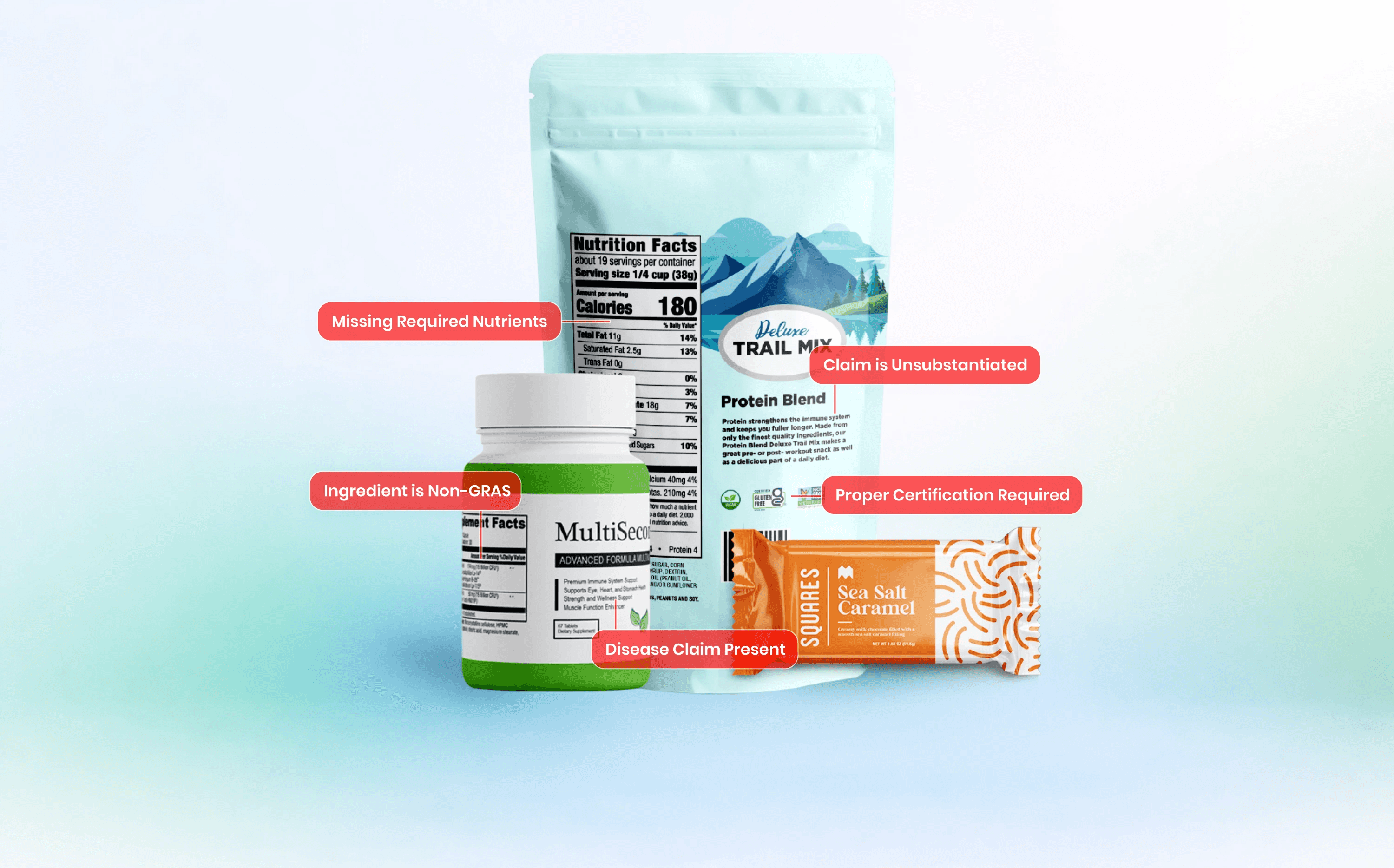
Truli scans your labels and marketing against FDA and FTC requirements — including the health-forward claims that become liabilities when a UPF definition arrives — and its Regulatory Radar tracks enforcement and rule changes as they land. Book a demo to see where your portfolio stands.
A note from Truli: Truli is not a law firm, and this article does not constitute or contain legal advice or create an attorney-client relationship. When determining your obligations and compliance with respect to relevant laws and regulations, you should consult a licensed attorney.
About

Truli is an AI compliance platform for food, beverage, and supplement brands. Automate FDA/FTC label reviews, claims validation, and post-market monitoring — 10x faster.

Platform
See Truli in action
If regulatory delays are consuming months and thousands in fees, see how Truli delivers fast and continuous compliance coverage at a fraction of the cost.
Book a demo