Bottled in Bond — TTB Labeling Requirements Explained
\"Bottled in bond\" is one of the oldest regulated claims in American labeling law, rooted in the Bottled-in-Bond Act of 1897. Today the requirements live at 27 CFR 5.88: spirits of one kind, distilled by one distiller at one distillery in one distilling season, stored at least four years in wood, and bottled at exactly 100 proof. The label must also identify the distilled spirits plants where the product was distilled and bottled.

Catherine Zhou
| Co-founder at Truli

"Bottled in bond" is not a marketing flourish — it is a restricted label statement governed by 27 CFR 5.88 ("Bottled in bond"), in Subpart F of TTB's recodified distilled spirits labeling regulations. The section controls the terms "bond," "bonded," "bottled in bond," and "aged in bond," including their use inside brand names, and pairs strict production requirements with a mandatory distillery-identification rule that makes the claim one of the most transparent statements a whiskey label can carry.
The 1897 Act Behind the Claim
The Bottled-in-Bond Act of 1897 — championed by Colonel E.H. Taylor Jr. and Treasury Secretary John G. Carlisle — is widely regarded as one of the first federal consumer-protection laws, predating the Pure Food and Drug Act by nearly a decade. It answered an era in which "whiskey" was routinely cut with neutral spirits, colorants, and worse: spirits aged in a federally bonded warehouse under government supervision, from a single distillery and season, bottled at 100 proof, could carry the government's bottled-in-bond stamp as a guarantee of authenticity. The Act's tax-supervision machinery has since been dismantled and modernized, but its production standard survives essentially intact as § 5.88 under the FAA Act — which is why the modern requirements read like a 19th-century affidavit.
The Production Requirements (§ 5.88(a))
Under § 5.88(a), the terms "bond," "bonded," "bottled in bond," "aged in bond," or synonymous phrases may be used — including as part of the brand name — only if the distilled spirits meet all six conditions:
# | Requirement |
|---|---|
1 | Composed of the same kind of spirits (same type, or same class if no type applies) distilled from the same class of materials |
2 | Distilled in the same distilling season by the same distiller at the same distillery |
3 | Stored at least 4 years in wooden containers in contact with the wood (vodka: 4 years in paraffin-lined or similarly coated wooden containers; gin: 4 years in paraffin-lined or unlined wooden containers) |
4 | Unaltered from original condition or character — no additions or subtractions other than filtration, chill proofing, or other physical treatments that leave nothing behind and change no class or type |
5 | Reduced in proof only with pure water, to 50 percent alcohol by volume (100° proof) |
6 | Bottled at exactly 100 proof (50 percent alcohol by volume) |
"Distilling season" is a defined term: under § 5.1, the spring distilling season runs January 1 through June 30 and the fall season July 1 through December 31. A bonded whiskey therefore cannot blend a June run with a July run, even from the same still — the two halves of a calendar year are different seasons by rule.
Note what the requirements do not say: there is no recipe restriction. Bottled in bond is best known on straight bourbon and straight rye, but any spirit that satisfies all six conditions qualifies — the section itself contemplates bonded vodka and bonded gin by giving them modified storage rules (paraffin-lined containers, since neither may take wood character). In practice the 4-year wood storage and 100-proof bottling make American whiskies the natural fit, and the 4-year minimum conveniently clears the threshold below which whisky requires a mandatory age statement under § 5.74.
Mandatory Distillery Identification (§ 5.88(c))
The transparency obligation is what separates bottled in bond from every other age or quality cue. Under § 5.88(c), domestically manufactured spirits labeled as bottled in bond must bear:
The real name of the distillery — or the trade name under which the distiller distilled and warehoused the spirits
The distilled spirits plant (DSP) number where the spirits were distilled
The DSP number where the spirits were bottled
The label may also carry the bottler's name or trade name. For sourced-whiskey brands, this is the decisive constraint: a bottled-in-bond label cannot hide behind a vague "bottled by" line, because the distilling DSP must be named. That is exactly why the claim has become a credibility marker in craft whiskey — it is the one label statement that proves a distillery made its own liquid, in a market where undisclosed sourcing is common.
Imported Spirits (§ 5.88(b))
Imported spirits may be labeled bottled in bond (or a synonymous term) only if they meet the same six production conditions of § 5.88(a)(1)–(6) and the laws and regulations of the country of manufacture authorize bottling spirits in bond and require or specifically authorize the labeling. The statement must be immediately followed, in the same font and type size, by the name of the country under whose laws the spirits were bottled — for example, "Bottled in Bond, Canada."
Why Bottled in Bond Is Resurging
After decades as a bottom-shelf signifier, bottled in bond has become a premium cue in craft whiskey. The reasons map directly onto the rule: a guaranteed 4-year minimum age at a moment when young craft whiskey is common, 100-proof bottling favored by enthusiasts and bartenders, single-distillery provenance in an era of brokered barrels, and DSP disclosure that lets consumers verify who actually distilled the product. For a craft distillery, releasing a bonded expression is a regulatory milestone as much as a product launch — it proves four years of continuous own-make production. The compliance risk runs the other direction: "bond" language in a brand name or back-label romance copy on a product that misses any of the six conditions is a prohibited restricted statement, and a bonded label missing either DSP number will not clear COLA review.
How Truli Helps with Bottled in Bond Compliance
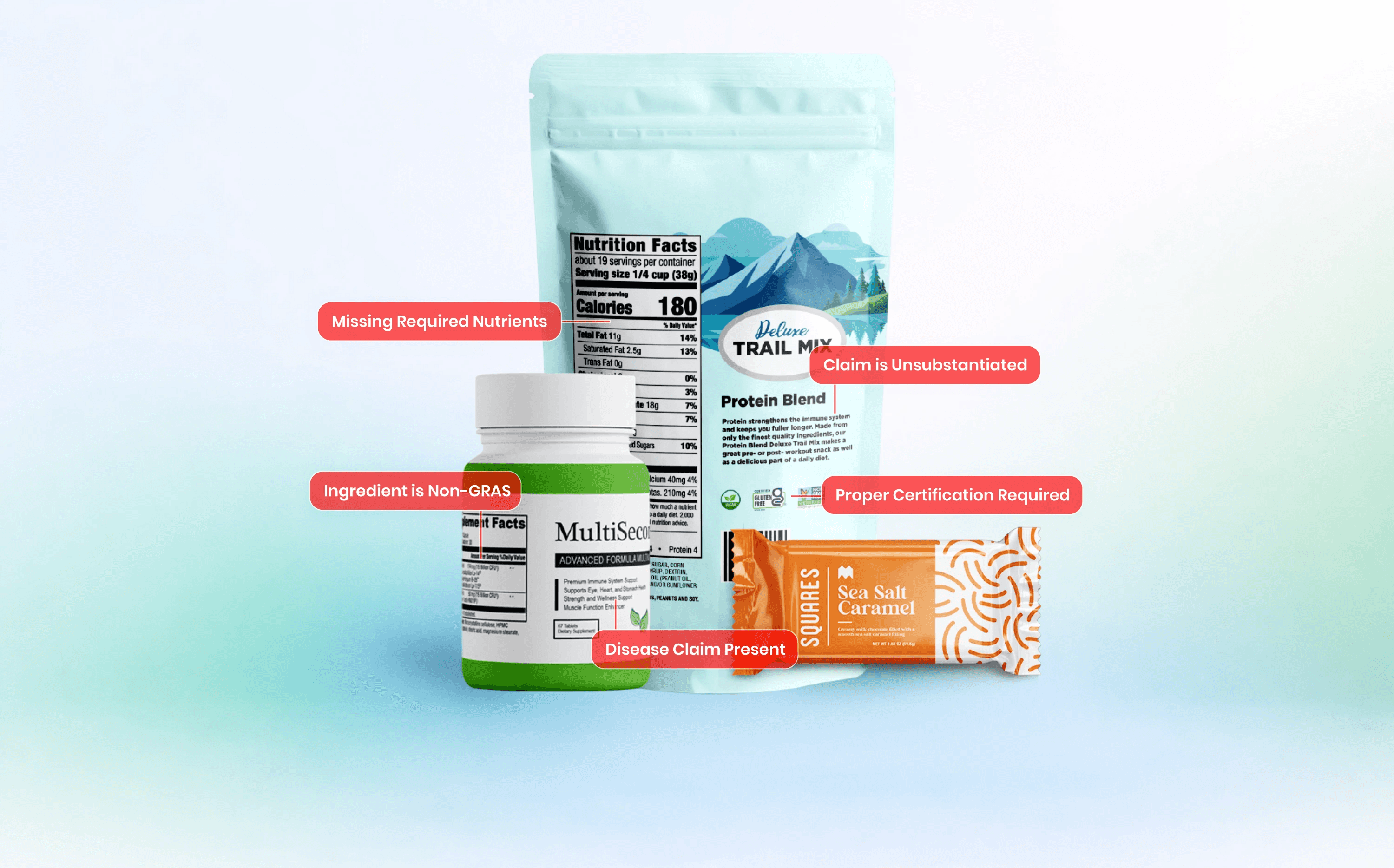
Restricted-term detection: Truli's AI agents flag "bond," "bonded," "bottled in bond," and "aged in bond" anywhere on the label — including inside brand names — and map them to the § 5.88 conditions
Six-condition verification: Truli checks the labeled claim against the product's stated class, age, and proof, flagging a bonded label that is not bottled at exactly 100 proof or that shows an age under 4 years
DSP identification checks: Truli verifies that a bottled-in-bond label carries the distillery name and both required DSP numbers under § 5.88(c), and the country name in matching type for imports under § 5.88(b)
Cross-section consistency: Truli reconciles bonded claims with § 5.74 age statements and § 5.65 alcohol content so one label tells one story
Related Regulations
27 CFR Part 5 — Distilled Spirits Labeling — The parent part containing § 5.88, covered section by section
27 CFR 5.143 — Whisky and Bourbon Labeling — The standards of identity most bonded products are labeled under
27 CFR 5.74 — Age Statements — How the 4-year bonded minimum interacts with mandatory and optional age statements
27 CFR 5.66 — Name, Address, and State of Distillation — The baseline identification rules that § 5.88(c) tightens
27 CFR 5.65 — Alcohol Content and Proof — The mandatory alcohol-by-volume statement behind the 100-proof requirement
Frequently Asked Questions
Does bottled in bond require aging in a federally bonded warehouse?
Historically yes — the 1897 Act put bonded spirits under Treasury lock and supervision. The modern § 5.88(a) states the requirement as at least 4 years of storage in wooden containers; in practice spirits aging at a distilled spirits plant before tax determination are stored "in bond" on bonded premises, so the name still describes reality even though the government warehouse stamps are gone.
Can a bottled-in-bond whiskey be sourced from another distillery?
It can be bottled by someone other than the distiller, but it cannot hide the source: § 5.88(c) requires the real name (or distilling trade name) of the distillery and the DSP numbers where the spirits were distilled and bottled. Every drop must also come from one distiller, one distillery, one distilling season.
Is bottled in bond limited to bourbon and rye?
No. Any spirit meeting all six § 5.88(a) conditions qualifies, and the rule expressly accommodates bonded vodka and gin with paraffin-lined storage. Whiskey dominates because 4 years in wood and 100-proof bottling align naturally with straight whiskey production.
A note from Truli: Truli is not a law firm, and this article does not constitute or contain legal advice or create an attorney-client relationship. When determining your obligations and compliance with respect to relevant laws and regulations, you should consult a licensed attorney.
Last updated: August 2026. Reflects 27 CFR 5.88 as of August 2026. Truli monitors TTB rulemaking and enforcement. Book a demo to see how.
About

Truli is an AI compliance platform for food, beverage, and supplement brands. Automate FDA/FTC label reviews, claims validation, and post-market monitoring — 10x faster.

Platform
See Truli in action
If regulatory delays are consuming months and thousands in fees, see how Truli delivers fast and continuous compliance coverage at a fraction of the cost.
Book a demo