TTB Advertising Rules — 27 CFR Mandatory Statements and Prohibitions
Under the FAA Act, producers, importers, and wholesalers of wine, distilled spirits, and malt beverages must conform their advertising — in any medium, including social media — to TTB's advertising subparts. Each commodity's rules require identifying the responsible advertiser and the product's class, and prohibit false, misleading, disparaging, obscene, and unsubstantiated health-related content.

Catherine Zhou
| Co-founder at Truli

TTB's advertising rules run in three parallel tracks: Subpart G of Part 4 for wine (27 CFR 4.60–4.65), Subpart N of Part 5 for distilled spirits (27 CFR 5.231–5.236), and Subpart N of Part 7 for malt beverages (27 CFR 7.231–7.236). The spirits and malt subparts were renumbered in TTB's 2022 recodification (T.D. TTB-176); the wine subpart retains its long-standing numbering. All three implement Section 105(f) of the Federal Alcohol Administration Act, and all three follow the same architecture: application, definitions, mandatory statements, legibility, prohibited practices, and comparative advertising.
Who the Rules Apply To (§§ 4.60, 5.231, 7.231)
The application sections cover industry members — producers, rectifiers/processors, blenders, bottlers, importers, and wholesalers (brewers for malt) — advertising "directly or indirectly or through an affiliate" in or affecting interstate commerce. Two structural limits matter:
Retailers and publishers are exempt unless they are also engaged in business as an industry member, directly or through an affiliate
For malt beverages only, § 7.231 applies the federal rules in a state only to the extent that state law imposes similar requirements on in-state advertising
The recodified spirits and malt sections now expressly name "electronic or internet media" in the application language itself.
What Counts as an "Advertisement" — Including Social Media
The definitions are deliberately sweeping. 27 CFR 5.232 and 27 CFR 7.232 define an advertisement as any written or verbal statement, illustration, or depiction calculated to induce sales in interstate commerce, appearing in newspapers, magazines, menus, leaflets, catalogs, promotional material, hang tags, billboards, radio, television — and, explicitly, any "internet or other electronic site or social network." The wine definition at 27 CFR 4.61 predates the recodification and does not name social networks in its text, but TTB applies the same interpretation to wine through guidance.
That guidance began as Industry Circular 2013-1, TTB's first statement that fan pages, microblogs, video channels, and apps are advertisements under the FAA Act. It has since been superseded — first by Industry Circular 2022-2, and currently by Industry Circular 2024-1, which restates the position for modern platforms: a brand's profile, posts, videos, and links are advertising subject to the mandatory statements and prohibited practices. Practical accommodations carry through the guidance line: mandatory statements generally need to appear once per fan page or profile rather than on every post, and for character-limited or video formats they may live on the advertiser's profile page.
Mandatory Statements (§§ 4.62, 5.233, 7.233)
Every advertisement must carry two things:
Responsible advertiser: the advertiser's name, city, and state — or the name plus other contact information such as a telephone number, website, or email address where the responsible advertiser may be contacted (27 CFR 5.233(a), 4.62(a), 7.233(a))
Class (and type): a conspicuous statement of the product's class — and for wine and spirits its type, corresponding to the class/type designation required on the label (5.233(b), 4.62(b), 7.233(b))
The legibility sections (§§ 4.63, 5.234, 7.234) require the mandatory information to be conspicuous and readable against the ad's background. An Instagram post promoting "the smoothest pour in Texas" with no brand contact information and no indication the product is a bourbon whisky misses both requirements.
Prohibited Practices (§§ 4.64, 5.235, 7.235)
The prohibited-practices sections track the label rules for each commodity. Using the spirits version at 27 CFR 5.235 as the model, advertisements may not contain:
Any statement that is false or misleading in any material particular — including statements that mislead "by ambiguity, omission, or inference, or by the addition of irrelevant, scientific or technical matter"
False or misleading disparagement of a competitor's product (truthful comparisons and clear statements of opinion are allowed)
Anything obscene or indecent
Misleading references to analyses, standards, tests, or guarantees
"Bonded"/"bottled in bond" claims unless the label lawfully bears them, and (spirits) the word "pure" or "double/triple distilled" outside narrow truthful uses
Health-related statements get their own detailed regime, spelled out at 27 CFR 4.64(i) for wine with parallel provisions for spirits and malt beverages. A "health-related statement" includes curative and therapeutic claims, implied benefits, statements of nutritional value, and even directional statements pointing consumers to third-party health information. Specific health claims are effectively unusable in practice: they must be truthful, scientifically substantiated, detailed as to affected populations, and must disclose the risks of both moderate and heavier drinking — as prominently as the claim itself. Directional statements are presumed misleading without a neutral framing and the disclaimer "This statement should not encourage you to drink or increase your alcohol consumption for health reasons." Caloric, carbohydrate, protein, and fat content statements are not treated as health claims.
The Three Commodities Side by Side
Provision | Wine (Part 4, Subpart G) | Spirits (Part 5, Subpart N) | Malt (Part 7, Subpart N) |
|---|---|---|---|
Application | § 4.60 | § 5.231 | § 7.231 (state-parity limit) |
Definition of advertisement | § 4.61 | § 5.232 (names social networks) | § 7.232 (names social networks) |
Mandatory statements | § 4.62 | § 5.233 | § 7.233 (class only) |
Legibility | § 4.63 | § 5.234 | § 7.234 |
Prohibited practices | § 4.64 | § 5.235 | § 7.235 |
Comparative advertising | § 4.65 | § 5.236 | § 7.236 |
Digital and Influencer Content
Because the definitions reach any medium calculated to induce sales, brand-controlled digital content is advertising: websites, e-commerce product pages, email campaigns, brand social accounts, and paid influencer posts made on the brand's behalf. Under the Industry Circular line (2013-1 through 2024-1), practical rules of thumb:
Put the responsible advertiser and class/type on the profile or "about" section of each platform account; TTB treats the account as a single advertisement
Links count: content a brand links to or embeds can be attributed to the brand
Influencer posts commissioned by an industry member are the industry member's advertising — the same prohibited-practices list applies, and the FTC's Endorsement Guides separately require clear disclosure of the material connection (#ad)
User-generated content on brand pages is lower risk, but brands should not adopt or amplify claims they could not make themselves
TTB Enforcement and the FTC Overlay
TTB enforces the advertising subparts administratively — through correction requests, offers in compromise, and, in serious cases, permit action under the FAA Act — and historically prioritizes health claims, misleading origin or identity claims, and category-blurring (an ad implying a malt-based hard seltzer is a spirits product, for example). Unlike labels, advertisements are not pre-approved: there is no COLA for an Instagram campaign, so compliance is entirely on the advertiser before publication.
The FTC operates as an overlay, policing unfair and deceptive alcohol advertising under Section 5 of the FTC Act, endorsement disclosure, and ad placement/audience-composition practices aimed at underage exposure. A campaign can satisfy TTB's mandatory statements and still draw FTC scrutiny for an unsubstantiated implied claim or an undisclosed influencer relationship. Separately, TTB's proposed Alcohol Facts rule (published January 17, 2025; still a proposal, not a final rule) would change what labels disclose — and advertising claims about calories or nutrition would need to stay consistent with whatever labeling regime is ultimately finalized.
How Truli Helps with Alcohol Advertising Compliance
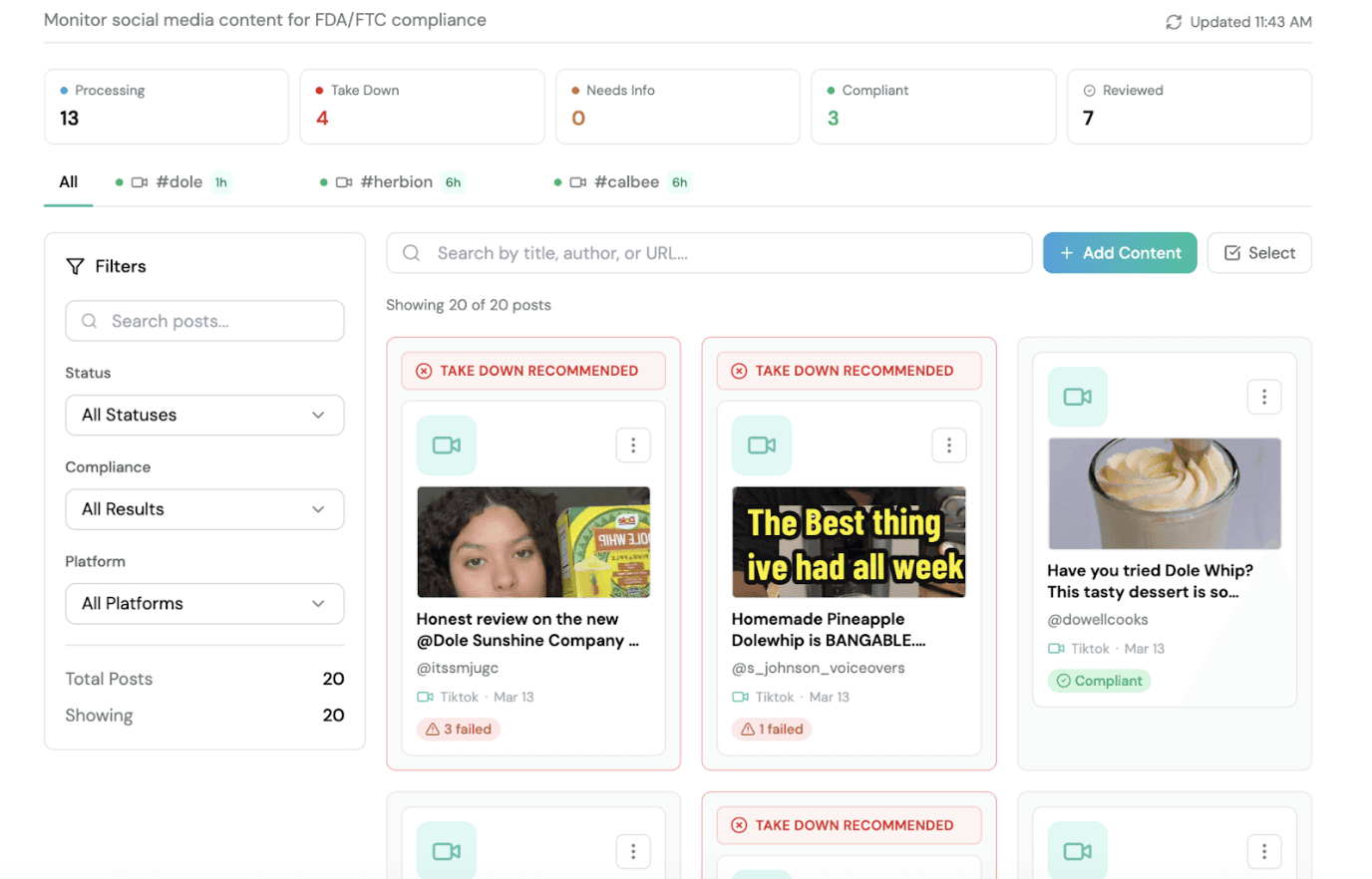
Ad and social scanning: Truli's AI agents review marketing content — web pages, social posts, influencer copy — against the actual text of §§ 4.60–4.65, 5.231–5.236, and 7.231–7.236, citing the specific rule on every finding
Mandatory statement checks: Truli verifies the responsible advertiser identification and class/type statement appear where TTB guidance expects them, per platform
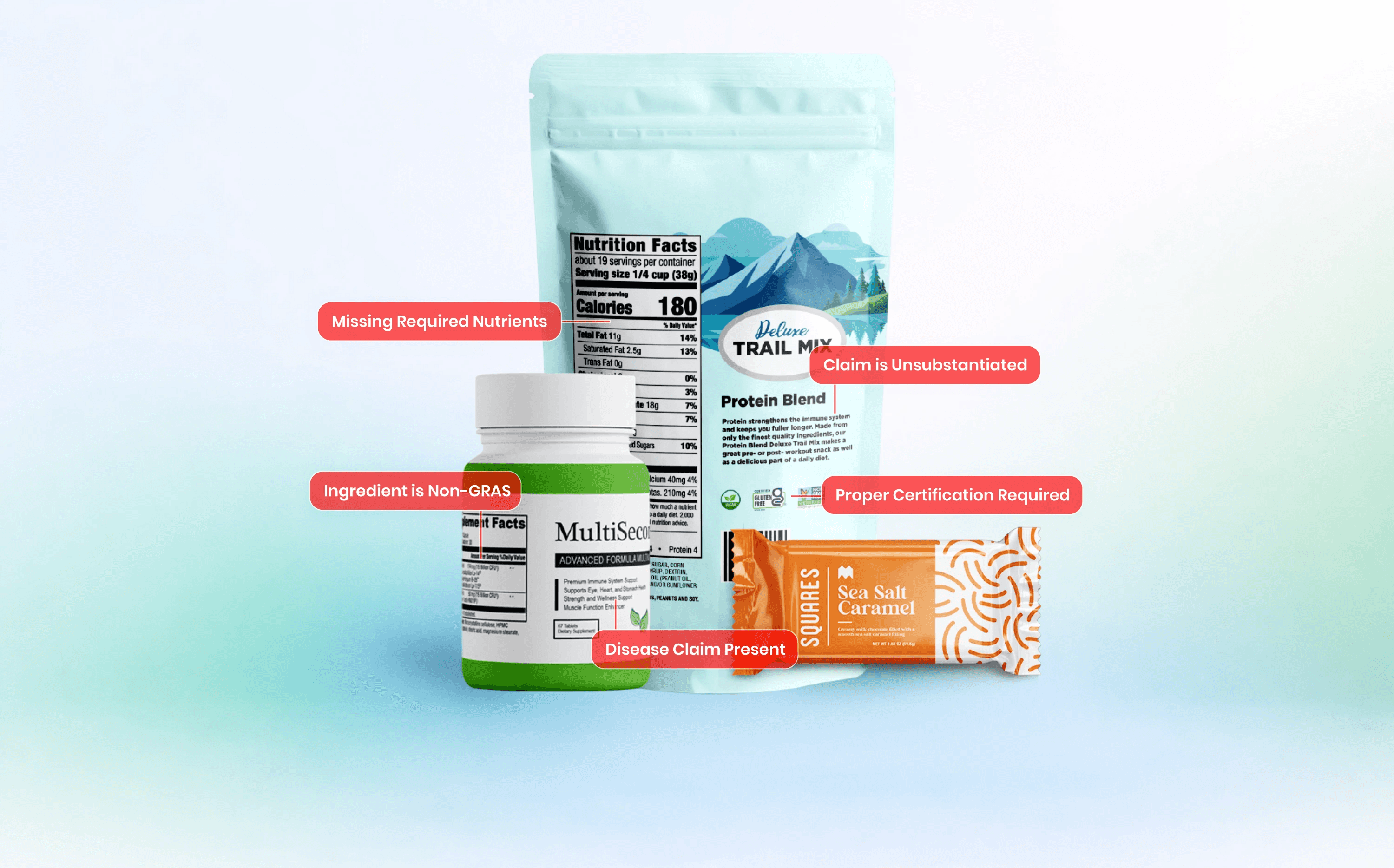
Prohibited-practice detection: Truli flags health-related statements, disparagement, "pure"/"bonded"-style terms, and claims that outrun the approved label
Label-to-ad consistency: Truli compares advertising claims against the COLA-approved label so identity, origin, and age claims never drift apart across channels
Related Regulations
TTB 27 CFR Part 4 — Wine Labeling — The labeling rules wine advertising must correspond to
TTB 27 CFR Part 5 — Distilled Spirits Labeling — Label requirements that anchor spirits ad claims
TTB 27 CFR Part 7 — Malt Beverage Labeling — The malt beverage labeling counterpart
27 CFR 5.141–5.156 — Distilled Spirits Standards of Identity — The class/type system that ads must conspicuously state
FAA Act — Federal Alcohol Administration Act — The statute authorizing TTB's advertising jurisdiction
Frequently Asked Questions
Does TTB really regulate my brand's Instagram account?
Yes. The spirits and malt definitions (§§ 5.232, 7.232) expressly include any "internet or other electronic site or social network," and TTB guidance — currently Industry Circular 2024-1, successor to 2013-1 — treats brand profiles, posts, and videos as advertisements. Mandatory statements can generally live once on the profile rather than in every post.
Do advertisements need TTB approval like labels do?
No. There is no pre-approval process for advertising — COLAs cover labels only. Advertising compliance is self-executing, which is why TTB enforcement typically surfaces after publication, through correction demands or offers in compromise.
Can I say my whiskey is "good for your heart" if I add a disclaimer?
Effectively no. Specific health claims are permitted only if truthful, substantiated, qualified by population, and accompanied by prominent disclosure of the risks of both moderate and heavier drinking — conditions TTB itself describes as rarely satisfiable. Even directing consumers to third-party health studies is presumed misleading without the prescribed disclaimer.
Are comparative ads and taste-test claims allowed?
Yes, within limits. The comparative advertising sections (§§ 4.65, 5.236, 7.236) permit truthful comparisons, and § 5.235(a)(2) explicitly allows accurate factual comparisons and statements of opinion — what is prohibited is false or misleading disparagement of a competitor's product.
A note from Truli: Truli is not a law firm, and this article does not constitute or contain legal advice or create an attorney-client relationship. When determining your obligations and compliance with respect to relevant laws and regulations, you should consult a licensed attorney.
Last updated: August 2026. Reflects the cited 27 CFR sections as of August 2026. Truli monitors TTB rulemaking and enforcement. Book a demo to see how.
About

Truli is an AI compliance platform for food, beverage, and supplement brands. Automate FDA/FTC label reviews, claims validation, and post-market monitoring — 10x faster.

Platform
See Truli in action
If regulatory delays are consuming months and thousands in fees, see how Truli delivers fast and continuous compliance coverage at a fraction of the cost.
Book a demo