27 CFR 5.74 — Age Statements on Distilled Spirits
Age is one of the most valuable claims a spirits label can make — and one of the most tightly regulated. 27 CFR 5.74 defines what 'age' legally means, makes age statements mandatory for whisky under 4 years old, requires blends to state the age of the youngest spirit, and prohibits overstating age while permitting understatement. Marketing teams that treat age as ad copy rather than a regulated statement get COLA rejections.

Catherine Zhou
| Co-founder at Truli

27 CFR 5.74 — "Statements of age, storage, and percentage" — is TTB's rulebook for every number-of-years claim on a distilled spirits label. It sits in Subpart E of Part 5 (post-2022 recodification numbering; the pre-2022 equivalent was old § 5.40) and was amended as recently as December 2024 by T.D. TTB-199, which wove the new American single malt whisky standard into the age rules. The section matters in both directions: it forces young whisky to admit its age, and it polices the age claims that premium brands most want to make.
What "Age" Legally Means
Under § 5.74(a) and the definition in § 5.1, age is the length of time, after distillation and before bottling, that the spirits were stored in oak barrels. Time in stainless steel, glass, or non-oak wood does not count, and time in the bottle never counts — a 10-year-old bourbon bottled in 2016 is still 10 years old today. For bourbon, rye, wheat, malt, and rye malt whisky — and straight whiskies other than straight corn whisky and straight American single malt whisky — the aging must occur in charred new oak barrels; time in used cooperage does not accrue age for those types. The age may be stated in years, months, or days.
Two bright-line rules from § 5.74(a) govern every age statement:
Understating age is permitted; overstating is prohibited. A 6-year-old whisky may be labeled "Aged 4 years." A 3-year-old whisky may never be labeled "Aged 4 years."
The age statement may not conflict with the standard of identity. TTB's own example: a straight rye whisky cannot carry "Aged 1 year" — even if literally true of nothing in the bottle — because "straight" requires a 2-year minimum by definition, and the understatement would contradict the designation.
When Age Statements Are Mandatory
For whisky, § 5.74(b) makes an age statement (and, for blends, a percentage-of-types statement) mandatory whenever the whisky is aged less than 4 years — including blends containing any whisky under 4 years old. The one exception is whisky labeled "bottled in bond" under § 5.88, which by definition has been stored at least 4 years. For whisky 4 years or older, the age statement is optional — this is the regulatory floor beneath the entire no-age-statement (NAS) category: the moment every component in the bottle crosses 4 years, the label may go silent about age, which is why so many premium whiskies dropped their age statements as stocks tightened. Imported rye, wheat, malt, and rye malt whisky must state age and percentage in the same manner as if made in the United States.
Beyond whisky, § 5.74(c) makes an age statement mandatory for brandy not stored in oak barrels for at least 2 years (excluding immature brandies, fruit brandy, marc, pomace, Pisco, Singani, and grappa, which are not customarily oak-stored). Age statements are optional for rum, agave spirits, and oak-stored brandy over 2 years.
The Youngest-Spirit Rule and Prescribed Formats
When spirits of different ages are combined, the label may state only the age of the youngest spirit — the rule appears throughout the section: § 5.74(b)(1) for whisky ("the age of the youngest whisky in the product"), § 5.74(c) for rum, brandy, and agave spirits, and § 5.74(e)(1) for other spirits batched from barrels of different ages. A blend of 12-year and 5-year stock is, for labeling purposes, 5 years old.
The formats are prescribed, not free-form:
Whisky without neutral spirits: substantially "____ years old". If aged in more than one container, the label may optionally identify the types of oak containers used
Whisky containing neutral spirits (blended whisky) with any component under 4 years: the percentage by volume and age of each straight whisky or other whisky, in forms such as "____ percent straight whisky ____ years old", placed immediately adjacent to the neutral spirits statement required by § 5.71
U.S. whisky stored in reused barrels (other than corn, light, and American single malt whisky): "stored ____ years in reused cooperage" in place of "____ years old"
Grain spirits: an optional storage statement such as "____% grain spirits stored ____ years in oak barrels" (§ 5.74(d))
For all other spirits except neutral spirits — think aged gin or barrel-rested liqueur bases — § 5.74(e) permits age or maturity statements only when the spirits were stored in an oak barrel and, after dumping, received no treatment beyond water, filtering, and bottling. Age or maturity statements on neutral spirits are prohibited outright (grain spirits storage statements being the narrow exception) — there is no such thing as a compliant "barrel-aged vodka" age claim.
Age-Adjacent Representations and Distillation Dates
Section 5.74(f) closes the loopholes. If a label carries a representation similar to an age statement — "matured to perfection," barrel-years imagery, maturity language — a true age statement must also appear on that label, conspicuously and at least half the type size of the representation. Two exceptions: the word "old" in a brand name (Old Grand-Dad needs no age statement for its name), and general inconspicuous maturity references on whiskies and most brandies not otherwise required to state age, and on rum and agave spirits aged at least 4 years. Distillation dates may appear only where the spirits are made solely by distillation, only when an age statement (optional or mandatory) is on the label, and only in the same field of vision as that age statement.
Age Claims in Marketing Beyond the Label
The label rules extend into advertising. Under § 5.235(c), an advertisement may not contain any statement, design, or device concerning age or maturity unless an age statement appears on the label of the advertised product — and when an ad does reference age, it must include, with substantially equal conspicuousness, all parts of the label's required age and percentage statement. Inconspicuous general maturity references are tolerated for products not required to bear age statements (and for rum and agave spirits aged 4+ years). Practically: a social post calling an NAS whisky "extra-aged," a website's barrel-count storytelling implying a decade of maturation, or an influencer brief promising "well-aged" copy can each create a compliance problem that the bottle itself does not have. Age is the rare claim where TTB regulates the campaign, not just the container.
How Truli Helps with Age Statement Compliance
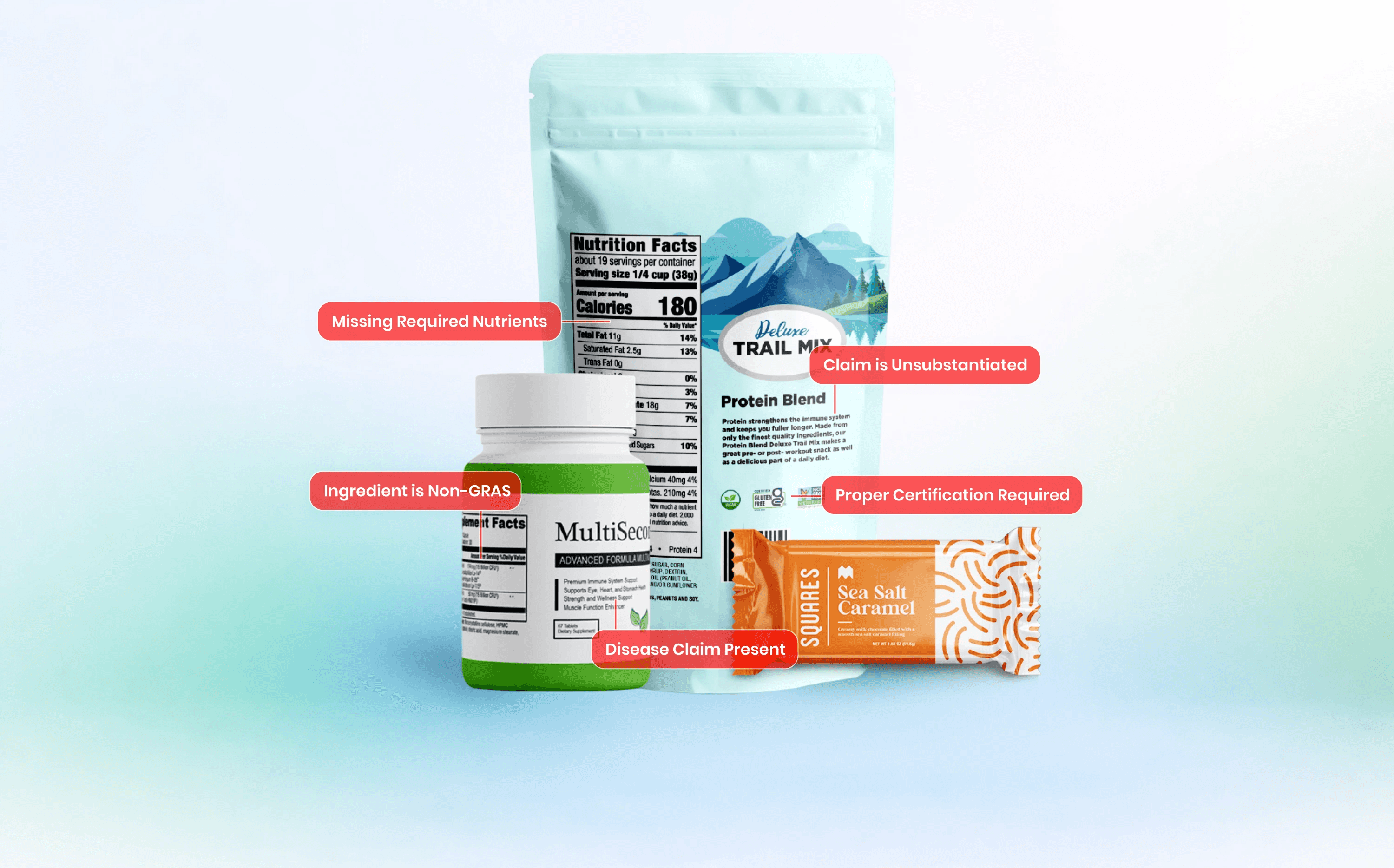
Mandatory-statement detection: Truli's AI agents flag whisky labels that need an age statement — under-4-year products and blends containing young stock — and verify bottled-in-bond exemptions against § 5.88
Youngest-spirit and format checks: Truli validates "____ years old" formats, blend percentage statements, adjacency to the § 5.71 neutral spirits statement, and reused-cooperage phrasing against the prescribed § 5.74 forms
Overstatement and conflict screening: Truli cross-checks stated age against the product's standard of identity, catching conflicts like "Aged 1 year" on a straight whisky
Marketing surface monitoring: Truli reviews websites, social content, and ad copy for age and maturity representations that § 5.235(c) prohibits when the label bears no age statement
Related Regulations
27 CFR Part 5 — TTB Distilled Spirits Labeling Requirements — The parent guide to all Part 5 labeling rules
27 CFR 5.143 — Whisky Types — Bourbon, Rye, and Single Malt — The whisky standards of identity that age statements must not contradict
Bottled in Bond Labeling — The 4-year, single-season, 100-proof standard that exempts whisky from mandatory age statements
27 CFR 5.71 — Neutral Spirits and Commodity Statements — The neutral spirits statement that blend age-and-percentage statements must sit adjacent to
27 CFR 5.66 — Name, Address, and State of Distillation — The companion origin-disclosure rule for American whisky
Frequently Asked Questions
Does time in the bottle or in stainless steel count toward age?
No. Age under § 5.74 is only the time stored in oak barrels between distillation and bottling — and for bourbon, rye, wheat, malt, and rye malt whisky (and most straight whiskies), only time in charred new oak counts.
My whisky is a blend of 6-year and 3-year barrels. What can the label say?
An age statement is mandatory because the product contains whisky under 4 years old, and it must state the age of the youngest whisky — "Aged 3 years." Labeling it 6 years, or omitting the age statement entirely, are both violations.
Can I round 3 years and 10 months up to 4 years?
No — that is an overstatement, which § 5.74(a) prohibits. You may state age in years, months, or days, so "Aged 46 months" is compliant, as is understating to "Aged 3 years."
A note from Truli: Truli is not a law firm, and this article does not constitute or contain legal advice or create an attorney-client relationship. When determining your obligations and compliance with respect to relevant laws and regulations, you should consult a licensed attorney.
Last updated: August 2026. Reflects 27 CFR 5.74 as of August 2026, including the December 2024 amendments (T.D. TTB-199). Truli monitors TTB rulemaking and enforcement. Book a demo to see how.
About

Truli is an AI compliance platform for food, beverage, and supplement brands. Automate FDA/FTC label reviews, claims validation, and post-market monitoring — 10x faster.


Platform
See Truli in action
If regulatory delays are consuming months and thousands in fees, see how Truli delivers fast and continuous compliance coverage at a fraction of the cost.
Book a demo