27 CFR 5.64 — Distilled Spirits Brand Name Rules
A brand name is the one piece of a spirits label that marketing owns outright — and 27 CFR 5.64 is the rule that constrains it. The section is short, but its misleading-impression standard reaches age cues, geographic references, and class/type suggestions embedded in the name itself. Brand names that clear trademark review still fail TTB review with some regularity.

Catherine Zhou
| Co-founder at Truli

27 CFR 5.64 governs brand names on distilled spirits labels under the post-2022 recodification of Part 5. It contains just two paragraphs — a requirement that every label bear a brand name, and a prohibition on misleading ones — but the second paragraph does an enormous amount of work. Because the brand name is usually the largest, most prominent text on the bottle, TTB reads it as a representation about the product, and a name that implies an age, origin, or class the spirits cannot support is a labeling violation no disclaimer buried in small print will reliably cure.
The Brand Name Requirement (§ 5.64(a))
Every distilled spirits label must include a brand name, and under § 5.63(a) that brand name must appear in the same field of vision as the class/type designation and alcohol content. Section 5.64(a) supplies a fallback for unbranded products: if the spirits are not sold under a brand name, the name of the bottler, distiller, or importer appearing in the name-and-address statement is treated as the brand name. In that case the same-field-of-vision placement obligation attaches to the company name, which otherwise could have appeared anywhere on the container.
The Misleading Brand Name Standard (§ 5.64(b))
Section 5.64(b) states the operative rule: labels may not include any misleading brand names, and a brand name is misleading if it creates — by itself or in association with other printed or graphic matter — any erroneous impression or inference as to the age, origin, identity, or other characteristics of the distilled spirits.
Three features of this standard deserve attention:
Context counts. The "in association with other printed or graphic matter" language means TTB evaluates the brand name together with the label's imagery, typography, and surrounding text. A neutral name paired with barrel imagery and an antique typeface can create an age impression the name alone would not.
Impressions, not falsehoods. The test is whether an erroneous impression or inference is created — the name does not have to be literally false. A truthful family surname that happens to match a famous distilling region can still mislead as to origin.
The four target categories. Age (implying maturation the product lacks), origin (implying a geographic source or producer that is not accurate), identity (implying a different class or type), and the catch-all "other characteristics."
The section offers one safety valve: a brand name that would otherwise be misleading may be qualified with the word "brand" or some other qualification, if the appropriate TTB officer determines the qualification actually dispels the misleading impression. This is a discretionary determination made in COLA review — producers cannot assume that appending "Brand" rescues a problematic name.
Class and Type Misimpressions
The "identity" prong is where brand names most often collide with the standards of identity in Subpart I. Every label must bear a class/type designation under § 5.141 that the product's composition and production actually support — and the brand name cannot pull against it. Classic patterns TTB scrutinizes:
A vodka dressed as a whiskey. A neutral spirit branded with a name and trade dress evoking bourbon country — barrel references, "old," "reserve," a distiller's-portrait aesthetic — invites an identity misimpression even though the class designation says "vodka." The designation states the truth; the brand name suggests otherwise; § 5.64(b) resolves the conflict against the brand name.
Age-implying names. Names incorporating years, "aged," "old," or specific date references imply maturation. For classes where age statements are regulated under § 5.74 — and prohibited entirely for neutral spirits under the misleading-statements framework — an age-flavored brand name can trigger a demand for substantiation or rejection.
Standard-of-identity terms inside names. Using a protected type term (such as "bourbon" or "single malt") inside a brand name for a product that does not meet that standard under § 5.143 is treated as a designation problem, not just a branding choice.
Geographic and Distinctive Names
Origin misimpressions overlap with the geographic-designation rules in § 5.154. Geographic names for distinctive types of spirits may not be applied to spirits produced elsewhere unless the label adds "type," "American," or another adjective indicating the true place of production in equally conspicuous lettering — and the product must actually conform to the spirits of that region. Names TTB has found generic (London dry gin, Geneva gin) are free to use; non-generic geographic names that are not distinctive types (Armagnac, Jamaica rum, Puerto Rico rum) may only designate spirits actually produced in those places. A brand name built on a geographic reference is evaluated against both § 5.64(b)'s origin prong and § 5.154 — a Kentucky-themed brand name on a whisky distilled elsewhere is a common rejection scenario, particularly given the state-of-distillation rules in § 5.66(f).
How Brand-Name Conflicts Surface in COLA Review
Brand names get checked at the worst possible time: after trademark clearance, naming sprints, and label design are done, when the finished label goes to TTB for a certificate of label approval under Part 13. TTB label specialists review the brand name against the class/type designation, the formula (where required), and the overall label impression. Outcomes range from approval, to approval conditioned on a qualifying statement, to rejection requiring a name change — the most expensive correction a label can need, since it can invalidate trademark filings, printed packaging, and distributor listings simultaneously. Producers entering the category should screen candidate names against § 5.64(b)'s four categories before trademark investment, not after.
How Truli Helps with Brand Name Compliance
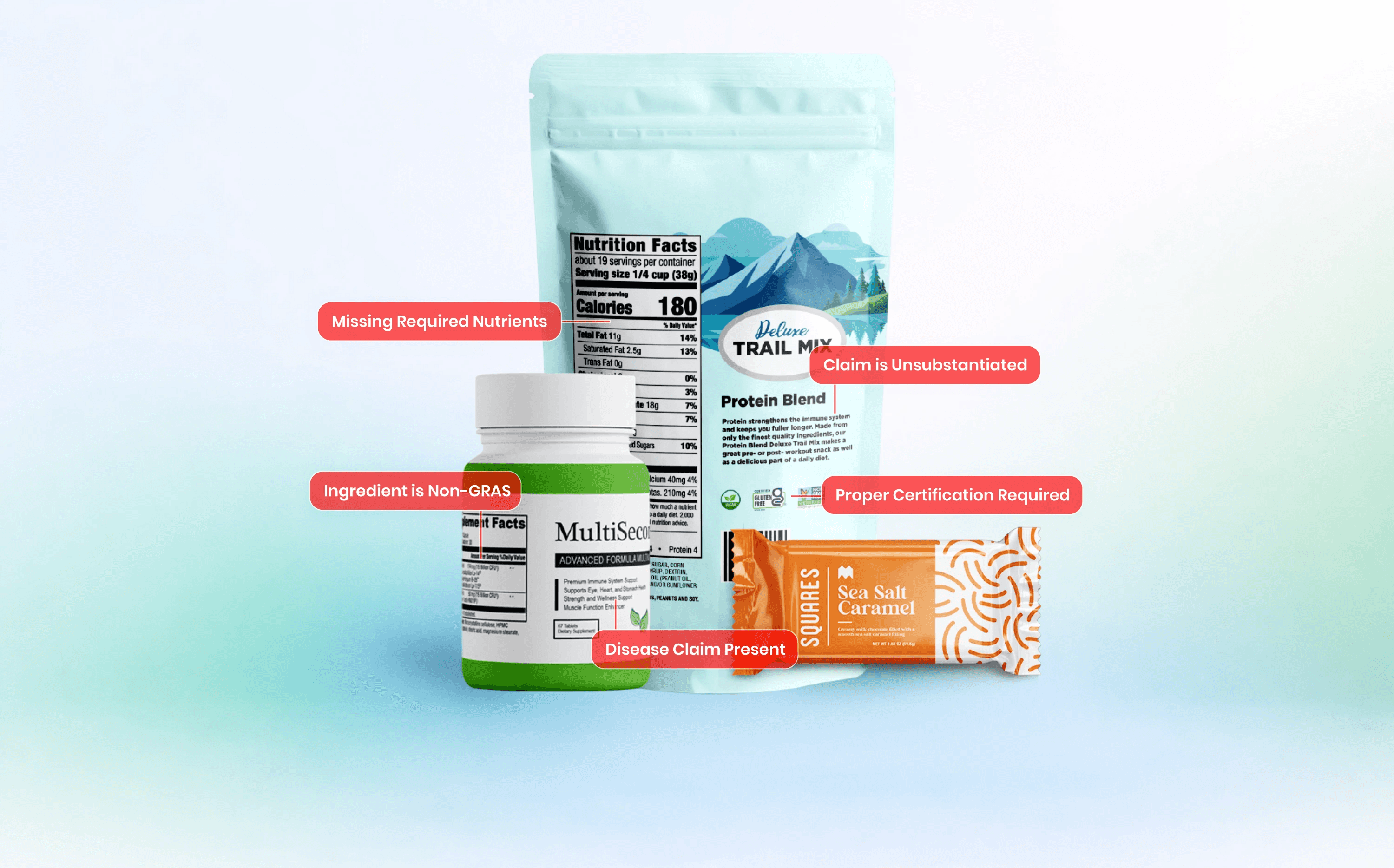
Misimpression screening: Truli's AI label scans evaluate brand names in context — name plus imagery plus surrounding claims — against § 5.64(b)'s age, origin, and identity prongs, citing the specific erroneous impression at issue
Class/type conflict detection: Truli cross-checks brand names against the labeled designation and the § 5.143 standards of identity, flagging names that suggest a class the product's composition cannot support
Geographic reference checks: Truli flags geographic terms in brand names and trade dress that conflict with § 5.154 or the § 5.66(f) state-of-distillation disclosure
COLA-readiness review: Truli's alcohol vertical screens candidate names and finished labels for the brand-name issues that drive TTB rejections, before artwork and trademark spend are committed
Related Regulations
27 CFR Part 5 — TTB Distilled Spirits Labeling Requirements — The parent guide to the full distilled spirits labeling framework
27 CFR 5.63 — Mandatory Spirits Label Information — Where the brand name must appear on the container
27 CFR 5.143 — Whisky and Bourbon Labeling — The type standards brand names most often collide with
Distilled Spirits Standards of Identity — The full class and type framework behind the identity prong
27 CFR Part 13 — COLA Label Approval — The review process where brand-name conflicts surface
Frequently Asked Questions
My product has no brand name — is that allowed?
Yes, but with a consequence. Under § 5.64(a), if spirits are not sold under a brand name, the bottler's, distiller's, or importer's name in the name-and-address statement is treated as the brand name — which means it must then appear in the same field of vision as the class/type designation and alcohol content under § 5.63(a).
Can I fix a misleading brand name by adding the word "brand"?
Sometimes. Section 5.64(b) allows a qualifying word such as "brand" only if the appropriate TTB officer determines the qualification actually dispels the misleading impression. It is a discretionary call made during label review, not an automatic cure — do not build a launch plan on the assumption it will be accepted.
A brand name cleared trademark — does that mean TTB will approve it?
No. Trademark clearance tests confusion with other marks; § 5.64(b) tests whether the name creates an erroneous impression about the spirits themselves — their age, origin, identity, or other characteristics. Names sail through one review and fail the other routinely, so screen against both standards before committing to packaging.
A note from Truli: Truli is not a law firm, and this article does not constitute or contain legal advice or create an attorney-client relationship. When determining your obligations and compliance with respect to relevant laws and regulations, you should consult a licensed attorney.
Last updated: August 2026. Reflects 27 CFR 5.64 as of August 2026. Truli monitors TTB rulemaking and enforcement. Book a demo to see how.
About

Truli is an AI compliance platform for food, beverage, and supplement brands. Automate FDA/FTC label reviews, claims validation, and post-market monitoring — 10x faster.

Platform
See Truli in action
If regulatory delays are consuming months and thousands in fees, see how Truli delivers fast and continuous compliance coverage at a fraction of the cost.
Book a demo