27 CFR 4.36 — Wine Alcohol Content Statements
Alcohol content is one of the most frequently miswritten statements on wine labels, and 27 CFR 4.36 leaves little room for improvisation. The section dictates the exact phrase, the permitted abbreviations, and a tolerance system that changes at the 14 percent line. It also contains a trap that catches many producers: the tolerance never excuses a statement that puts the wine in the wrong tax class.

Catherine Zhou
| Co-founder at Truli

27 CFR 4.36 sets the rules for stating alcohol content on labels of wine regulated under the Federal Alcohol Administration (FAA) Act — wine containing 7 to 24 percent alcohol by volume. The section answers three questions: when the statement is mandatory, what form it must take, and how far the actual alcohol content may deviate from the label. Because TTB verifies alcohol content both at label approval and through market compliance sampling, § 4.36 is among the most commonly enforced provisions in Part 4.
When Alcohol Content Must Be Stated
Under § 4.36(a), alcohol content must be stated on wines containing more than 14 percent alcohol by volume. For wine at 14 percent or less, the statement is optional — but only if the type designation "table" wine or "light" wine appears on the brand label as prescribed in § 4.32(a)(2). In other words, every wine label must communicate its alcohol category one way or the other: either a numeric statement or the "table"/"light" designation that signals the wine is at or under 14 percent.
In practice, nearly all producers state a numeric alcohol content even when it is optional, because many states require it and because distributors and retailers expect it. Once stated, an optional alcohol content statement must follow the same format and tolerance rules as a mandatory one — § 4.36(a) makes any statement of alcoholic content subject to paragraph (b).
Required Format and Abbreviations
Section 4.36(b) requires alcohol content to be stated in terms of percentage of alcohol by volume, and not otherwise. Proof statements, alcohol by weight, and invented formats are all off the table. Two formats are authorized:
Direct statement (§ 4.36(b)(1)): "Alcohol __% by volume" or a similar appropriate phrase
Range statement (§ 4.36(b)(2)): "Alcohol __% to __% by volume" or a similar appropriate phrase
If the words are abbreviated, the regulation prescribes the exact abbreviations: "alcohol" may be shown only as "alc." (or "alc"), and "volume" only as "vol." (or "vol"). "Alc. 13.5% by vol." complies; "13.5% ABV" standing alone does not follow the prescribed form, which is why TTB-approved labels consistently use the "alc./vol." construction.
Presentation is regulated separately under 27 CFR 4.38(b)(3): on containers of 5 liters or less, the alcohol content statement may be no smaller than 1 mm and no larger or more conspicuous than 3 mm, and may not be set off with a border or otherwise accentuated. TTB wants the number legible but not promotional.
Labeling Tolerances
TTB recognizes that alcohol content varies lot to lot, so § 4.36(b)(1) permits a tolerance between the stated and actual alcohol content of a direct statement — above or below the labeled figure:
Wine category | Tolerance (direct statement) | Maximum spread (range statement) |
|---|---|---|
More than 14% ABV | ± 1.0 percentage point | Not more than 2 percentage points |
14% ABV or less | ± 1.5 percentage points | Not more than 3 percentage points |
A table wine labeled 12.5% alc./vol. may lawfully measure anywhere from 11.0% to 14.0%. A dessert wine labeled 18% may measure 17% to 19%. Note that the tolerance is expressed in percentage points of alcohol by volume, not a relative percentage of the stated value.
Range Statements
The range format under § 4.36(b)(2) works differently. The label states a minimum and maximum ("Alcohol 11% to 13% by volume"), and the actual alcohol content must fall within the stated range — no tolerance is permitted below the minimum or above the maximum. The spread between the two figures is capped at 2 percentage points for wines over 14 percent and 3 percentage points for wines at 14 percent or less. Range statements are useful for multi-lot programs where alcohol varies between bottlings, but they trade away the tolerance cushion: the stated range is a hard boundary.
The Tax Class Boundary Rule
Section 4.36(c) is the provision that turns a rounding decision into a compliance problem. Regardless of the tolerances above, every alcohol content statement — required or optional — must definitely and correctly indicate the class, type, and taxable grade of the wine. A range statement may never overlap a prescribed alcohol content limitation for any class, type, or taxable grade, and a direct statement may never indicate the wine is within a limitation when in fact it is not.
The most important boundary is 14 percent, which separates table wine from dessert wine under the standards of identity in § 4.21 and also marks a federal excise tax line. A wine labeled 13.9% that actually measures 14.5% is out of compliance even though 0.6 points is within the 1.5-point tolerance, because the label claims a table wine and the bottle contains a dessert wine in a different taxable grade. The same logic applies at other class boundaries, such as the minimum alcohol contents for sherry (17 percent) and port or madeira (18 percent) under § 4.21(a)(6). The practical rule: the tolerance only operates within a tax class, never across one.
The "Table Wine" and "Light Wine" Option
For wines at 7 to 14 percent ABV, the designation "table" or "light" on the brand label substitutes for a numeric statement entirely. Section 4.21 defines table wine as grape wine having an alcoholic content not in excess of 14 percent by volume, and permits variants such as "light wine," "red table wine," and "sweet table wine." Producers who bottle at the same nominal strength year-round often prefer the numeric statement; producers with vintage variation sometimes rely on the "table wine" designation to avoid relabeling. Remember that the choice is only available at or under 14 percent — above that line, a numeric statement is mandatory.
The Proposed Alcohol Facts Rule
TTB has proposed — not finalized — an Alcohol Facts labeling rule (Notice No. 237, published January 2025) that would require a standardized panel disclosing alcohol content in percent alcohol by volume together with per-serving calories and nutrient information on wine, distilled spirits, and malt beverage labels. If finalized as proposed, alcohol content would effectively become mandatory on all wines, including those currently eligible for the "table wine" designation option, and would appear both in the existing § 4.36 statement and in the new panel. As of August 2026 this remains a proposed rule; § 4.36 as described above is the binding requirement. Wineries planning label refreshes should leave room for a facts panel but should not print one that conflicts with current format rules in the meantime.
How Truli Helps with Alcohol Content Compliance
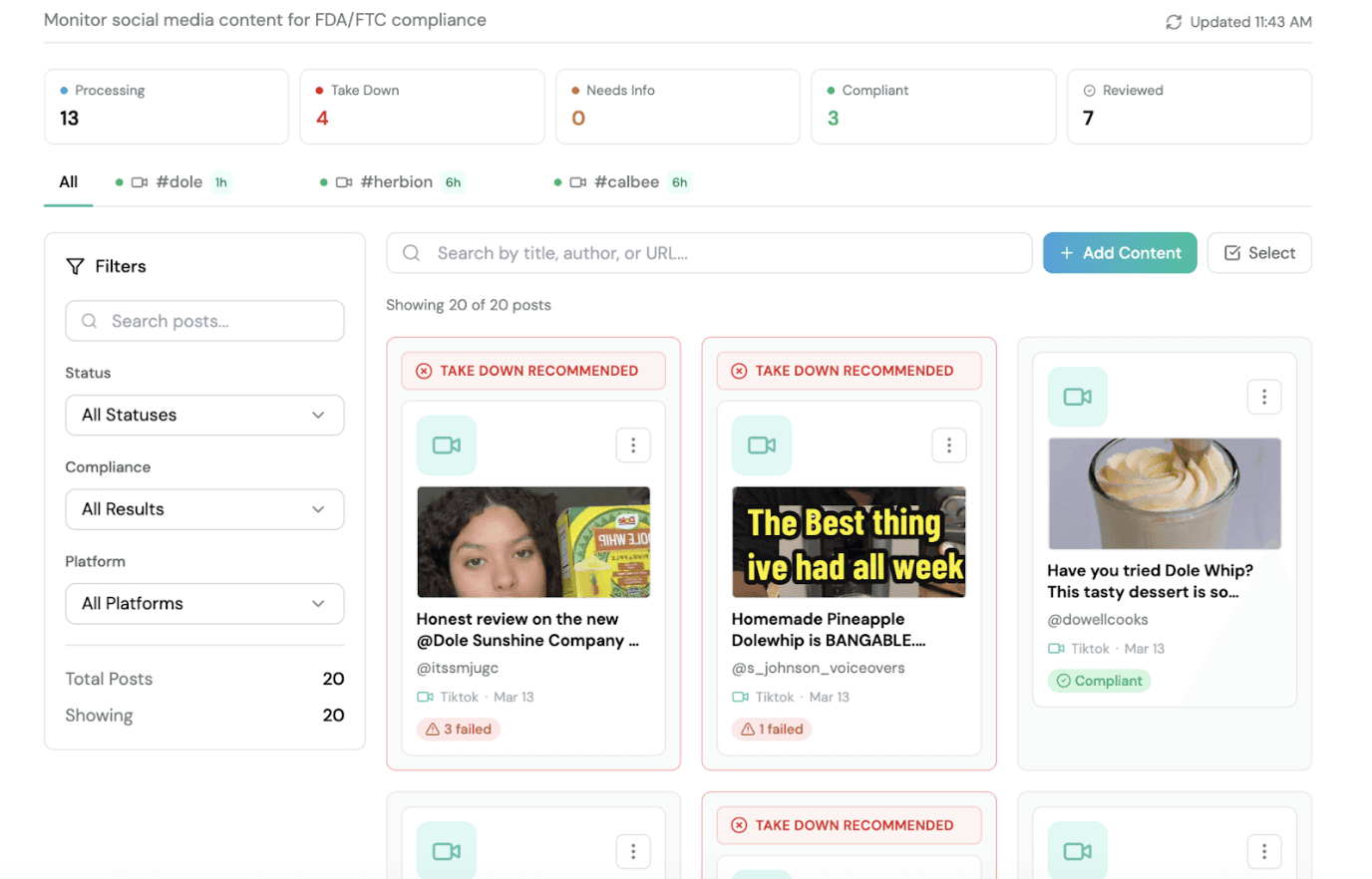
Format validation: Truli checks every wine label's alcohol statement against the § 4.36(b) formats, flagging nonconforming phrases and abbreviations that deviate from the prescribed "alc." and "vol." forms
Tolerance and tax class analysis: given your lab value, Truli confirms the stated content sits within the applicable 1.0 or 1.5 point tolerance and never crosses the 14 percent table/dessert boundary or a class minimum
Type size screening: Truli flags alcohol statements that appear larger than the 3 mm ceiling, smaller than the 1 mm floor, or visually accentuated contrary to § 4.38(b)(3)
Rulemaking monitoring: Truli tracks the proposed Alcohol Facts rule so your team knows when panel requirements become final and which SKUs need revision
Related Regulations
27 CFR Part 4 — TTB Wine Labeling Requirements — The full wine labeling framework this section belongs to
27 CFR 4.32 — Mandatory Wine Label Information — Where the alcohol content statement fits among the required label elements
27 CFR 4.34 — Wine Class and Type Designation — The designation rules that interact with the "table wine" option
27 CFR 4.38 — Wine Label Format, Legibility, and Type Size — The 1–3 mm type size rule for alcohol statements
27 CFR Part 16 — Health Warning Statement — The GOVERNMENT WARNING required alongside the alcohol statement
Frequently Asked Questions
Can I label my wine "13.5% ABV"?
The regulation prescribes "Alcohol __% by volume" or a similar appropriate phrase, with only "alc." and "vol." authorized as abbreviations. The conventional compliant renderings are "Alcohol 13.5% by volume" or "Alc. 13.5% by vol." A bare "ABV" abbreviation does not match the abbreviations § 4.36(b) authorizes, so stick to the prescribed forms.
My wine measured 14.3% but I labeled it 13.8%. Am I within tolerance?
No. Although 0.5 points is inside the 1.5-point tolerance for wines labeled at 14 percent or less, § 4.36(c) prohibits any statement indicating the wine is within a class or taxable grade limitation when it is not. At 14.3% actual, the wine is a dessert wine in a higher taxable grade; a 13.8% label misstates its class and tax status.
Do I have to state alcohol content at all on an 11% Riesling?
Not under federal law, provided the designation "table" wine or "light" wine appears on the brand label per § 4.36(a). Many producers state it anyway for state law and market reasons, and if the proposed Alcohol Facts rule is finalized, numeric disclosure is expected to become mandatory across the board.
A note from Truli: Truli is not a law firm, and this article does not constitute or contain legal advice or create an attorney-client relationship. When determining your obligations and compliance with respect to relevant laws and regulations, you should consult a licensed attorney.
Last updated: August 2026. Reflects 27 CFR 4.36 as of August 2026. Truli monitors TTB rulemaking and enforcement, including the pending Alcohol Facts proposal. Book a demo to see how.
About

Truli is an AI compliance platform for food, beverage, and supplement brands. Automate FDA/FTC label reviews, claims validation, and post-market monitoring — 10x faster.

Platform
See Truli in action
If regulatory delays are consuming months and thousands in fees, see how Truli delivers fast and continuous compliance coverage at a fraction of the cost.
Book a demo