27 CFR 4.32 — Mandatory Wine Label Information
Every TTB-regulated wine label is built around 27 CFR 4.32, the section that lists what must appear and where. It splits mandatory information between the brand label and any label on the container, and it houses the disclosure triggers — sulfites at 10 ppm, FD&C Yellow No. 5, and cochineal or carmine — that catch bottlers by surprise. This guide walks through every item and where the detailed rules live.

Catherine Zhou
| Co-founder at Truli

27 CFR 4.32 is the index section of TTB's wine labeling rules: it enumerates every piece of mandatory label information for wine between 7 and 24 percent alcohol by volume, assigns each item to a placement tier, and cross-references the section that defines how each item must be stated. When TTB reviews a certificate of label approval (COLA) application, § 4.32 is effectively the first checklist the label is scored against. This guide covers each requirement in the order the regulation lists them, plus the three ingredient-triggered disclosures — sulfites, FD&C Yellow No. 5, and cochineal extract or carmine — that live in the same section.
The Two Placement Tiers: Brand Label vs Any Label
Section 4.32 splits mandatory information into two tiers. Paragraph (a) lists what must appear on the brand label — the label carrying, in the usual distinctive design, the brand name, which in practice is the principal front label the consumer sees on the shelf. Paragraph (b) lists what must appear on any label affixed to the container, meaning a back label, strip label, or neck label satisfies the requirement just as well as the front.
This split matters in label design. A producer can move the name and address statement, net contents, and alcohol content to a back label to keep the front clean — but the brand name and the class, type, or other designation cannot leave the brand label. Getting an item in the wrong tier is a routine COLA correction.
Brand Label Requirements (§ 4.32(a))
Under § 4.32(a), the brand label must state:
Brand name, in accordance with § 4.33. Every wine must bear one; if the wine is not sold under a brand name, the name of the bottler or packer on the brand label is deemed the brand name. Section 4.33 also carries the misleading-brand-name standard — see the companion guide on wine brand name rules
Class, type, or other designation, in accordance with § 4.34 — the standard of identity from Subpart C, a varietal or other permitted substitute designation, or a statement of composition for non-standard wines. The full rules are covered in the companion guide on class and type designation
Foreign wine percentage — on blends consisting of American and foreign wines, if any reference is made to the presence of foreign wine, the exact percentage by volume must be stated (§ 4.32(a)(4)). A back label boast about "a touch of French wine" triggers a front-label percentage
Paragraph (a)(3) is reserved — an artifact of an earlier requirement that has since been removed.
Any-Label Requirements (§ 4.32(b))
Under § 4.32(b), the following must appear on some label on the container, front or back:
Name and address of the bottler, packer, or importer, in accordance with § 4.35 — including the strictly defined optional terms like "Produced by" and "Cellared by" covered in the companion guide on name and address statements
Net contents, in accordance with § 4.37. Note the placement exception: if the net contents is a standard of fill other than an authorized metric standard of fill prescribed in § 4.72, the net contents statement must appear on a label affixed to the front of the bottle
Alcohol content, in accordance with § 4.36 — mandatory for wines over 14 percent ABV, optional below that threshold when a "table" or "light" wine designation appears on the brand label
All mandatory information is additionally subject to the legibility, contrast, and minimum type-size rules of § 4.38 — generally 2 mm minimum type on containers over 187 mL and 1 mm on smaller containers.
FD&C Yellow No. 5 Disclosure (§ 4.32(c))
If FD&C Yellow No. 5 (tartrazine) is used as a coloring material in a wine product bottled on or after October 6, 1984, the label must state that the product contains FD&C Yellow No. 5. The statement may appear on the brand label or on a back label. The disclosure exists because of documented sensitivity reactions to tartrazine, and it parallels FDA's food-side declaration requirement. In practice this arises mostly in flavored and specialty wine products rather than conventional grape wine.
Cochineal Extract and Carmine Disclosure (§ 4.32(d))
For wine removed on or after April 16, 2013, that contains the color additive cochineal extract or carmine, § 4.32(d) requires a prominent and conspicuous statement using the respective common or usual name — for example, "Contains Cochineal Extract", "Contains Carmine", or "Contains Cochineal Extract and Carmine" if both are used. The statement may appear on a front, back, strip, or neck label. Like the Yellow No. 5 rule, this is an allergen-driven disclosure: cochineal-derived colors have caused severe allergic reactions, and TTB adopted the requirement in parallel with FDA's declaration rule for foods and cosmetics.
The Sulfite Declaration (§ 4.32(e))
The best-known § 4.32 disclosure is the sulfite statement. Where sulfur dioxide or a sulfiting agent is detected at a level of 10 or more parts per million, measured as total sulfur dioxide, the label must state "Contains sulfites", "Contains (a) sulfiting agent(s)", or a statement identifying the specific sulfiting agent. The declaration may appear on a front, back, strip, or neck label.
Three points trip up producers:
The trigger is detection, not addition. Fermentation naturally produces sulfur dioxide, so wines with no added sulfites routinely exceed 10 ppm total SO2. Omitting the declaration requires laboratory verification that the wine is below the threshold, and TTB expects supporting analysis
The threshold is total SO2, not free SO2 — the figure most winemakers track for stability is not the compliance figure
Because nearly all commercial wine exceeds 10 ppm, the declaration is effectively universal, and its absence on a COLA application is a common correction
The phase-in dates in § 4.32(e) — COLAs issued on or after January 9, 1987, wine bottled on or after July 9, 1987, and wine removed on or after January 9, 1988 — are now purely historical; every wine entering the market today is covered.
How § 4.32 Fits into COLA Review
Because § 4.32 consolidates the mandatory-information list, it is the natural organizing frame for a pre-submission label review: confirm the two brand-label items, confirm the three any-label items, then test each disclosure trigger against the wine's composition and analysis. Most § 4.32 findings are placement errors (a mandatory item missing from the brand label), omissions (no sulfite declaration), or format errors that actually live in the cross-referenced sections — which is why each item above links to the section that governs its wording.
How Truli Helps with Mandatory Label Information Compliance
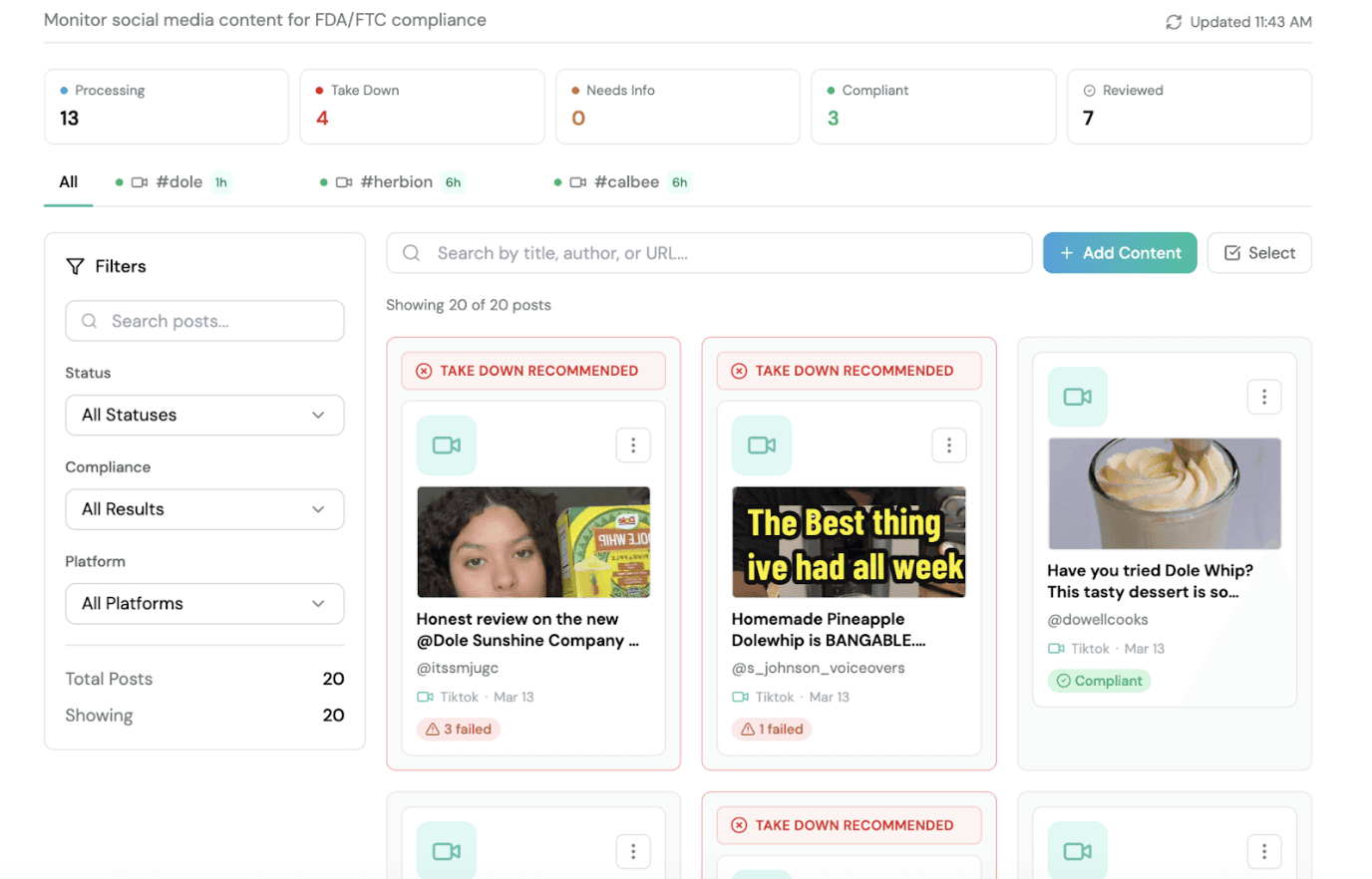
Full § 4.32 checklist scanning: Truli's AI label scans verify every mandatory item — brand name, class/type designation, name and address, net contents, and alcohol content — and cite the specific paragraph of § 4.32 and its cross-referenced section for each finding
Placement-tier checks: Truli distinguishes brand-label requirements from any-label requirements, flagging class/type designations or foreign-wine percentages that have drifted off the brand label
Disclosure trigger detection: Truli flags missing sulfite, FD&C Yellow No. 5, and cochineal/carmine statements based on the product's declared composition
COLA-readiness review: Truli runs the § 4.32 checklist as part of its pre-submission COLA check so labels arrive at TTB without the most common rejection triggers
Related Regulations
27 CFR Part 4 — TTB Wine Labeling Requirements — The full Part 4 overview this section belongs to
27 CFR 4.33 — Wine Brand Name Rules — The brand name requirement and misleading-name standard
27 CFR 4.34 — Wine Class and Type Designation — How the mandatory designation is chosen and stated
27 CFR 4.35 — Wine Name and Address Statements — Bottler, packer, and importer statements and the defined production terms
27 CFR 4.36 — Wine Alcohol Content — When alcohol content is mandatory and the labeling tolerances
Frequently Asked Questions
Which items must appear on the front (brand) label, and which can go on the back?
Only two items are locked to the brand label: the brand name and the class, type, or other designation (plus the foreign-wine percentage if a blend references foreign wine). Name and address, net contents, and alcohol content may appear on any label on the container — with one exception: net contents in a non-metric standard of fill must appear on a front label.
My wine has no added sulfites. Can I skip the "Contains sulfites" statement?
Only if laboratory analysis verifies total sulfur dioxide below 10 ppm. The § 4.32(e) trigger is detection, not addition — fermentation naturally produces SO2, so most "no sulfites added" wines still exceed the threshold and still need the declaration.
Do the color additive disclosures apply to ordinary grape wine?
Rarely. FD&C Yellow No. 5 and cochineal/carmine appear mostly in flavored, specialty, and formula wine products. But if either is used, the disclosure is mandatory — "Contains Carmine" style wording for cochineal-derived colors, and a contains-statement for Yellow No. 5 on the brand or back label.
A note from Truli: Truli is not a law firm, and this article does not constitute or contain legal advice or create an attorney-client relationship. When determining your obligations and compliance with respect to relevant laws and regulations, you should consult a licensed attorney.
Last updated: August 2026. Reflects 27 CFR 4.32 as of August 2026. Truli monitors TTB rulemaking and enforcement. Book a demo to see how.
About

Truli is an AI compliance platform for food, beverage, and supplement brands. Automate FDA/FTC label reviews, claims validation, and post-market monitoring — 10x faster.

Platform
See Truli in action
If regulatory delays are consuming months and thousands in fees, see how Truli delivers fast and continuous compliance coverage at a fraction of the cost.
Book a demo