Trustwell Genesis Alternatives — Beyond Nutrition Analysis
Trustwell Genesis — the nutrition analysis tool the industry still calls ESHA — is the default answer for generating Nutrition Facts panels. But brands searching for Genesis alternatives are usually asking a bigger question: which parts of label compliance does a nutrition database actually cover, and what handles the rest?

Catherine Zhou
| Co-founder at Truli

Trustwell Genesis is the most established nutrition analysis platform in the food industry. ESHA Research built the category, and after ESHA merged with FoodLogiQ in 2022 and rebranded as Trustwell in 2023, Genesis became the flagship formulation and labeling product of the combined company. If your need is calculating a nutrient profile from a formulation and producing an FDA-format Nutrition Facts panel, Genesis has decades of database depth behind it.
But nutrition analysis is one slice of label compliance. Genesis calculates what goes in the panel — it doesn't evaluate whether the claims on your label are legally permissible, whether your allergen declarations are complete, or whether your website and Amazon listing say things your label can't support. Brands evaluating Genesis alternatives are usually trying to close one of those gaps, reduce cost, or both.
Here's how the alternatives compare, organized by the problem each one actually solves.
What Trustwell Genesis Does Well
Genesis is a formulation-based nutrition analysis tool. Its core capabilities:
Nutrient calculation — computes complete nutrient profiles from recipe formulations using a large, professionally maintained ingredient database
Nutrition Facts and Supplement Facts panel generation — produces FDA-format panels that reflect current regulatory formats
Formulation management — tracks recipes, versions, and the downstream effect of ingredient changes on label data
Supply chain integration — since the FoodLogiQ merger, Genesis connects into Trustwell's supplier compliance and traceability products
For food manufacturers running lab-grade nutrition analysis across a large portfolio, Genesis remains the industry standard. The reasons brands look elsewhere are usually specific: the licensing cost is significant for small teams, the learning curve is steep, and — most importantly — panel generation is where Genesis stops.
What a Nutrition Analysis Tool Doesn't Cover
A Nutrition Facts panel that is mathematically accurate can still sit on a non-compliant label. Genesis doesn't evaluate:
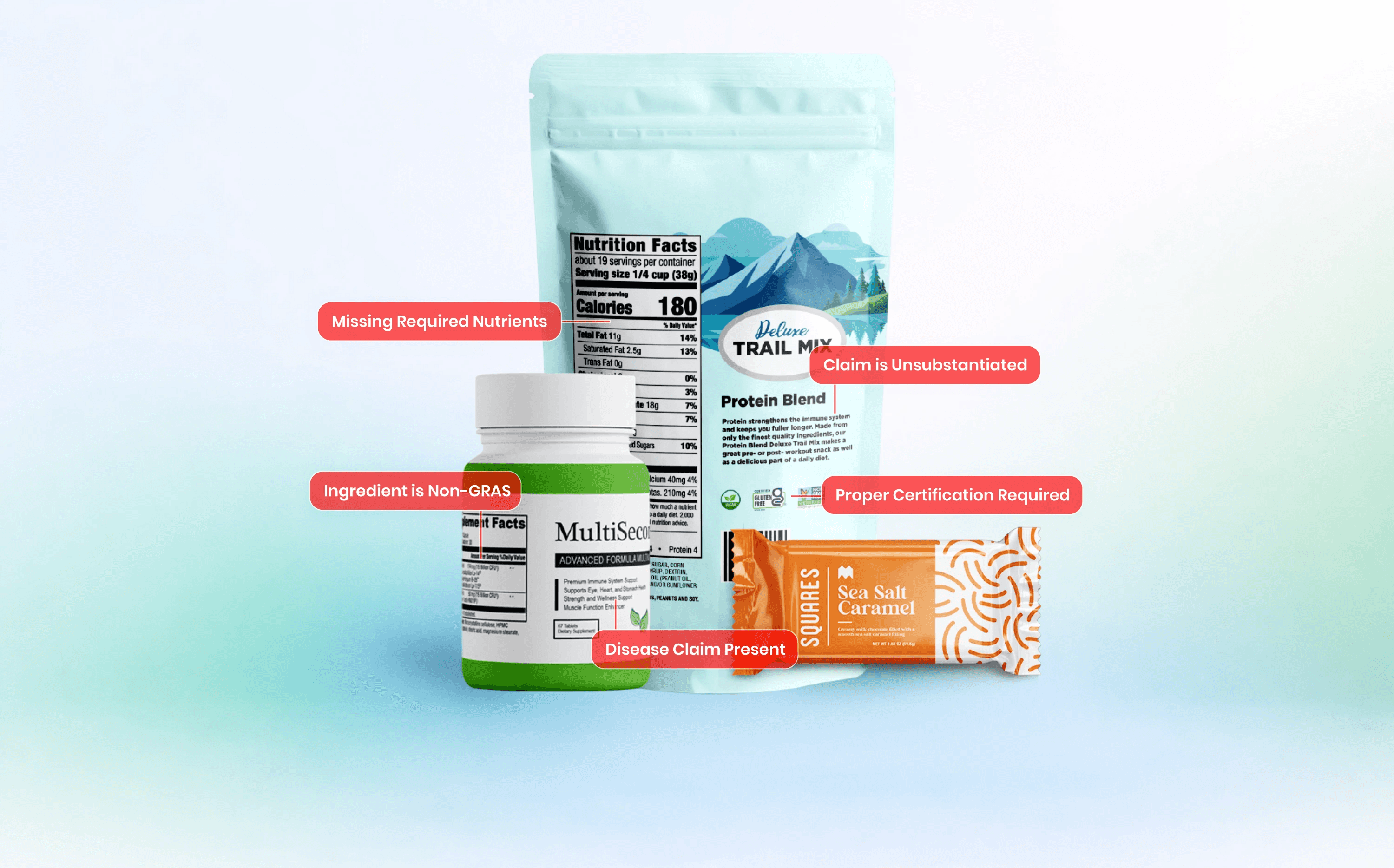
Claims compliance — whether "immune support," "clinically proven," or "heart healthy" language is permissible under FDA's structure/function, health claim, and nutrient content claim frameworks
Disease claim exposure — the implied disease claims that drive FDA warning letters
Required element verification — statement of identity, net quantity placement, information panel grouping, allergen declaration completeness under FALCPA and the FASTER Act
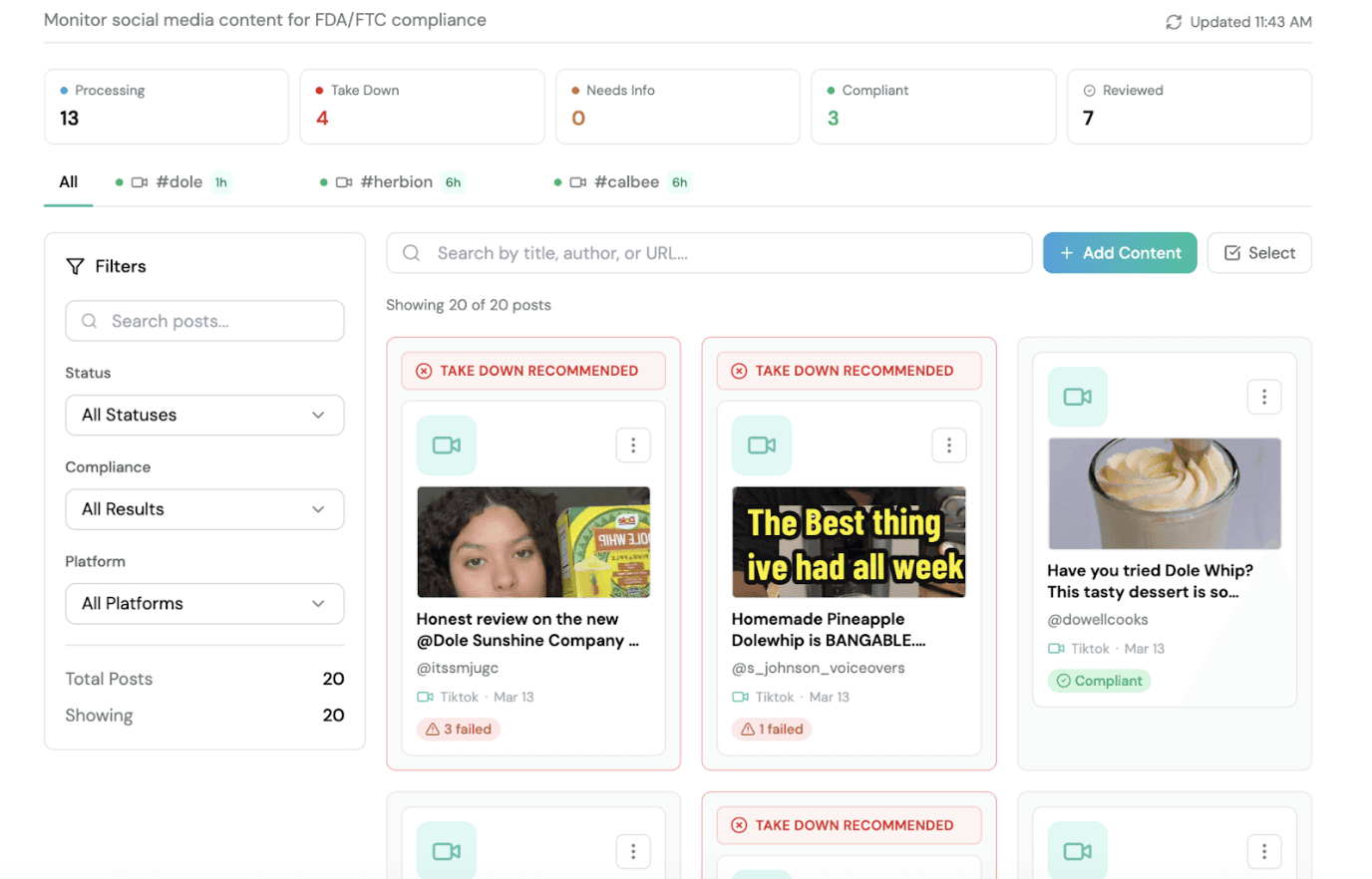
Marketing channel compliance — website copy, Amazon listings, and social content, where FDA and FTC enforcement is most active
If those are the risks you're trying to manage, the alternative to Genesis isn't another nutrition database — it's a different category of tool.
1. Truli — Best for AI Label and Claims Compliance Review
Truli is an AI-native compliance platform that audits finished labels, packaging, and marketing copy against FDA and FTC requirements. Instead of calculating nutrition data from a formulation, Truli scans the label you've built — wherever it was built — and flags violations with the specific regulation cited and a suggested fix.
Truli's multi-agent workflow checks required elements under 21 CFR Part 101, evaluates every claim against the applicable framework (structure/function claims and the 21 CFR 101.93 disclaimer for supplements, nutrient content and health claims for foods), scans ingredient lists against the nine declared allergens, and verifies rounding and format rules in the Nutrition Facts or Supplement Facts panel itself. The same analysis runs on websites, Amazon listings, ads, and influencer content.
Because regulation text is retrieved at review time rather than baked into a static ruleset, findings reflect current rules — current Daily Values, the current "healthy" definition, current enforcement patterns.
Best for: Food and supplement brands whose primary risk is claims and label compliance across packaging and digital channels — used alongside, not instead of, a nutrition calculation workflow.
2. LabelCalc — Best Budget Nutrition Analysis for Small Brands
LabelCalc, built by FoodCalc, is the most direct lower-cost alternative to Genesis for the panel-generation use case. It's an online recipe analysis tool with a USDA-based database of more than 18,000 ingredients that outputs FDA-format Nutrition Facts panels in vertical, tabular, and linear formats.
For a startup or small food company that needs a compliant-format panel without lab analysis or enterprise software licensing, LabelCalc covers the core job. The tradeoff against Genesis is database depth, formulation management, and integration — LabelCalc is a label generator, not a formulation platform.
Best for: Small and mid-size food companies that need affordable, database-driven Nutrition Facts panels without enterprise PLM features.
3. FoodChain ID (gComply) — Best for Global Regulatory Research
FoodChain ID's gComply is a regulatory content library covering food labeling and ingredient regulations across more than 220 countries. Where Genesis answers "what are the nutrient values," gComply answers "what does this market's regulation require" — additive permissions, contaminant limits, standards of identity, labeling requirements by jurisdiction.
It's a research platform for regulatory professionals rather than a label review tool: it gives your team the rule text and market comparisons, and your team applies them to the product.
Best for: Manufacturers exporting into many international markets who need authoritative, country-by-country regulatory intelligence.
4. Trace One Devex — Best Enterprise PLM with Compliance Framework
Trace One acquired Selerant in 2022, bringing the Devex PLM platform into its portfolio. Devex manages the full product lifecycle for process manufacturers — formulation, specifications, supplier data, and regulatory documentation — with compliance checks embedded in the development workflow.
For a large CPG organization, Devex competes less with Genesis's nutrition analysis and more with the entire Trustwell platform: it's a system-of-record decision, typically a significant implementation. It is not a fit for small teams looking for a lighter Genesis replacement.
Best for: Enterprise food, beverage, and cosmetics manufacturers standardizing product development and compliance data in one PLM system.
Comparison Summary
Tool | Nutrition analysis | Panel generation | Claims compliance review | Marketing channel coverage | Typical buyer |
|---|---|---|---|---|---|
Trustwell Genesis | ✓ | ✓ | ✗ | ✗ | Mid-size to enterprise food manufacturers |
Truli | ✗ | ✗ | ✓ | ✓ | Food and supplement brands, SMB to enterprise units |
LabelCalc | ✓ | ✓ | ✗ | ✗ | Small food companies |
FoodChain ID gComply | ✗ | ✗ | Research only | ✗ | Global regulatory teams |
Trace One Devex | ✓ | ✓ | Partial (workflow) | ✗ | Enterprise process manufacturers |
How to Choose
Match the tool to the gap. If Genesis's cost is the issue but the job is still panel generation, LabelCalc is the pragmatic swap. If you're scaling into international markets, gComply solves a problem Genesis never claimed to. If you're an enterprise consolidating product data, the Devex-versus-Trustwell decision is a PLM evaluation.
And if the question keeping you up at night is whether your label, website, and creator content will survive an FDA reviewer — that's not a nutrition analysis problem. That's the problem Truli was built for, and it's the gap that generates warning letters regardless of which nutrition database produced your panel.
See what a claims-level review catches
Run a label that Genesis or LabelCalc helped build through Truli and see what a claims-level compliance review surfaces — disease claim exposure, missing required elements, and marketing copy that exceeds what the label supports. Book a demo to scan your own products.
A note from Truli: Truli is not a law firm, and this article does not constitute or contain legal advice or create an attorney-client relationship. When determining your obligations and compliance with respect to relevant laws and regulations, you should consult a licensed attorney.
About

Truli is an AI compliance platform for food, beverage, and supplement brands. Automate FDA/FTC label reviews, claims validation, and post-market monitoring — 10x faster.


Platform
See Truli in action
If regulatory delays are consuming months and thousands in fees, see how Truli delivers fast and continuous compliance coverage at a fraction of the cost.
Book a demo