Truli vs LabelCalc — Which Tool Does Your Food Brand Need
Truli and LabelCalc both serve small food brands trying to avoid expensive consultants — which is why they get compared. But they do opposite halves of the labeling job: LabelCalc builds your Nutrition Facts panel, and Truli audits whether everything on your label and marketing is legally compliant.

Catherine Zhou
| Co-founder at Truli

For a small food company, the two most common labeling questions are "how do I get an accurate Nutrition Facts panel without paying a lab?" and "how do I know my label won't get me in trouble with FDA?" LabelCalc answers the first question. Truli answers the second. Brands frequently search for them as if they're substitutes — they're complements, and understanding the split will save you from buying the wrong tool for your actual risk.
What LabelCalc Does
LabelCalc, made by FoodCalc, is an online nutrition analysis tool aimed at small and mid-size food manufacturers. You enter your recipe, and it calculates the nutrient profile from a USDA-based database of more than 18,000 ingredients — no lab analysis required for most standard formulations. From there it generates FDA-format Nutrition Facts panels in the standard layout options (vertical, tabular, linear), plus an ingredient statement and allergen listing derived from your recipe inputs.
The pitch is speed and cost: a database-driven panel for a fraction of what lab analysis or consultant-built labels cost, with guided workflows in place of regulatory expertise. For a food startup heading to a farmers market, a co-packer, or a first retail order, that's usually the first labeling purchase.
What Truli Does
Truli is an AI compliance platform that reviews the label you've built — and everything you publish about the product — against FDA and FTC regulations. Upload a label, and specialized AI agents check it in parallel:
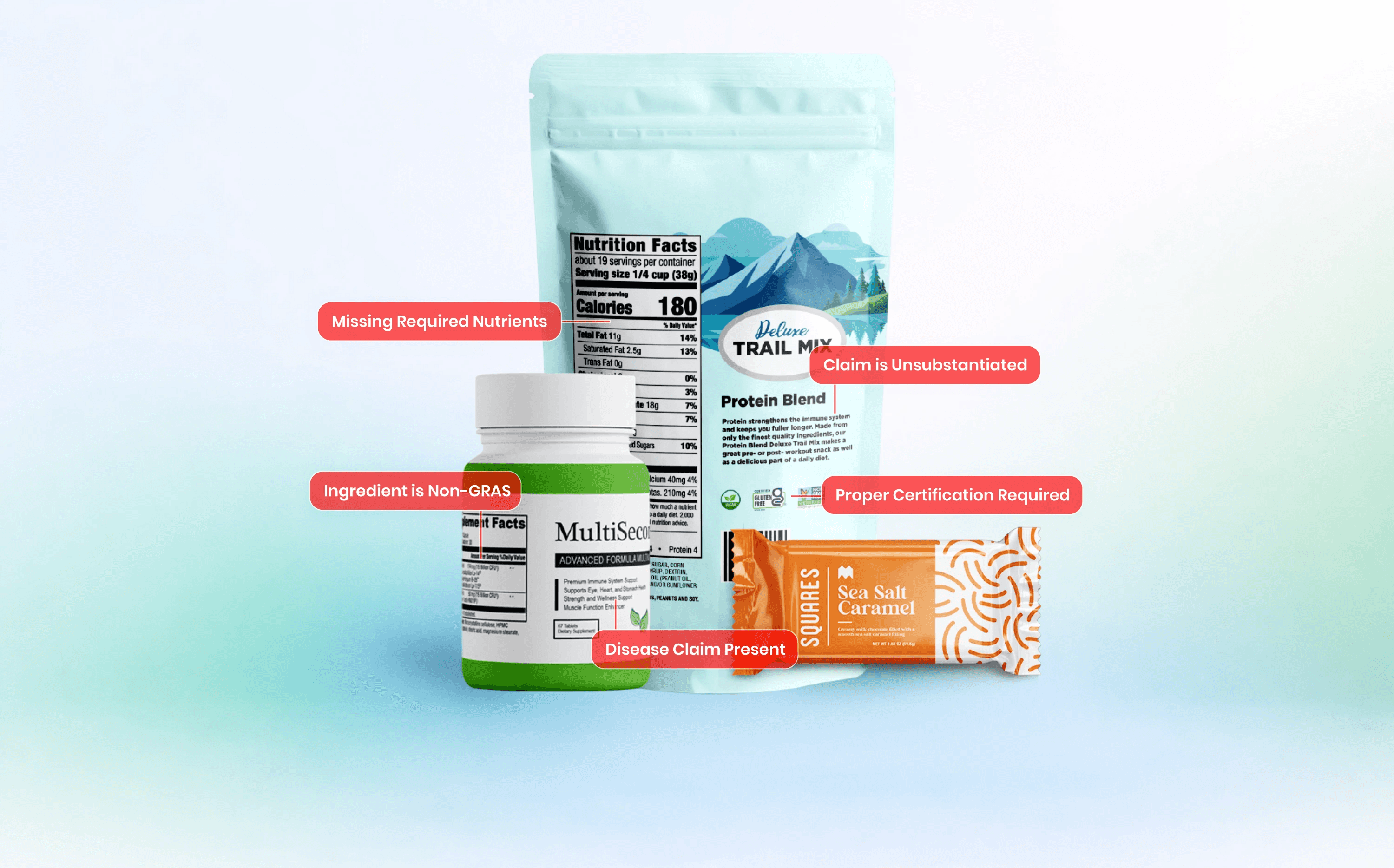
Required elements — statement of identity, net quantity, name and place of business, information panel placement under 21 CFR Part 101
Panel format and rounding — whether the Nutrition Facts or Supplement Facts panel follows FDA's format and rounding rules
Claims analysis — every nutrient content claim, health claim, and benefit statement evaluated against the framework that governs it, with implied disease claims flagged
Allergen declarations — ingredient lists screened against the nine declared allergens, including sesame under the FASTER Act
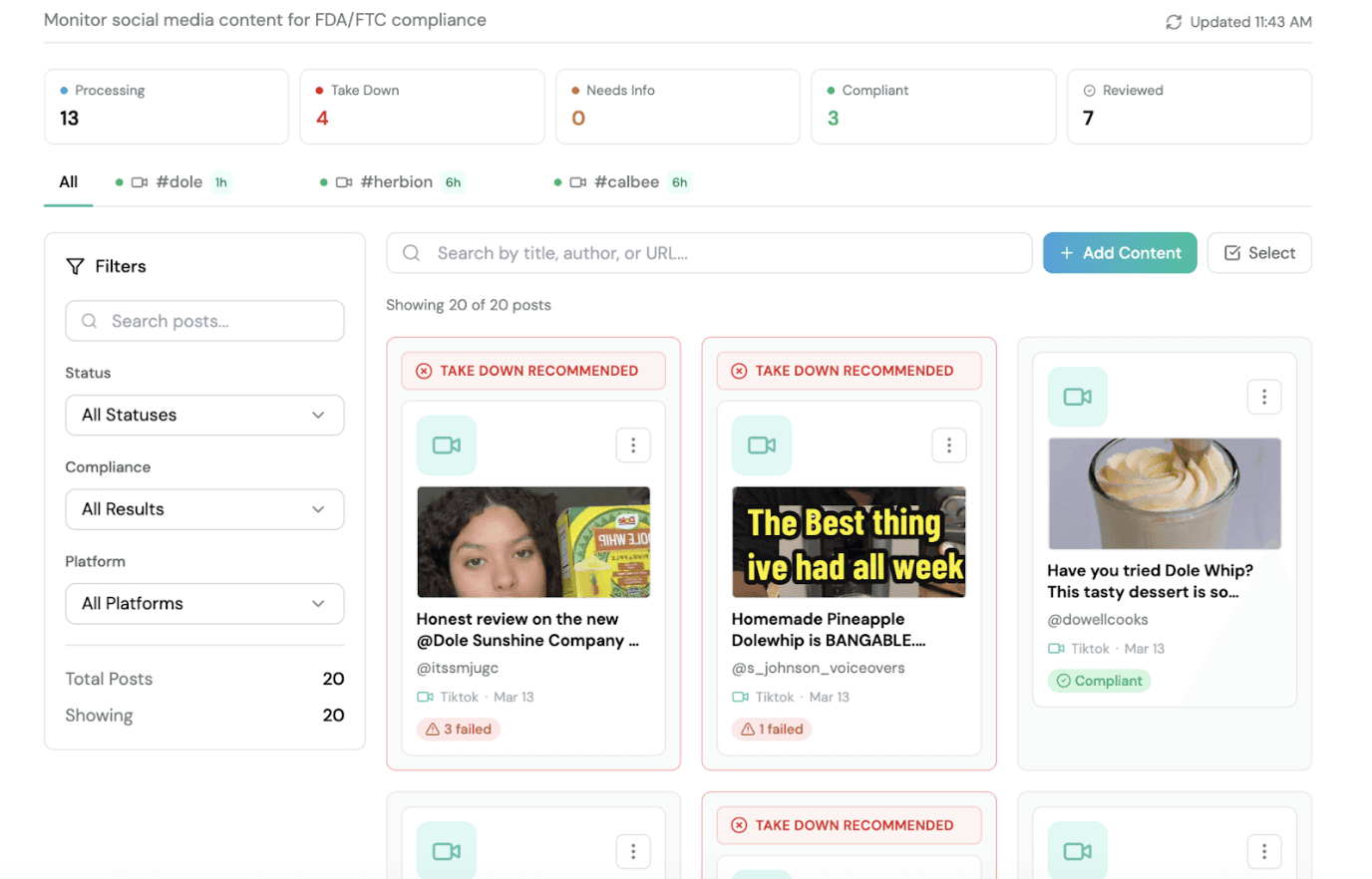
Marketing channels — the same review applied to your website, Amazon listing, ads, and social content
Each finding cites the specific regulation and suggests a compliant fix. Truli doesn't calculate nutrition data from your recipe — it evaluates whether what you're presenting to consumers and regulators is permissible.
The Core Distinction
LabelCalc helps you create one required element of your label: the Nutrition Facts panel and its supporting declarations. Truli audits the entire label and marketing surface for regulatory violations.
The distinction matters because the panel is rarely what triggers enforcement. FDA warning letters and class action lawsuits overwhelmingly target claims — "immunity boosting," "all natural," "supports healthy blood sugar" — plus missing required elements and undeclared allergens. A perfectly calculated panel does nothing to protect the front of the pack, and it says nothing about your website.
The inverse is also true: Truli will flag a panel that violates FDA's rounding or format rules, but it won't compute your calories from a recipe. If you don't have nutrition data yet, you need a nutrition analysis step first — LabelCalc, a lab, or a consultant.
Head-to-Head Comparison
Capability | Truli | LabelCalc |
|---|---|---|
Nutrition analysis from recipe | ✗ | ✓ |
Nutrition Facts panel generation | ✗ | ✓ |
Ingredient statement generation | ✗ | ✓ |
Panel format and rounding review | ✓ | Partial (its own output) |
Required element verification | ✓ | ✗ |
Claims compliance analysis | ✓ | ✗ |
Disease claim detection | ✓ | ✗ |
Allergen declaration review | ✓ | Recipe-based only |
Website and Amazon review | ✓ | ✗ |
Social and influencer monitoring | ✓ | ✗ |
Supplement Facts / DSHEA coverage | ✓ | ✗ |
Which One Small Brands Should Buy First
If you're pre-launch with no nutrition data, start with nutrition analysis — you can't finish a label without a panel. LabelCalc is one of the most affordable ways to get there for standard food formulations.
If you have a finished or near-finished label, the higher-stakes question is whether it's compliant. This is where brands get blindsided: the co-packer approved the artwork, the designer followed a template, and nobody with regulatory knowledge ever reviewed the claims. A compliance review before printing costs a fraction of a reprint — and far less than responding to a warning letter or a retailer delisting.
Supplement brands have a simpler answer: LabelCalc is built for conventional food Nutrition Facts, not Supplement Facts panels or DSHEA's claim rules, so the compliance review is the relevant purchase.
Using Both Together
The clean workflow for a small food brand: formulate, run the recipe through LabelCalc to produce the panel and ingredient statement, place them into your label design, then scan the finished label — and your website and listings — with Truli before anything goes to print or publish. Analysis tools build the inputs; the compliance review protects the output. Neither substitutes for the other, and together they replace most of what brands used to pay consultants for at both stages.
Check the label before it prints
A Truli scan takes minutes and flags the issues that actually generate FDA letters, lawsuits, and retailer rejections — with the regulation cited for every finding. Book a demo and run your current label through it before the next print run.
A note from Truli: Truli is not a law firm, and this article does not constitute or contain legal advice or create an attorney-client relationship. When determining your obligations and compliance with respect to relevant laws and regulations, you should consult a licensed attorney.
About

Truli is an AI compliance platform for food, beverage, and supplement brands. Automate FDA/FTC label reviews, claims validation, and post-market monitoring — 10x faster.

Platform
See Truli in action
If regulatory delays are consuming months and thousands in fees, see how Truli delivers fast and continuous compliance coverage at a fraction of the cost.
Book a demo