Thyroid Supplement Claims - FDA Rules, Prohibited Disease Language, and High-Risk Ingredients
Thyroid health supplements are commercially significant and among the most claim-sensitive products in the supplement industry. Hypothyroidism affects an estimated 20 million Americans. The marketing instinct — to speak directly to that consumer need — produces claims that almost uniformly qualify as disease claims under FDA's 21 CFR 101.93(g) framework. Understanding exactly where the line falls is essential for any brand in this category.

Michael Wu
| Co-founder at Truli

The thyroid is a hormone-producing organ whose dysfunction (hypothyroidism and hyperthyroidism) constitutes named diseases managed with prescription medications. Any supplement claim that implies the product treats, manages, or corrects thyroid dysfunction is a disease claim. The compliance challenge is that even modest language — "supports thyroid function" paired with certain marketing contexts — can cross the line.
What FDA Permits for Thyroid Claims
Under 21 CFR 101.93(f), permissible structure/function claims for thyroid support supplements include:
"Supports healthy thyroid function"
"Promotes healthy thyroid hormone production"
"Supports healthy iodine levels for thyroid health"
"Promotes healthy metabolism" (when not thyroid-disease-specific)
"Supports healthy energy levels"
"Promotes healthy thyroid gland function"
These claims describe support for normal thyroid physiology in healthy individuals. They don't imply treatment of hypothyroidism, hyperthyroidism, Hashimoto's disease, or Graves' disease.
Where Thyroid Claims Cross the Line
Prohibited disease claims:
"For people with hypothyroidism" — targeting a disease population
"Helps with an underactive thyroid" — "underactive thyroid" is clinical terminology for hypothyroidism
"Supports thyroid function in people with Hashimoto's" — named autoimmune disease
"Helps regulate thyroid hormones" — regulation of dysregulated thyroid hormones implies treatment
"For thyroid patients" — marketing to people with a diagnosed condition
"Reduces thyroid antibodies" — thyroid antibody levels are a disease biomarker
"Natural alternative to Synthroid" or "natural alternative to levothyroxine" — direct drug comparison for a named disease treatment
"Reduces symptoms of hypothyroidism" — symptom treatment of a named disease
The "underactive thyroid" framing is the most common violation
FDA warning letters and FTC actions for thyroid supplements consistently cite consumer-directed language about "underactive thyroid," "sluggish thyroid," and "thyroid problems" — which are layperson descriptions of hypothyroidism. Using these terms in marketing materials — even if the label itself says "supports healthy thyroid function" — creates an implied disease claim under the full-context evaluation in 21 CFR 101.93(g).
High-Risk Ingredients in Thyroid Supplements
Iodine and iodide: Iodine is an essential nutrient required for thyroid hormone synthesis. At appropriate supplemental doses, iodine is a legitimate dietary supplement ingredient. At high doses, iodine can cause both hypothyroidism and hyperthyroidism. Products providing very high iodine doses (above the Tolerable Upper Intake Level of 1,100 mcg/day for adults) carry safety concerns, and brands making thyroid claims for high-iodine products face heightened scrutiny.
Desiccated thyroid (bovine or porcine): Desiccated thyroid glandular products are a category where ingredient legality intersects with claim compliance. Products containing actual thyroid gland tissue (as opposed to support nutrients) may be classified as drugs if they contain active thyroid hormone. FDA has taken action against products containing thyroid hormones marketed as dietary supplements.
Ashwagandha: Has evidence for effects on thyroid hormone levels (T3 and T4) in some studies. This creates thyroid-specific claim risk alongside the adaptogen claim risks — "supports healthy thyroid hormone levels already within the normal range" is the permissible framing.
Selenium: An essential cofactor for thyroid hormone conversion (T4 to T3). Structure/function claims about selenium supporting thyroid hormone metabolism are potentially permissible at appropriate doses. Claims about correcting selenium deficiency as a thyroid disease intervention are higher-risk.
Marketing Context as the Compliance Trigger
Thyroid supplement brands frequently market to thyroid patient communities — Facebook groups for Hashimoto's patients, forums for people on Synthroid seeking natural alternatives, and social media content targeting people "struggling with thyroid issues." This marketing context — even when the label claim is "supports healthy thyroid function" — converts the label claim into an implied disease claim for a thyroid disease population. The contextual disease claim analysis under 21 CFR 101.93(g)(2) evaluates the full marketing context, not just the label text.
Thyroid supplements require the tightest claim controls in the endocrine health category
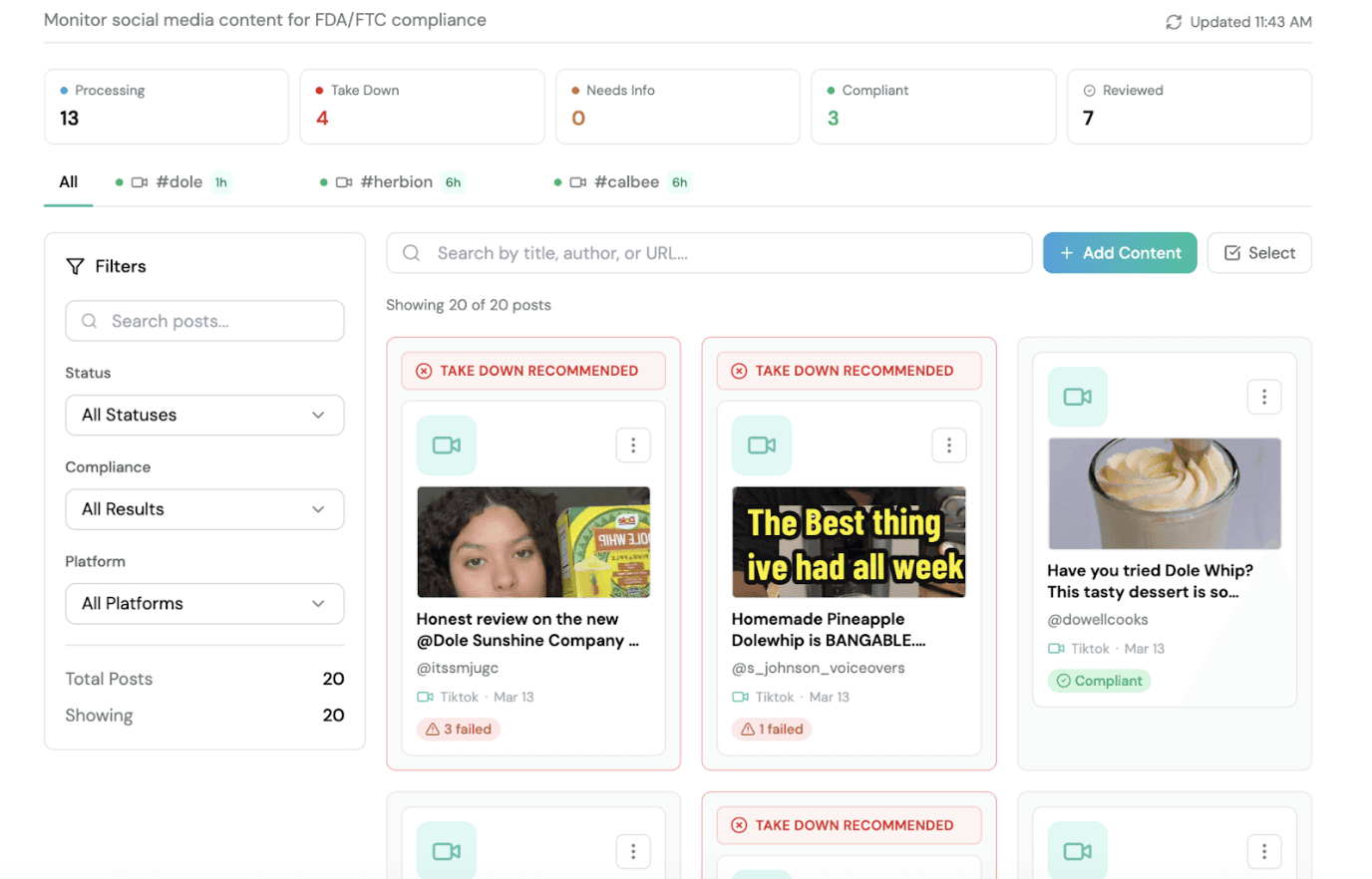
Truli scans thyroid supplement labels, websites, and social media content for disease population targeting (hypothyroidism, Hashimoto's, underactive thyroid), drug comparisons (levothyroxine, Synthroid), and high-iodine ingredient safety issues — identifying the claim and ingredient risks that most frequently trigger FDA enforcement in this category.
A note from Truli: Truli is not a law firm, and this article does not constitute or contain legal advice or create an attorney-client relationship. When determining your obligations and compliance with respect to relevant laws and regulations, you should consult a licensed attorney.
About

Truli is an AI compliance platform for food, beverage, and supplement brands. Automate FDA/FTC label reviews, claims validation, and post-market monitoring — 10x faster.

Platform
See Truli in action
If regulatory delays are consuming months and thousands in fees, see how Truli delivers fast and continuous compliance coverage at a fraction of the cost.
Book a demo