THC Beverages — The November 2026 Federal Hemp Deadline
The hemp-derived THC beverage boom is running into a federal wall. The spending bill signed November 12, 2025 redefines hemp to cap total THC at 0.4 milligrams per container — a threshold that outlaws essentially every THC seltzer on the market — effective November 12, 2026. Here's the compliance picture for beverage brands.

Catherine Zhou
| Co-founder at Truli
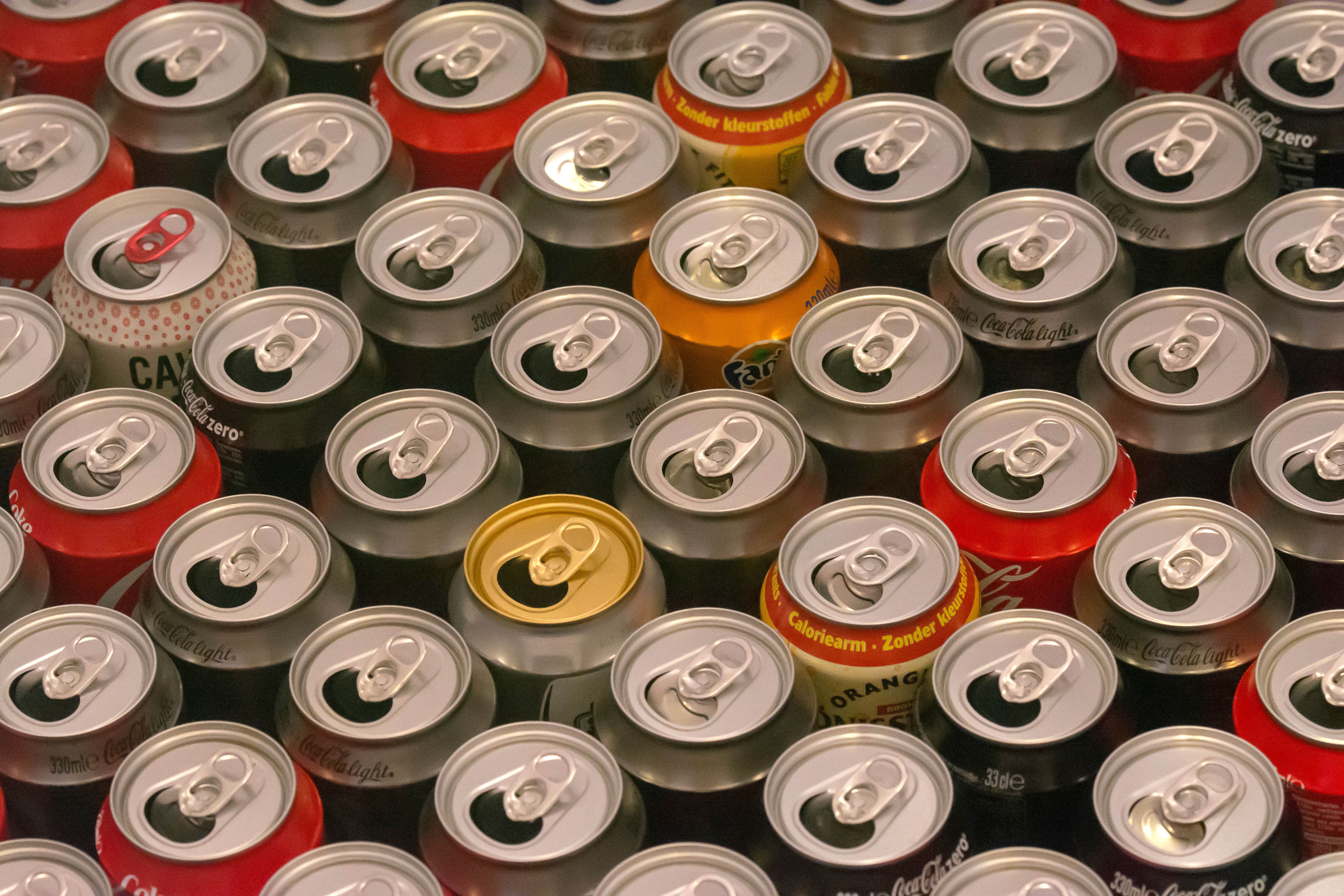
Hemp-derived THC beverages went from legal gray area to mainstream shelf space faster than any beverage category in memory — sold in liquor stores, ordered online, stocked next to hard seltzer. The entire category stood on one sentence in the 2018 Farm Bill: products from hemp containing no more than 0.3% delta-9 THC on a dry-weight basis weren't marijuana under federal law. Applied to a 12-ounce can, that percentage allowed a genuinely intoxicating dose.
Congress closed that door. The FY 2026 appropriations package (H.R. 5371), signed November 12, 2025, rewrites the federal definition of hemp — and starts a one-year countdown that ends November 12, 2026.
What the New Federal Law Does
The provision makes the most consequential change to federal hemp policy since the 2018 Farm Bill:
A 0.4 mg total THC cap per container. Final consumer products containing more than 0.4 milligrams of total THC — measured across THC variants, not just delta-9 — no longer qualify as hemp. For reference, most THC seltzers contain 2 to 10 mg per can.
A ban on synthetic and manufactured cannabinoids. Cannabinoids synthesized or converted outside the plant — the delta-8 pathway — lose hemp status regardless of dose.
Effective November 12, 2026. One year after enactment. Products above the threshold revert to Schedule I marijuana status under federal law.
The practical read: as written, the law eliminates the federal legality of nearly the entire consumable hemp THC market — beverages, gummies, vapes — outside state-licensed marijuana channels.
The Countervailing Bills — Don't Plan on Them Yet
Congress spent 2026 introducing off-ramps, and none has passed:
The Beverage Regulatory Parity Act (bipartisan, introduced August 2026) would carve out hemp-derived THC beverages and regulate them through FDA and TTB with a three-tier distribution system modeled on alcohol — while letting states impose stricter rules or prohibit the products entirely.
The Lawful Hemp Protection Act would rewrite the hemp definition again and divert the November 2026 ban.
Any of these could reshape the market. But a brand's compliance plan has to be built on enacted law, and enacted law currently says the category ends in November unless Congress acts.
The Compliance Picture Was Already Hard
The federal deadline lands on top of a compliance surface that was already the most fragmented in CPG:
FDA never authorized THC or CBD in food
Independent of the new law, FDA's position has been consistent: THC and CBD cannot lawfully be added to conventional foods or dietary supplements, because both were investigated as drugs before being marketed in food. The category operated on enforcement discretion, not permission — FDA warning letters have consistently targeted products making disease claims (pain, anxiety, sleep, inflammation) alongside cannabinoid content.
State rules are a 50-state patchwork
States built their own regimes while federal law lagged: per-serving and per-container milligram caps, mandatory warning statements, age gates (21+), QR-coded certificates of analysis, licensed-distribution requirements — and, in a growing number of states, outright bans on intoxicating hemp products. A can that's compliant in Minnesota is contraband in several neighboring states, and shipping direct-to-consumer multiplies the exposure.
Marketing claims are the enforcement magnet
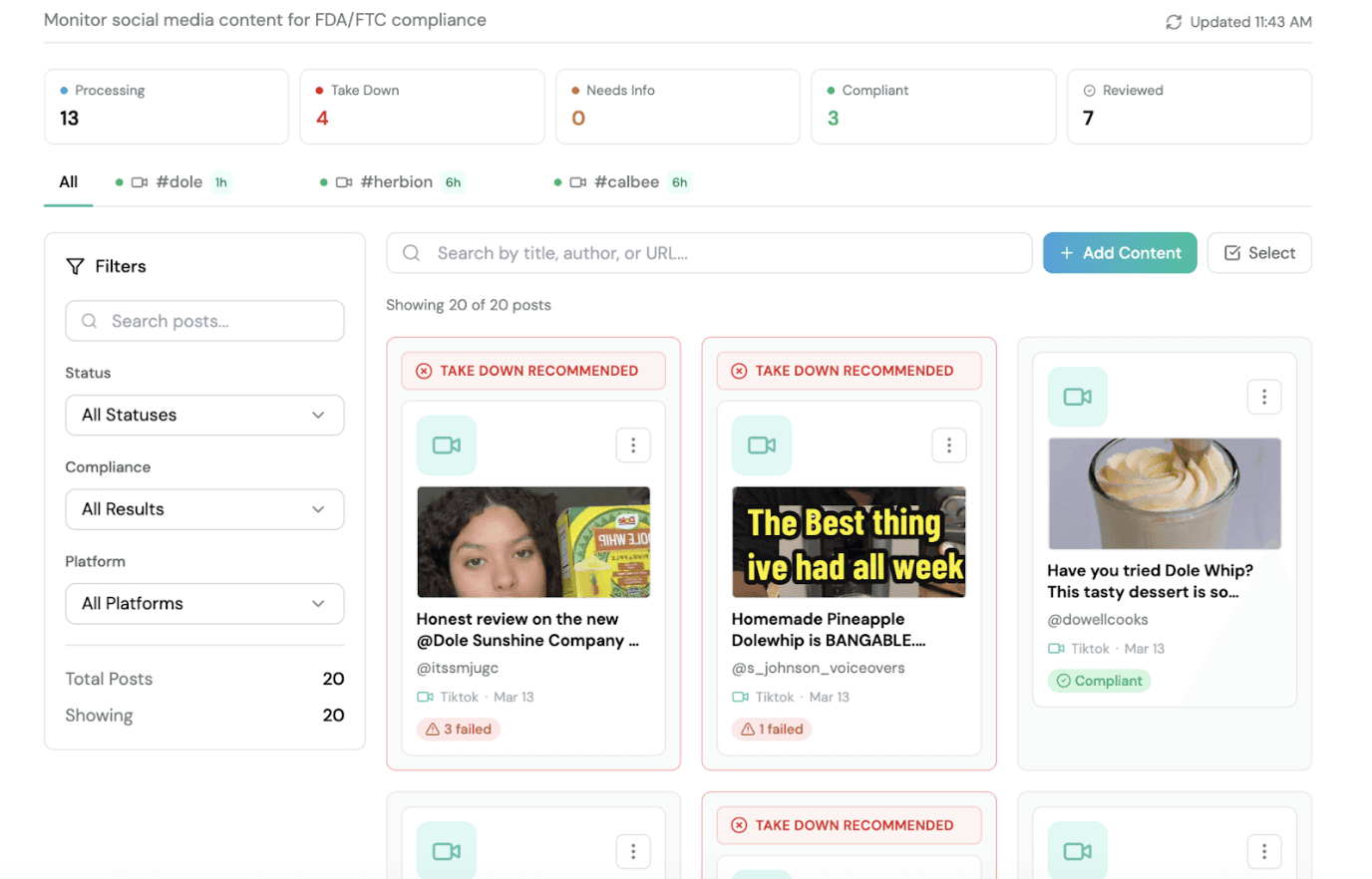
The fastest way to convert regulatory tolerance into an enforcement action is the marketing: "relieves anxiety," "helps you sleep," "reduces inflammation" are unapproved drug claims whether they appear on the can, the website, or a creator's TikTok. FTC substantiation rules apply on top. Brands riding the category's growth on aggressive functional claims are stacking federal drug-claim exposure onto the hemp-status problem.
What THC Beverage Brands Should Do Now
Scenario-plan against the enacted deadline. Model November 12, 2026 as real: inventory drawdown, contract terms with distributors and retailers, and what a pivot to state-licensed marijuana channels or sub-threshold formulations would require.
Track the carve-out bills — weekly, not quarterly. If beverage parity legislation moves, the compliance target changes fast, likely toward TTB-style labeling, three-tier distribution, and FDA oversight.
Get state-by-state labeling right today. Whatever happens federally, milligram disclosures, warning statements, age gating, and COA access are enforceable now in every state you ship to.
Scrub every channel for drug claims. Label, website, Amazon-adjacent marketplaces, social, and affiliates — functional health claims are the exposure you can eliminate immediately without waiting on Congress.
Keep every claim and label defensible while the rules move
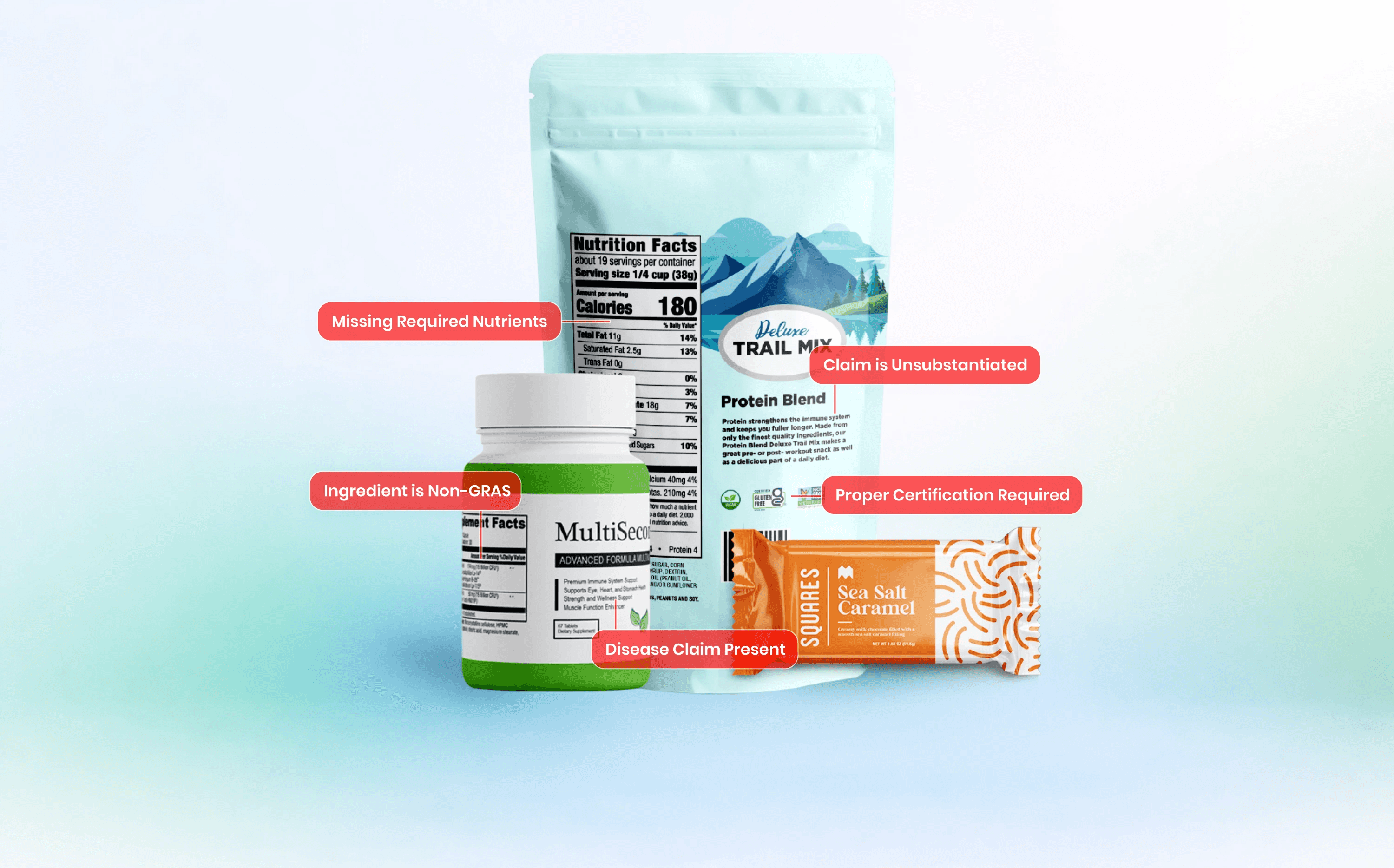
Truli scans labels, websites, and social content against FDA and FTC requirements — including the disease-claim language that draws cannabinoid enforcement — and tracks regulatory change as it happens. Book a demo to put continuous compliance monitoring on your THC beverage brand.
A note from Truli: Truli is not a law firm, and this article does not constitute or contain legal advice or create an attorney-client relationship. When determining your obligations and compliance with respect to relevant laws and regulations, you should consult a licensed attorney.
About

Truli is an AI compliance platform for food, beverage, and supplement brands. Automate FDA/FTC label reviews, claims validation, and post-market monitoring — 10x faster.

Platform
See Truli in action
If regulatory delays are consuming months and thousands in fees, see how Truli delivers fast and continuous compliance coverage at a fraction of the cost.
Book a demo