Research Use Only Peptides — Why the Disclaimer Fails
The research peptide market runs on a single legal theory: label the vial 'research use only' and the drug laws don't apply. FDA has now rejected that theory in writing, repeatedly, and enforcement has widened every quarter since. Here's why the disclaimer fails.

Catherine Zhou
| Co-founder at Truli

Type any trending peptide into a search engine and the top results are storefronts selling vials of semaglutide, tirzepatide, or BPC-157 with a "for research purposes only, not for human consumption" banner. The banner is doing all the legal work — and it doesn't work. FDA's warning letters since late 2024 dismantle the theory line by line, and the enforcement has expanded from letters into state actions and platform bans. This is the deep look at why the RUO shield fails and what the fallout looks like.
Intended Use Is the Whole Test
A product's regulatory status turns on intended use, not on the disclaimer printed on it. Under the FD&C Act, anything intended to treat disease or affect the structure or function of the body is a drug (21 U.S.C. 321(g)), and "labeling" (21 U.S.C. 321(m)) reaches far beyond the vial — websites, product pages, emails, and accompanying materials all count. FDA's intended-use regulation, 21 CFR 201.128, says intent is shown by claims, advertising, and the circumstances surrounding the sale.
So the test is the totality of the marketing. A seller whose product pages describe appetite suppression, whose FAQ links dosing guides, and whose reviews are weight-loss testimonials has established human intended use — and a footer disclaimer cannot un-establish it.
This doctrine is decades old and courts apply it broadly. Products have been condemned as drugs based on booklets sold separately, statements by company principals, and even the surrounding sales environment. Against that history, a boilerplate sentence contradicted by every other page of the site was never going to hold. The disclaimer doesn't create a legal category — it just documents that the seller knew one existed.
The December 2024 Warning Letters
In December 2024, FDA sent warning letters to online peptide sellers including Prime Peptides, Xcel Peptides, SwissChems, and Summit Research, treating their semaglutide, tirzepatide, and retatrutide products as unapproved new drugs and misbranded drugs. The letters walked through the sellers' own marketing as the evidence: benefit claims, dosing information, and site copy aimed at consumers, not laboratories.
The significance wasn't the specific sellers — it was FDA saying, in published enforcement documents, that the RUO label is irrelevant when everything around it implies human use. Every gray-market seller runs on the same playbook those letters rejected.
Enforcement Accelerated Through 2025 and 2026
The December 2024 batch was a starting gun, not a one-off. FDA drug-enforcement letters rose sharply through fiscal 2025, and on March 31, 2026 the agency issued a fresh batch of warning letters to research-peptide storefronts — including Gram Peptides — over GLP-1 copycats and other peptides sold under RUO labels. The 2026 letters reached beyond semaglutide-class compounds to peptides like BPC-157 and SARM-adjacent products, and again cited the sellers' dosing content and therapeutic claims as proof of intended use.
What FDA cites as evidence of human intended use
The letters keep pointing at the same tells:
Dosing guides, reconstitution calculators, and "protocol" content
Weight-loss and healing testimonials, before-and-after photos
Influencer and affiliate content showing self-administration
Cross-selling bacteriostatic water, syringes, and alcohol wipes
SEO copy targeting "peptides for weight loss" style searches
Purity language like "human-grade" or "pharma-grade"
If a compliance reviewer can infer your customer injects the product, so can FDA.
The pressure beyond FDA
State-level actions have stacked on top. State pharmacy boards and attorneys general have moved against unlicensed sellers and against compounders exceeding their authority, particularly around GLP-1 peptides. Selling drugs without a license is a state offense with its own penalties, and boards move faster than federal enforcement.
Meanwhile the commercial infrastructure is closing. Payment processors classify RUO peptide sales as prohibited high-risk activity and terminate accounts, marketplaces delist the products, and major ad platforms refuse the category outright. Many gray-market sellers get deplatformed by their payment stack before FDA ever writes to them — which is why the surviving storefronts churn through domains, processors, and crypto checkout flows. That churn is itself a signal regulators and card networks now screen for.
What Legitimate Research Suppliers Do Differently
There is a real, lawful market for research chemicals sold to actual laboratories. It looks nothing like the gray market.
Gray-market signal | Legitimate research supplier practice |
|---|---|
Sells to anyone with a credit card | Qualifies buyers — institutional affiliation, business verification |
Dosing guides and protocols | No administration information of any kind |
Weight-loss and recovery testimonials | No consumer marketing, no testimonials |
Sells bacteriostatic water and syringes alongside | Sells reagents in laboratory formats and quantities |
SEO pages targeting consumer health searches | B2B channels, catalogs aimed at researchers |
"Human-grade" purity claims | Certificates of analysis framed for lab use |
The distinction matters because it shows the RUO framework itself isn't the problem. The problem is consumer-facing sellers borrowing a B2B label to run a drug business.
The Takeaway for Wellness Brands
If you operate a supplement or wellness brand, the line is simple: peptides with drug histories — semaglutide, tirzepatide, BPC-157 — cannot appear in your products or your marketing vocabulary, under any disclaimer. Food-derived peptides like collagen remain lawful, but borrowing gray-market language ("healing peptide," "nature's Ozempic") imports gray-market risk into an otherwise legal product. Enforcement is scanning marketing, not just ingredients.
Audit your peptide marketing the way FDA reads it
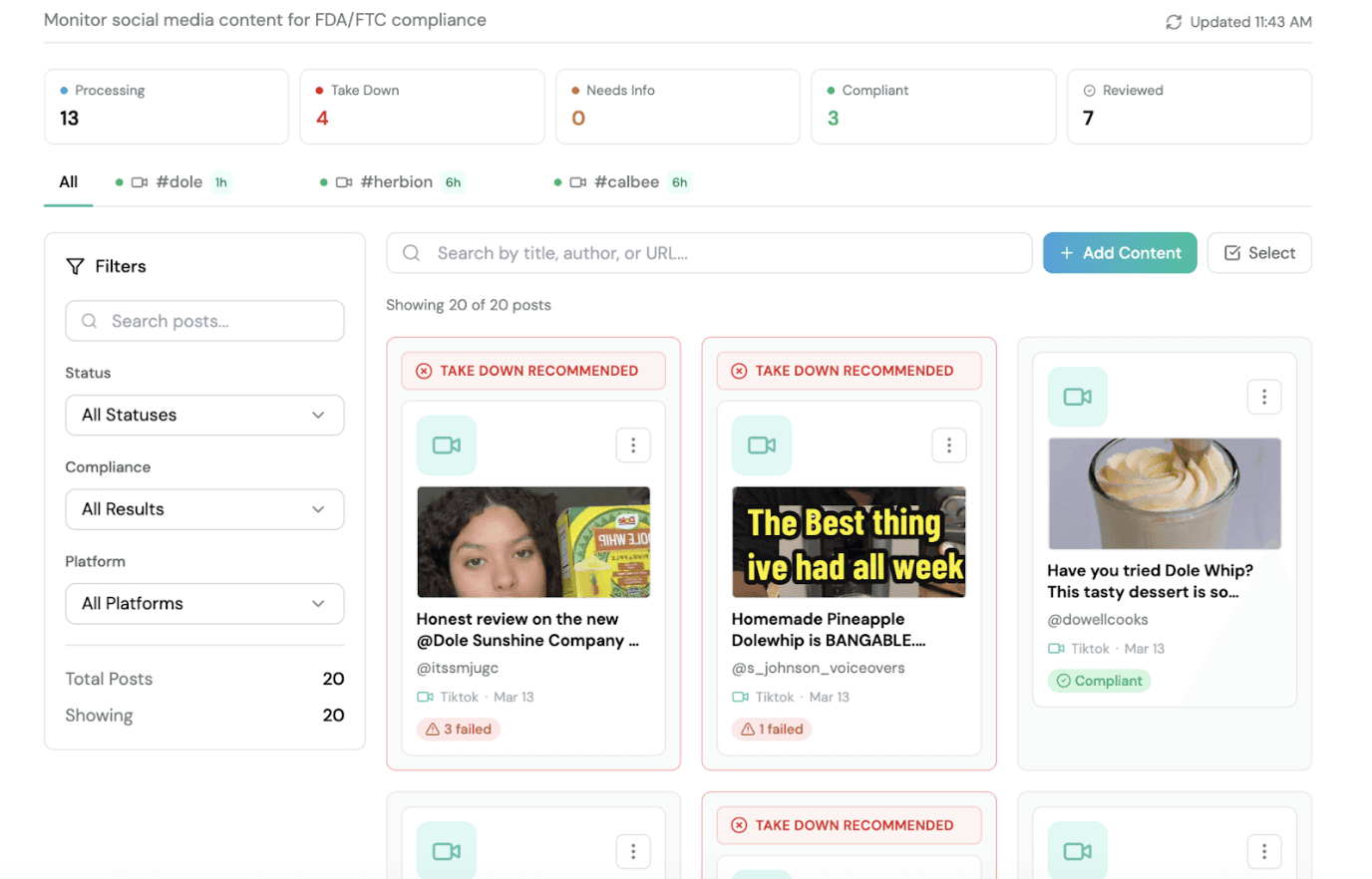
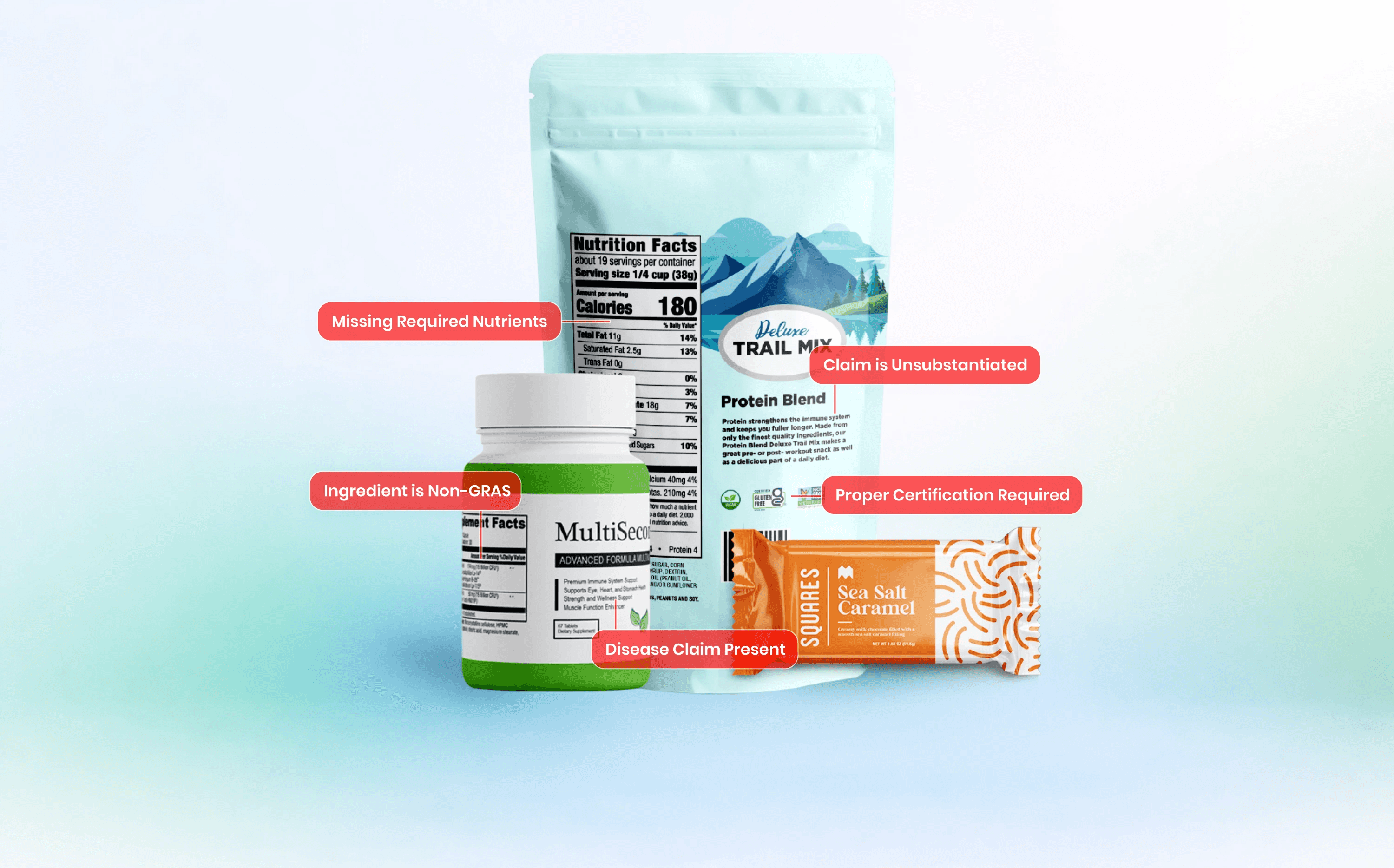
Truli's AI agents review labels, websites, and influencer content the way an FDA reviewer does — as evidence of intended use — flagging disease claims, drug-adjacent language, and missing disclaimers with the specific rule cited. Book a demo to see what your marketing establishes before an enforcement letter tells you.
A note from Truli: Truli is not a law firm, and this article does not constitute or contain legal advice or create an attorney-client relationship. When determining your obligations and compliance with respect to relevant laws and regulations, you should consult a licensed attorney.
About

Truli is an AI compliance platform for food, beverage, and supplement brands. Automate FDA/FTC label reviews, claims validation, and post-market monitoring — 10x faster.

Platform
See Truli in action
If regulatory delays are consuming months and thousands in fees, see how Truli delivers fast and continuous compliance coverage at a fraction of the cost.
Book a demo