Novel Peptide Ingredients — The NDI Pathway Explained
There is a lawful path to market for a genuinely novel peptide supplement ingredient — the New Dietary Ingredient notification. Almost no peptide seller takes it, and some peptides are locked out of it entirely. Here's how the pathway actually works and who can use it.

Michael Wu
| Co-founder at Truli

Most coverage of peptide supplements is about what brands cannot sell. This one is about the legal front door. If you have a novel peptide ingredient — a new protein hydrolysate fraction, a fermentation-derived bioactive peptide — federal law gives you a defined premarket route: the New Dietary Ingredient (NDI) notification. It is slow, demanding, and unforgiving of shortcuts, which is exactly why the gray market skips it. Understanding the pathway tells you both how to do this right and why most peptide products on the internet are adulterated.
First Test — Is It a Dietary Ingredient at All?
Before the NDI question, the ingredient must qualify as a dietary ingredient under 21 U.S.C. 321(ff): a vitamin, mineral, herb or botanical, amino acid, a dietary substance used to supplement the diet, or a concentrate, metabolite, constituent, or extract of any of those. Peptides typically qualify — if at all — as constituents of dietary proteins or as dietary substances with food-supply history. A peptide hydrolyzed from milk, fish, or collagen protein has a credible path. A synthetic sequence designed in a pharma lab, with no relationship to anything eaten as food, has a much harder argument.
The Drug Exclusion Locks Some Peptides Out Forever
This is the clause that ends most research-peptide dreams. Under 21 U.S.C. 321(ff)(3)(B), an article cannot be a dietary supplement if it was approved as a new drug, or authorized for investigation as a new drug with substantial clinical investigations instituted and made public — unless it was marketed as a food or supplement before that drug work began.
Semaglutide is an approved drug, so it is excluded permanently. BPC-157 was authorized for investigation as a new drug before any supplement marketing, so FDA's position is that it is excluded too. No NDI notification, disclaimer, or reformulation cures the exclusion — the race to market was lost years ago, and the clause has no reset button. This is why "can we just file an NDI for BPC-157" has a one-word answer.
The NDI Notification — Section 413's 75-Day Rule
For peptides that clear both tests, section 413 of the FD&C Act (21 U.S.C. 350b) sets the mechanics. A dietary ingredient not marketed in the US before October 15, 1994 is an NDI. Unless the ingredient has been present in the food supply as an article used for food without chemical alteration, you must submit a notification to FDA at least 75 days before marketing. The content requirements live in 21 CFR 190.6.
Note the trap in the food-supply exemption: "without chemical alteration." FDA's NDI draft guidance treats many processing steps — including some hydrolysis and fractionation methods — as chemical alteration. A novel peptide fraction enzymatically cut from a common food protein may still require a notification, even though the parent protein has centuries of food use. Brands assume the collagen precedent covers any hydrolysate; it does not.
What the submission must contain
An NDI notification is a safety dossier, not a form. FDA expects:
Identity — the ingredient's name, full characterization, specifications, and manufacturing description
Conditions of use — the supplement it will appear in, the level, and the labeled serving
Safety basis — history of use or other evidence of safety, typically published toxicology, human data, and intake estimates supporting the expected daily dose
A signed basis of conclusion that the supplement containing the ingredient will reasonably be expected to be safe
FDA's response is an acknowledgment, not an approval — and often an objection letter identifying identity or safety deficiencies. Historically most notifications draw objections on the first pass, so serious ingredient companies budget for a pre-submission meeting, real toxicology, and possibly a second filing.
Who Has Actually Navigated It
The peptide-adjacent success stories are food-protein fractions, not synthetics. FDA's public NDI notification archive includes milk-protein-derived bioactive peptide preparations — the casein-derived lactotripeptides marketed for years in functional products are the best-known example — alongside various specialized protein hydrolysates. Meanwhile, standard collagen peptides generally never needed the pathway because gelatin and hydrolyzed collagen were marketed before 1994.
The pattern across successful filings is consistent: a real food lineage, a tightly defined manufacturing process, and safety data matched to the intended daily dose. Sequences whose entire evidence base is pharmacological have none of those three, which is why no research-peptide compound has a credible notification on file.
Why Most Peptide Sellers Skip It — and What That Risks
The gray market skips the NDI pathway because it fails all three of its tests: their compounds are often drug-excluded, they have no food-use history, and a safety dossier would document intended human doses of an unapproved substance. Legitimate brands skip it for cheaper reasons — the dossier costs real money, objections are likely, and the 75-day clock delays launches.
Ingredient situation | Requirement |
|---|---|
Marketed in the US before October 15, 1994 | No notification — grandfathered |
In the food supply, not chemically altered | No notification, but document the basis |
Novel peptide fraction or new-to-market ingredient | NDI notification 75 days pre-market |
Prior drug approval or public IND investigation | Excluded — no supplement pathway exists |
Skipping a required notification makes the supplement adulterated under 21 U.S.C. 350b(a) — the same legal status as a contaminated product. That exposure surfaces as warning letters, import refusals, retailer delistings, and recall demands, and it hands plaintiffs an easy theory in civil litigation. The pathway is slow, but it is the only thing standing between a novel peptide brand and an adulteration charge.
Know where every ingredient stands
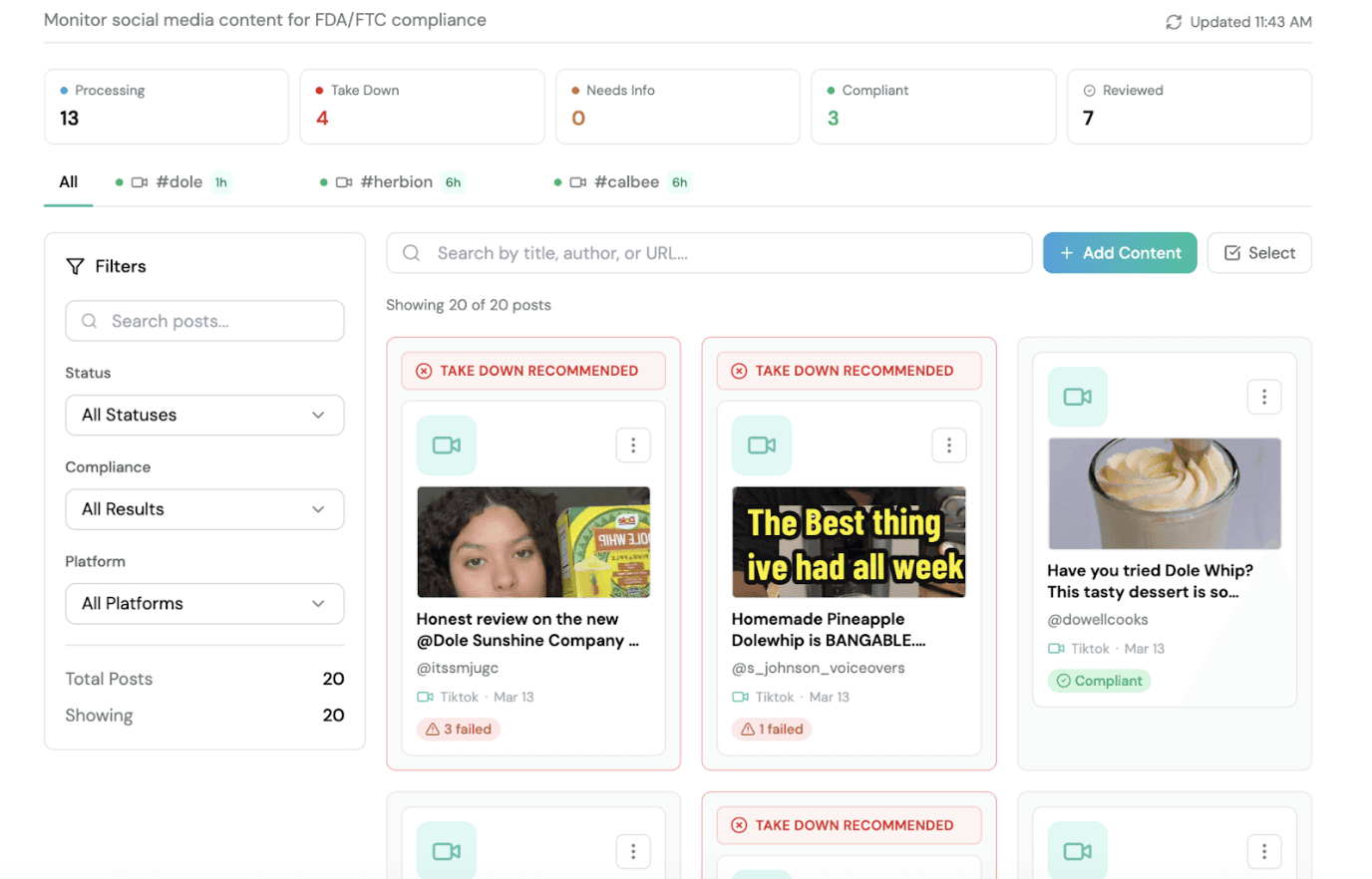
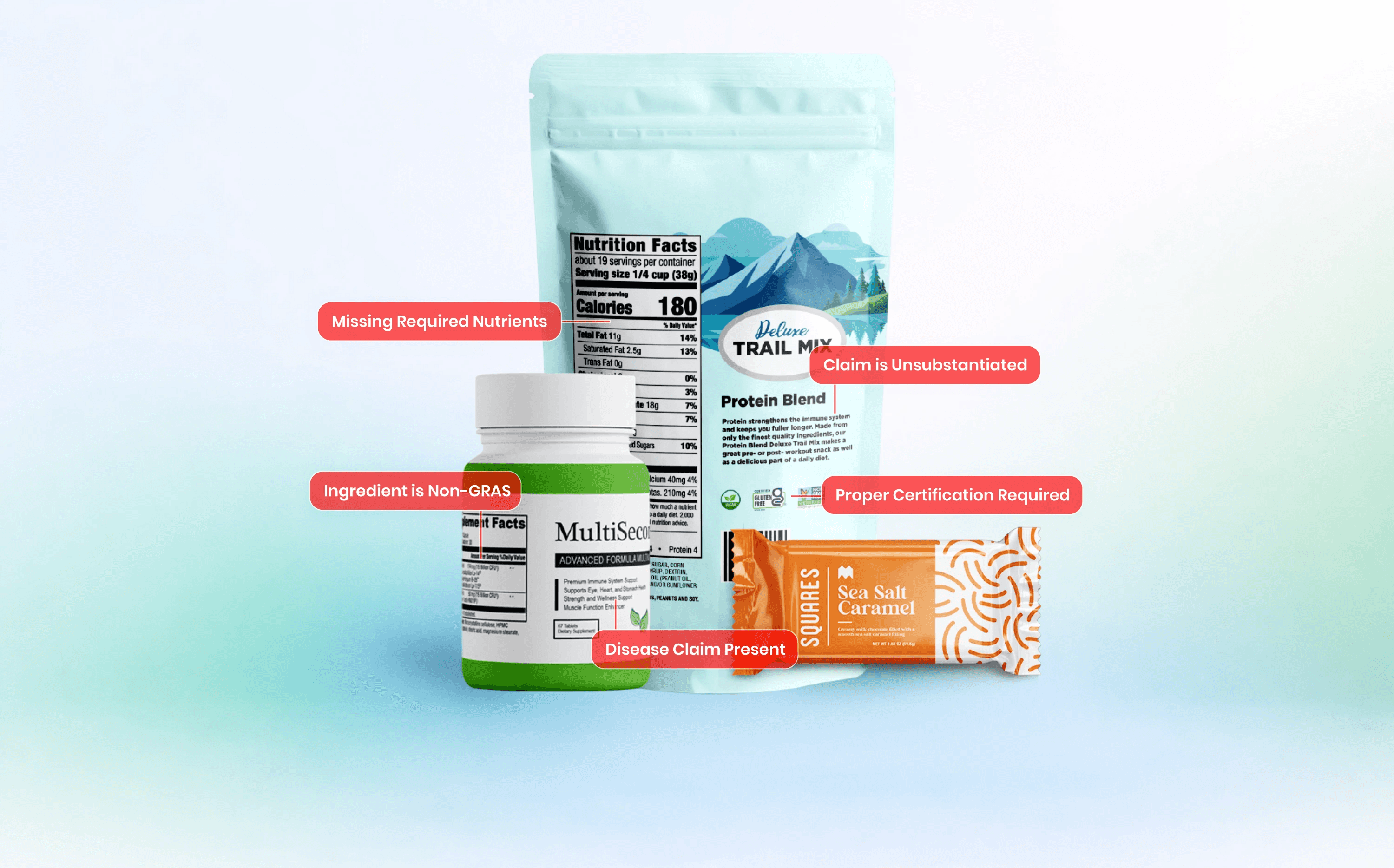
Truli's AI agents scan your labels, websites, and marketing against FDA and FTC rules — flagging drug-excluded ingredients, disease claims, and missing disclaimers with the regulation cited for each finding. Book a demo to pressure-test your peptide roadmap before FDA does.
A note from Truli: Truli is not a law firm, and this article does not constitute or contain legal advice or create an attorney-client relationship. When determining your obligations and compliance with respect to relevant laws and regulations, you should consult a licensed attorney.
About

Truli is an AI compliance platform for food, beverage, and supplement brands. Automate FDA/FTC label reviews, claims validation, and post-market monitoring — 10x faster.

Platform
See Truli in action
If regulatory delays are consuming months and thousands in fees, see how Truli delivers fast and continuous compliance coverage at a fraction of the cost.
Book a demo