Peptide Supplements and FDA Rules — What Brands Can Sell
Peptides are the hottest ingredient story in wellness — and the most legally treacherous. The same word covers collagen peptides that are unambiguously legal in supplements and compounds like BPC-157 and semaglutide that FDA treats as unapproved drugs. Brands that blur that line are collecting warning letters. Here's where it sits.

Michael Wu
| Co-founder at Truli

Search interest in peptides has exploded on the back of GLP-1 drugs, longevity influencers, and recovery protocols — and wellness brands are racing to put the word on labels. But "peptide" is a chemistry term, not a regulatory category. Some peptides are ordinary food-derived ingredients that make perfectly lawful supplements. Others are investigational drug compounds, and putting them in a consumer product — or even marketing them with a "research use only" sticker — is selling an unapproved drug.
The distinction is the whole game for anyone building a peptide brand. Here's how FDA actually draws the line, and what enforcement has looked like through 2026.
The Line — Dietary Ingredient vs. Unapproved Drug
Under DSHEA, a dietary supplement ingredient must qualify as a dietary ingredient — a vitamin, mineral, herb or botanical, amino acid, a substance used to supplement the diet, or a concentrate, metabolite, constituent, or extract of those. Hydrolyzed proteins clear that bar easily: collagen peptides, whey peptides, casein peptides, and similar protein hydrolysates are conventional dietary ingredients with long food-use histories, and they anchor a large, lawful category.
Synthetic research peptides fail it in two ways. First, most were never marketed as dietary ingredients or present in the food supply, so they'd require a New Dietary Ingredient notification at minimum — which essentially none have. Second, and decisively, compounds like semaglutide and BPC-157 have been authorized for investigation as new drugs, which under the Federal Food, Drug, and Cosmetic Act's exclusionary clause disqualifies them from the supplement category entirely. They are drugs — approved or unapproved — no matter what the label says.
That's the two-sentence compliance summary: peptides from food proteins can be supplements; pharmacological peptides cannot.
What Enforcement Actually Looks Like
The GLP-1 warning letters
In December 2024, FDA issued warning letters to online peptide sellers — including Prime Peptides, Xcel Peptides, SwissChems, and Summit Research — for selling semaglutide, tirzepatide, and retatrutide as unapproved new drugs. The letters treated the products as drugs based on how they were marketed, and enforcement against gray-market GLP-1 sellers has continued since, alongside state pharmacy board and FTC activity.
The "research use only" myth
The gray market's standard shield — "for research purposes only, not for human consumption" — does not work when everything else about the marketing implies human use: dosing protocols, benefit claims, testimonials, fitness influencers injecting the product on camera. FDA and courts look at intended use, which is established by the totality of marketing, not the disclaimer. A brand selling BPC-157 capsules "for research" on a site full of recovery testimonials is selling an unapproved drug with extra steps.
BPC-157's status is evolving — toward pharmacy, not supplements
BPC-157, the internet's favorite healing peptide, illustrates where the puck is moving. FDA removed it from the compounding Category 2 list (substances flagged for significant safety risk) in April 2026, and in July 2026 the Pharmacy Compounding Advisory Committee voted narrowly to recommend adding it to Category 1 — tied to a specific proposed indication. Every step of that pathway runs through licensed compounding pharmacies and prescribers. None of it makes BPC-157 a legal supplement ingredient, and it doesn't legalize the capsule-and-website business model.
The Claims Problem on Top of the Ingredient Problem
Even brands on the right side of the ingredient line — collagen and other hydrolysate products — inherit the peptide category's claims risk. The trend is powered by drug-adjacent expectations: healing, weight loss, muscle repair, longevity. Structure/function claims under 21 CFR 101.93 can describe effects on normal structure and function ("supports skin elasticity," "supports joint health") with the required disclaimer, but the moment the copy borrows the research-peptide vocabulary — "repairs tendons," "heals your gut," "nature's Ozempic" — it becomes a disease claim or an unsubstantiated FTC problem. Marketing teams chasing peptide search traffic drift over that line constantly, especially on social.
Compliance Checklist for Peptide Brands
Verify every peptide ingredient's regulatory status — food-derived hydrolysate with dietary ingredient status, or synthetic compound with an investigational drug history? If the latter, it cannot be a supplement, full stop.
Kill the drug vocabulary — audit labels, product pages, and creator content for healing, repair, weight-loss, and GLP-1 comparison language.
Keep structure/function claims inside the lane — normal structure and function, with the FDA disclaimer present and correctly formatted on every channel.
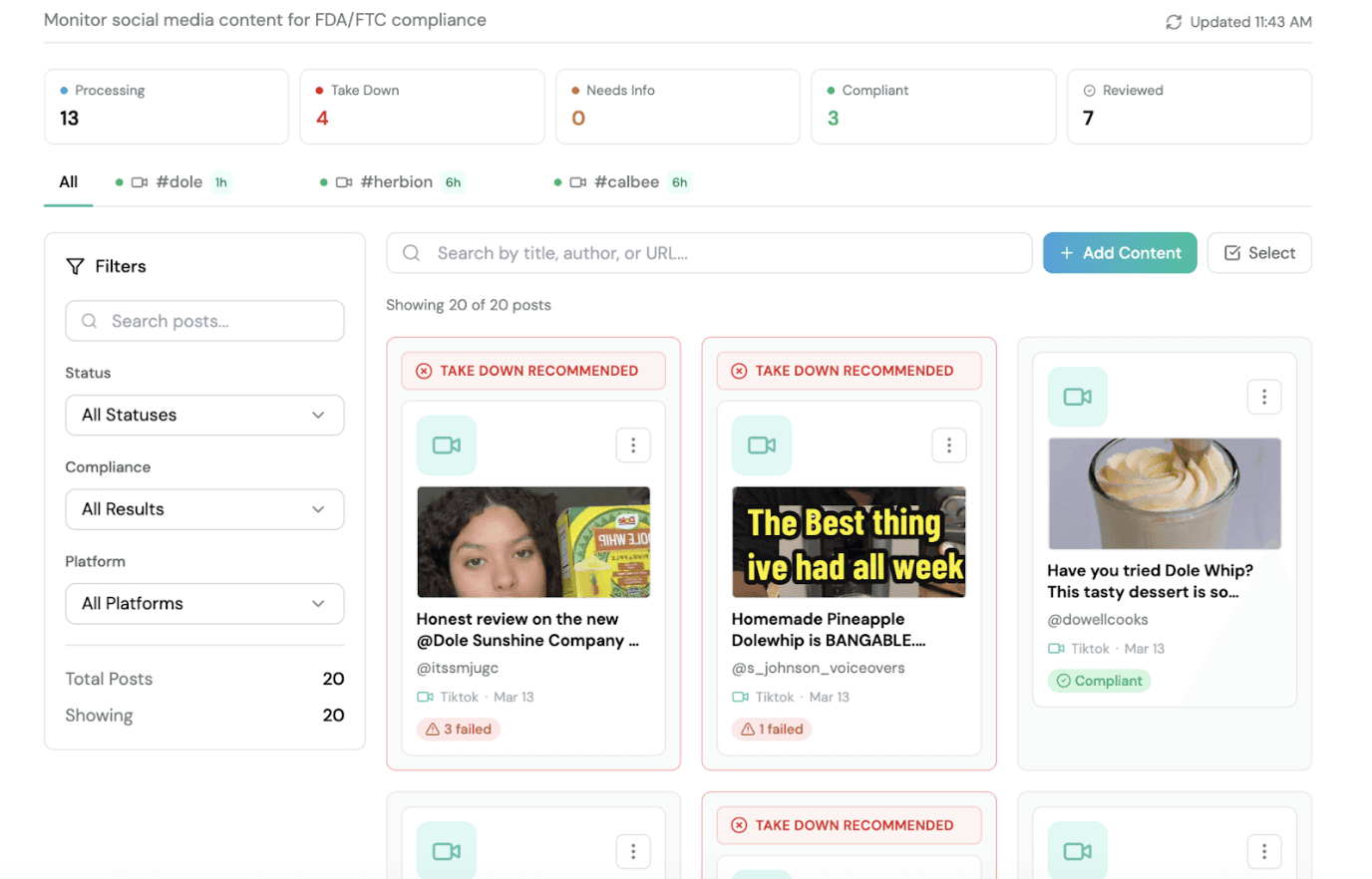
Watch your affiliates hardest — influencer content is where peptide brands make their most aggressive claims, and it counts as your marketing under FTC endorsement rules.
Scan your peptide marketing before FDA reads it
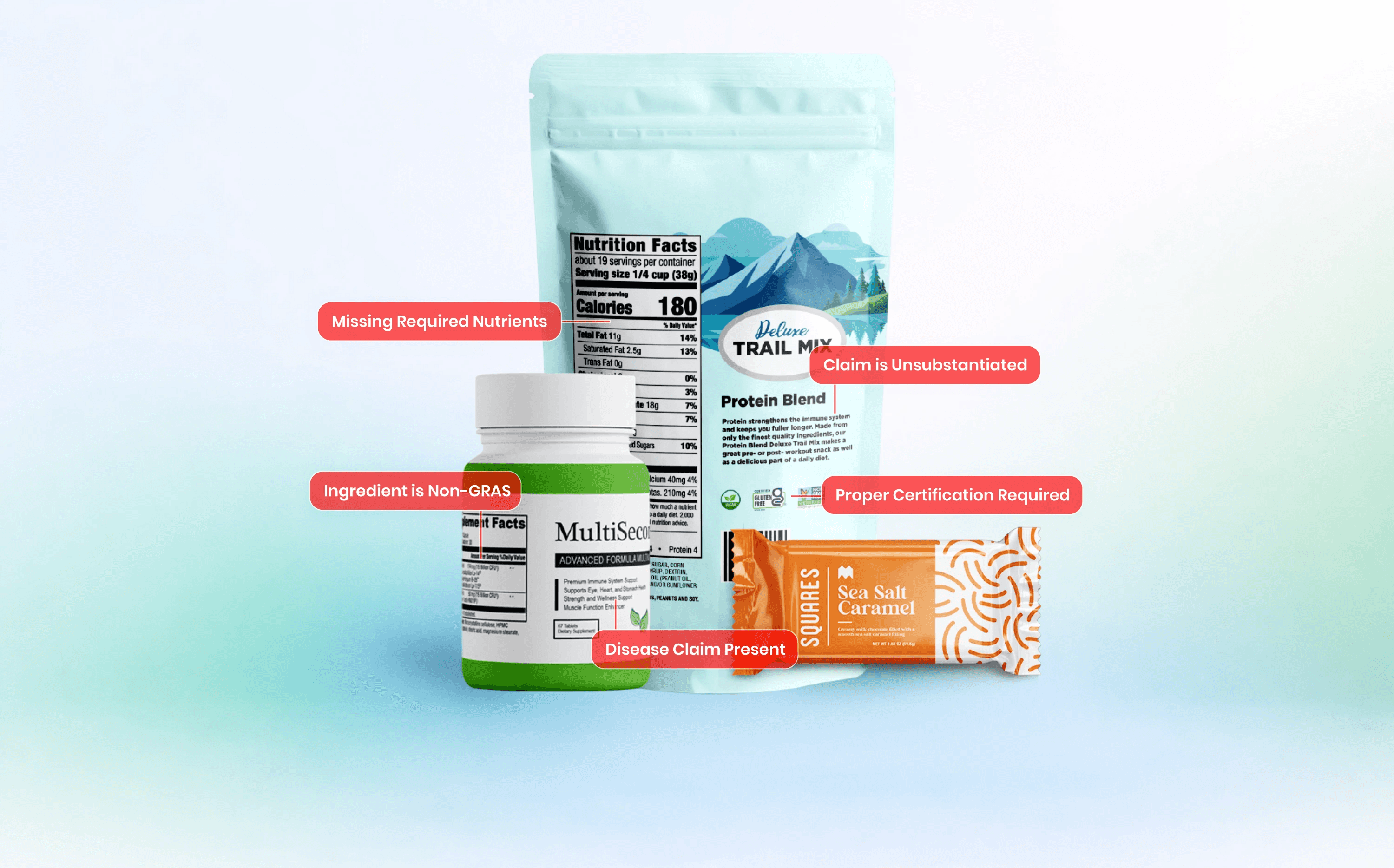
Truli audits labels, websites, and influencer content against FDA and FTC rules — flagging disease claims, missing disclaimers, and drug-adjacent language with the regulation cited for every finding. Book a demo to see what it flags across your peptide products.
A note from Truli: Truli is not a law firm, and this article does not constitute or contain legal advice or create an attorney-client relationship. When determining your obligations and compliance with respect to relevant laws and regulations, you should consult a licensed attorney.
About

Truli is an AI compliance platform for food, beverage, and supplement brands. Automate FDA/FTC label reviews, claims validation, and post-market monitoring — 10x faster.

Platform
See Truli in action
If regulatory delays are consuming months and thousands in fees, see how Truli delivers fast and continuous compliance coverage at a fraction of the cost.
Book a demo