Peptide Skincare Claims — The Cosmetic vs Drug Line
Peptides are the hottest actives in skincare, and the marketing writes itself — collagen synthesis, muscle relaxation, Botox without needles. That copy is exactly what turns a cosmetic into an unapproved drug. The line is intended use, and your claims define it.

Michael Wu
| Co-founder at Truli

Peptide serums are carrying the skincare category. Matrixyl, argireline, copper peptides — every launch leans on mechanism science that sounds pharmaceutical because it is. That creates the central compliance problem for peptide skincare: the formula does not determine whether your product is a cosmetic or a drug. Your claims do. The same serum can be a lawful cosmetic with one product page and an unapproved drug with another.
The Statute Draws the Line at Intended Use
Under the FD&C Act, a cosmetic (21 U.S.C. 321(i)) is an article intended for cleansing, beautifying, promoting attractiveness, or altering the appearance. A drug (21 U.S.C. 321(g)) includes any article intended to affect the structure or function of the body, or to treat or prevent disease. Intended use is read from everything you publish: the label, the website, the Instagram caption, the founder's podcast quote.
A drug requires FDA approval before sale. No peptide serum has that approval, so a peptide serum making drug claims is an unapproved new drug — the most serious classification a skincare product can trigger.
Appearance Claims Are Safe, Mechanism Claims Are Not
The working rule: claims about how skin looks are cosmetic, claims about what the product does to skin physiology are drug claims. FDA has said explicitly that a product claiming to remove wrinkles or increase collagen production is taking drug territory, while "reduces the appearance of fine lines" stays cosmetic.
Cosmetic claim (allowed) | Drug claim (unapproved drug) |
|---|---|
Reduces the appearance of fine lines | Reduces wrinkles by stimulating collagen synthesis |
Skin looks firmer and smoother | Rebuilds the skin's structural matrix |
Smooths the look of expression lines | Relaxes facial muscles to prevent wrinkles |
Hydrates for plumper-looking skin | Repairs cellular damage and boosts elastin production |
Improves the appearance of skin tone | Treats eczema, rosacea, or acne |
Why mechanism copy is irresistible — and radioactive
Peptide ingredient science is mechanism science. Matrixyl (palmitoyl pentapeptide) is marketed by its supplier as a collagen-signaling peptide; argireline (acetyl hexapeptide-8) is studied as a SNAP-25 inhibitor that dampens muscle contraction. Quoting that research on your product page converts your cosmetic into a drug, because you have declared an intent to affect the structure and function of the body. The ingredient story belongs in your substantiation file, not your claims.
The "Botox in a Jar" Problem
"Needle-free Botox" and "Botox alternative" claims fail twice. First, Botox is a prescription biologic that works by paralyzing muscle — comparing your serum to it claims the same physiological effect, which is a textbook structure/function drug claim. Second, BOTOX is an AbbVie trademark, so the phrase invites a trademark demand alongside the regulatory one. Argireline-based products are the worst offenders here, because the entire ingredient narrative is "topical alternative to injectables." If the comparison to an injectable drug is the claim, the claim is the problem.
FDA Has Written the Warning Letters
This is not theoretical. FDA's warning letter to Crescent Health Center over its Ageless Derma Stem Cell and Peptide Anti-Wrinkle Cream cited claims that the product "enhances the production of elastin and collagen" and "reduces muscle contraction" — exactly the mechanism language above — as evidence the cream was an unapproved new drug. FDA has kept issuing letters to skincare marketers on the same theory since, including actions against anti-aging brands as recently as December 2025. The agency's public position on wrinkle treatments is unambiguous: affecting skin structure is drug territory.
FTC adds a second layer. Even lawful appearance claims must be truthful and substantiated, so "visibly reduces fine lines in 2 weeks" needs testing behind it under the FTC's advertising substantiation standard.
MoCRA Raised the Baseline — It Did Not Move the Line
The Modernization of Cosmetics Regulation Act gave FDA real cosmetic authority, and peptide brands now carry these obligations:
Facility registration with FDA for manufacturers, renewed biennially
Product listing for every cosmetic product and its ingredients
Safety substantiation — adequate evidence each product is safe as used
Adverse event reporting — serious events reported to FDA within 15 business days
Label requirements including a US contact for adverse event reports, plus ingredient declaration under 21 CFR 701.3
What MoCRA did not do is create premarket approval or blur the cosmetic-drug boundary. A registered, listed, safety-substantiated serum making collagen-synthesis claims is still an unapproved drug. Some brands treat MoCRA compliance as a shield for aggressive claims — it is the opposite, since registration puts you squarely on FDA's radar.
Auditing a Peptide Product Line
Run every claim through one question: does this describe how skin looks, or what the product does inside the skin? Check the places drug claims actually hide — ingredient glossaries quoting supplier studies, before-and-after captions promising structural change, affiliate and influencer scripts, and Amazon bullet points written for search volume. Claims made anywhere in your marketing count toward intended use, so the label being clean is only the start.
Two edits fix most peptide product lines. Add "the appearance of" or "the look of" wherever copy describes a change — it converts a structural promise into a cosmetic one. And move all mechanism science into internal substantiation files, replacing it on-page with sensory and visual language. Neither edit weakens the marketing; the category's best-selling serums already speak entirely in appearance terms.
Find the drug claims before FDA does
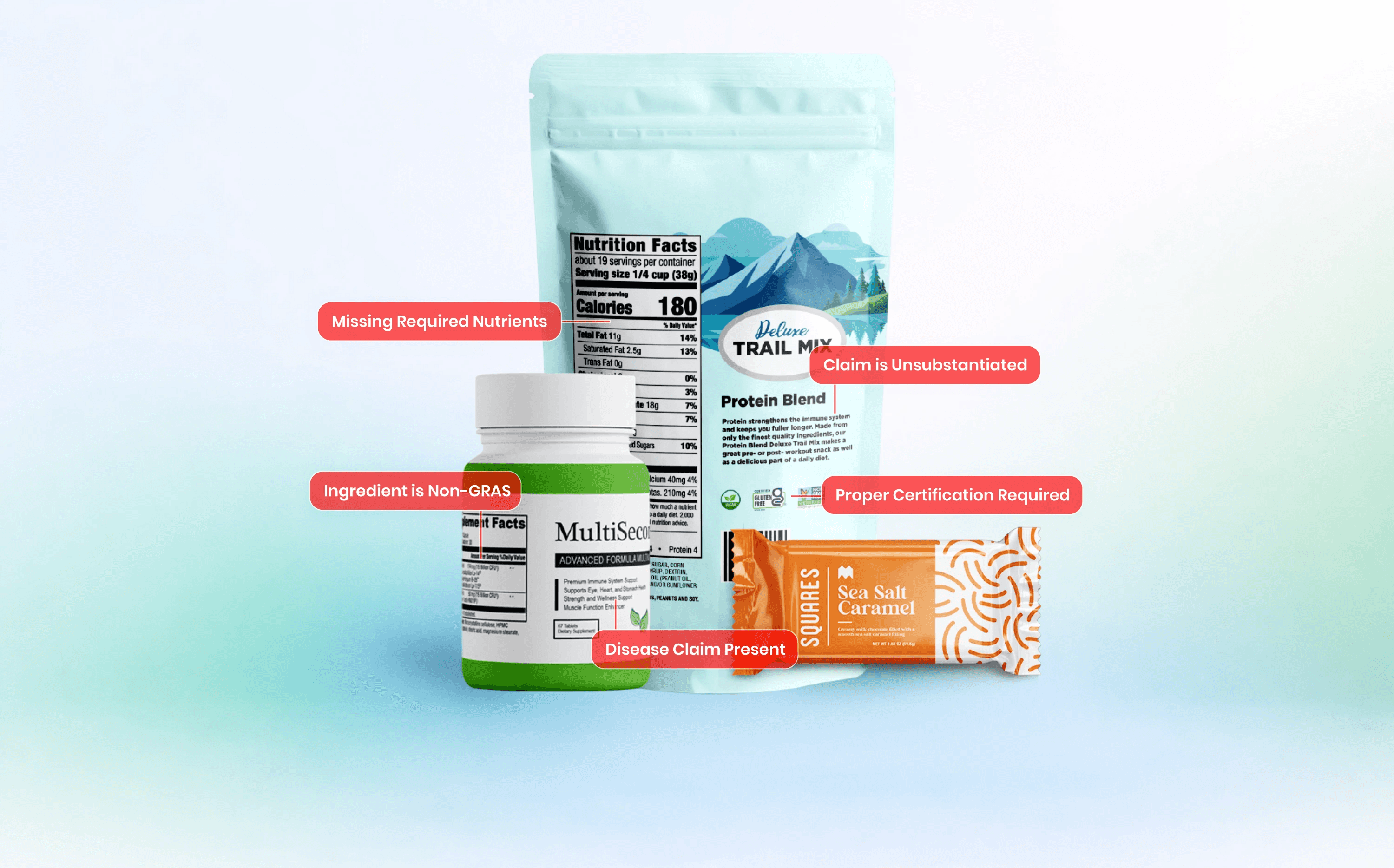
Truli's AI agents scan your labels, product pages, and influencer content against FDA and FTC rules — flagging structure/function drug claims, disease claims, and unsubstantiated appearance claims with the rule cited for every finding. Book a demo to see what your peptide line's marketing actually says under 21 U.S.C. 321.
A note from Truli: Truli is not a law firm, and this article does not constitute or contain legal advice or create an attorney-client relationship. When determining your obligations and compliance with respect to relevant laws and regulations, you should consult a licensed attorney.
About

Truli is an AI compliance platform for food, beverage, and supplement brands. Automate FDA/FTC label reviews, claims validation, and post-market monitoring — 10x faster.

Platform
See Truli in action
If regulatory delays are consuming months and thousands in fees, see how Truli delivers fast and continuous compliance coverage at a fraction of the cost.
Book a demo