Peptide Brand Marketing — A 10-Point Compliance Checklist
Peptide brands are operating in the most heavily enforced corner of the supplement market, with FDA warning letters up sharply through 2026. Most of the letters cite the same handful of failures. This checklist is the pre-flight: ten points, each tied to the regulation that enforces it.

Michael Wu
| Co-founder at Truli

FDA and FTC enforcement against peptide marketers has accelerated every year since the GLP-1 boom began, and the citations are remarkably repetitive: wrong ingredient, disease claims, missing disclaimers, rogue affiliates. That's good news operationally — a repetitive enforcement pattern is an auditable one. Here are the ten checks every peptide brand should be able to pass today, grouped the way a real audit runs: ingredient, claims, channels, and post-market.
Ingredient Legality (Points 1–2)
1. Confirm every peptide ingredient's legal status. A dietary supplement ingredient must qualify as a dietary ingredient under DSHEA — food-derived hydrolysates like collagen and whey peptides clear the bar, while synthetic research peptides generally don't. Anything without prior market history needs a New Dietary Ingredient notification before sale, and essentially no research peptide has one. If you can't document the ingredient's pathway, you don't have a supplement; you have inventory FDA can call an unapproved drug.
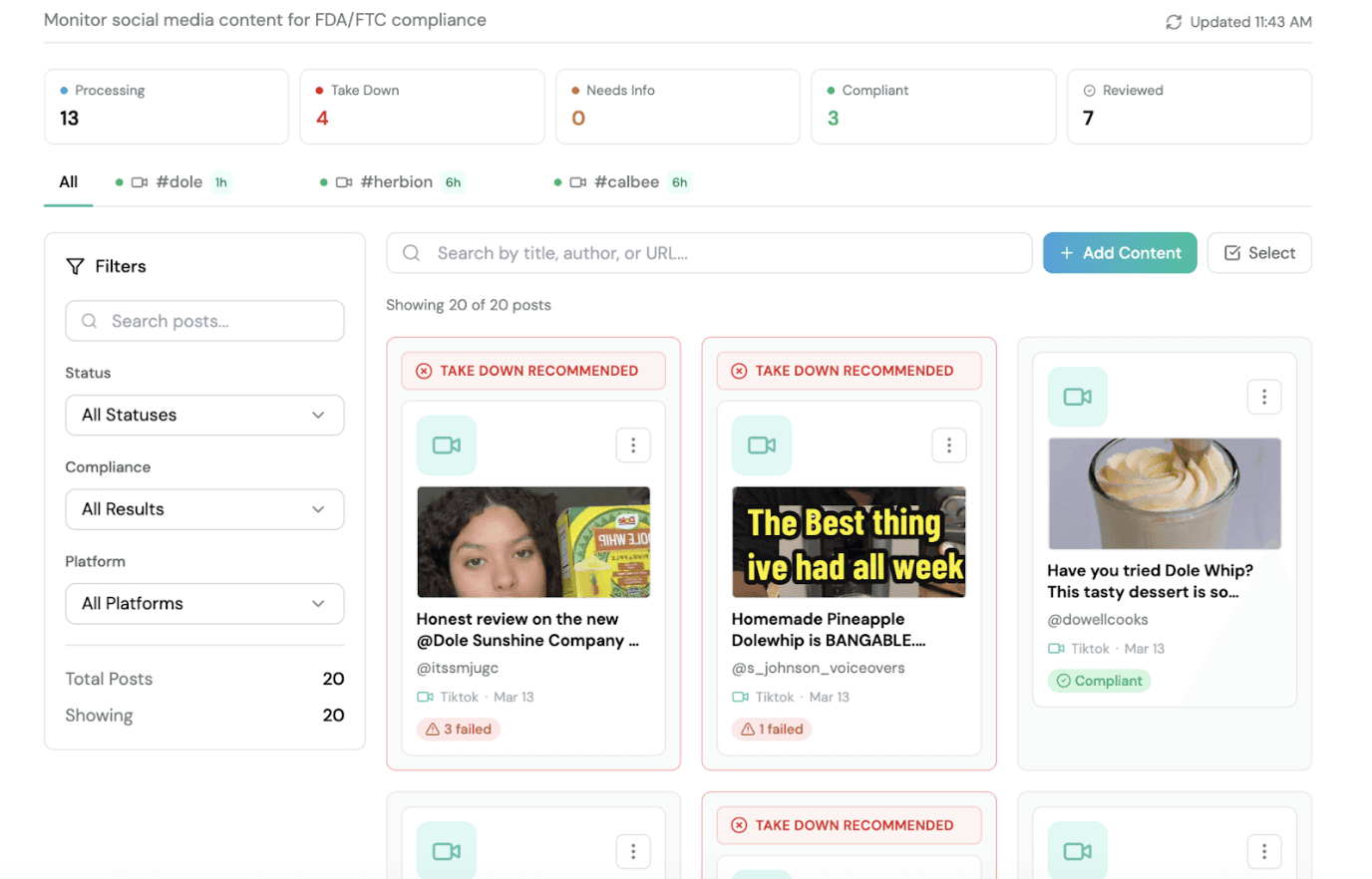
2. Screen for drug-exclusion compounds. Under the exclusionary clause in 21 U.S.C. 321(ff)(3)(B), a substance authorized for investigation as a new drug before it was marketed as a food or supplement is disqualified from the supplement category permanently. That's what removes BPC-157, semaglutide, and the GLP-1 copycats from play regardless of dose or disclaimer. Screen every formulation candidate against drug and IND history before it touches a spec sheet.
Claims Discipline (Points 3–6)
3. Keep structure/function claims in their lane, with the disclaimer. Claims like "supports muscle recovery" are lawful only as structure/function claims under 21 CFR 101.93, which requires the "not evaluated by FDA" disclaimer, properly placed and formatted, plus notification to FDA within 30 days of first marketing. The disclaimer belongs everywhere the claim appears — label, website, and marketplace listings. Missing disclaimers are among the easiest violations for regulators to spot at scale.
4. Ban disease vocabulary from every channel. "Heals," "repairs," "treats," "cures," "regenerates," and named conditions convert a supplement claim into an unapproved drug claim under 21 CFR 101.93(g). Peptide marketing is saturated with healing language because that's the research-peptide culture your customers arrive from. Maintain a prohibited-terms list and enforce it in copy review, not after publication.
Says this (compliant) | Not this (disease claim) |
|---|---|
Supports joint comfort | Repairs cartilage and heals joints |
Supports muscle recovery after exercise | Treats injuries and tendon damage |
Supports healthy skin structure | Reverses skin damage and heals wounds |
Supports a healthy metabolism | Works like Ozempic for weight loss |
5. Never compare to GLP-1 drugs. "Nature's Ozempic," "GLP-1 alternative," and semaglutide comparisons position your product as a substitute for a prescription drug — a drug claim FDA and FTC have both pursued aggressively since 2024. This includes paid search terms, meta descriptions, and influencer scripts, not just the label. The comparison is also a trademark problem on top of the regulatory one.
6. Keep a substantiation file for every claim. The FTC standard is competent and reliable scientific evidence — for health claims, that increasingly means human clinical data on your ingredient at your dose, assembled before the claim runs. Borrowed studies on injectable forms don't substantiate oral product claims. If a claim has no file, it doesn't ship.
Channels and Label (Points 7–9)
7. Monitor influencer and affiliate content continuously. Under the FTC Endorsement Guides (16 CFR Part 255), endorsers' claims are your claims, material connections must be disclosed clearly and conspicuously, and platform-buried disclosures don't count. Peptide brands' most aggressive claims almost always live in creator content, and FDA warning letters routinely quote social posts. Contract for claim control, then actually monitor.
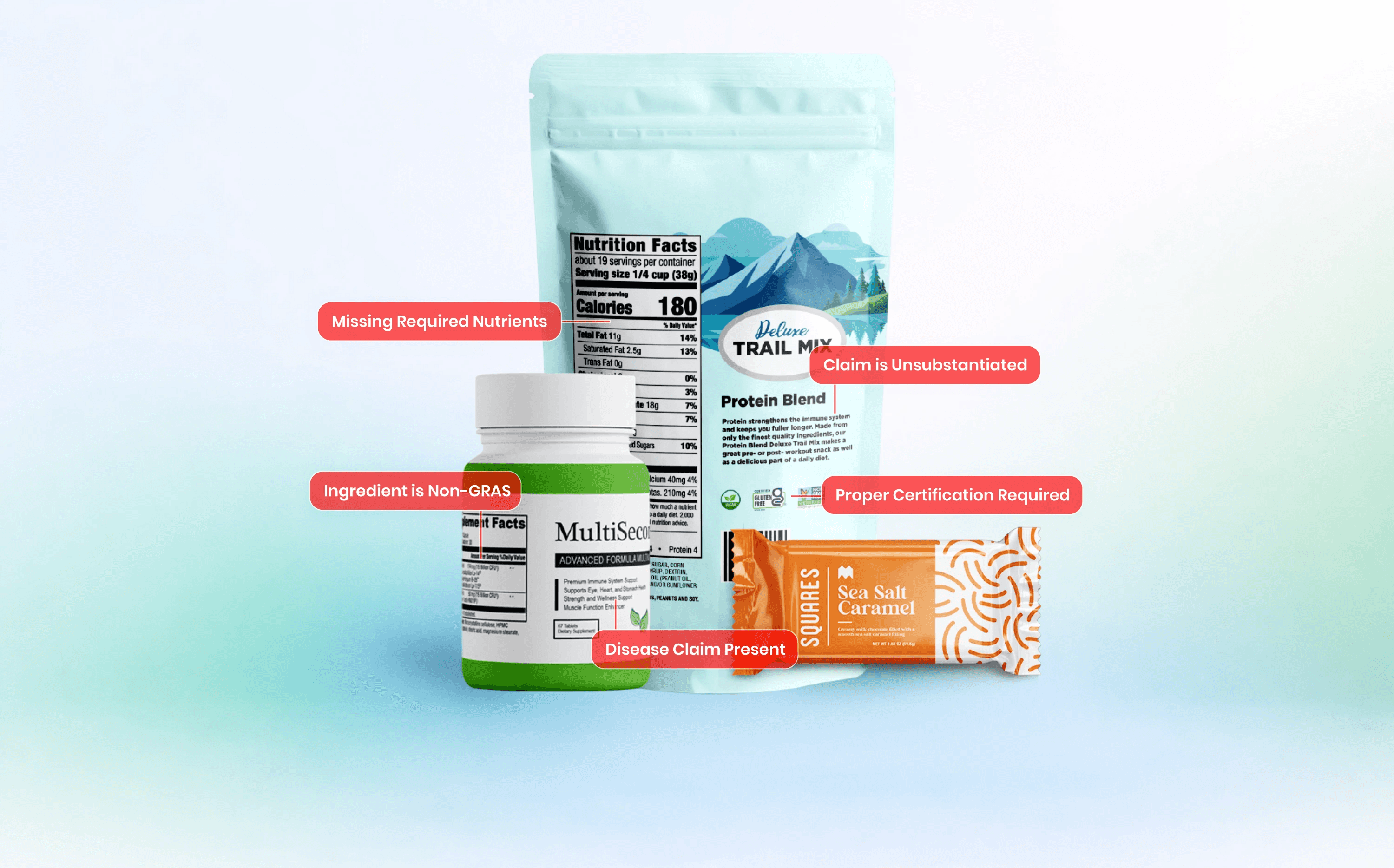
8. Get the Supplement Facts panel right. 21 CFR 101.36 dictates the panel's format in detail: nutrient order, units, %DV rounding, proprietary blend rules, and type sizes. Peptide products stumble on proprietary blends that hide per-ingredient amounts and on %DV math. Panel errors are misbranding on their own — no bad claim required.
9. Meet marketplace policy on top of regulation. Amazon requires supplement listings to carry compliant images and claims and has run third-party verification for supplements since 2024; ingredients on its prohibited list — which tracks FDA enforcement — get delisted without appeal ceremony. Marketplace policy moves faster than FDA does, and a delisting hits revenue harder than a warning letter. Audit listings as marketing, because regulators do.
Post-Market Readiness (Point 10)
10. Be ready for adverse event reports before the first one arrives. Under the Dietary Supplement and Nonprescription Drug Consumer Protection Act (21 U.S.C. 379aa-1), you must submit serious adverse event reports to FDA within 15 business days, keep records for six years, and put a U.S. address or phone number on the label for reports to reach you. Peptide products draw scrutiny here because injectables-adjacent customers report real harms. An AER SOP, a trained owner, and a monitored intake channel are the whole fix — build them now.
Run the List Quarterly, Not Once
None of these checks are one-time. Formulas change, affiliates churn, marketplace policies update, and claim drift is measured in weeks on social. The brands that stay out of the warning-letter database treat this list as a recurring audit with an owner — the ones inside it usually failed three or four points at once.
The sequencing matters too. Points 1 and 2 are existential: if the ingredient is wrong, no amount of claims hygiene saves the product, so they gate everything downstream. Points 3 through 7 are where enforcement actually finds you, because claims and creator content are public and searchable. Points 8 through 10 are the quiet ones that turn a routine inspection into a multi-count letter when they're missing. Score each point pass, fail, or unknown — and treat every "unknown" as a fail until someone proves otherwise.
Automate the audit
Truli's AI agents run these checks continuously — scanning labels, websites, and influencer content against FDA and FTC rules, and flagging disease claims, missing disclaimers, and panel errors with the regulation cited for every finding. Book a demo to see your ten-point status today.
A note from Truli: Truli is not a law firm, and this article does not constitute or contain legal advice or create an attorney-client relationship. When determining your obligations and compliance with respect to relevant laws and regulations, you should consult a licensed attorney.
About

Truli is an AI compliance platform for food, beverage, and supplement brands. Automate FDA/FTC label reviews, claims validation, and post-market monitoring — 10x faster.

Platform
See Truli in action
If regulatory delays are consuming months and thousands in fees, see how Truli delivers fast and continuous compliance coverage at a fraction of the cost.
Book a demo