Listeria in Dairy and Ready-to-Eat Foods — Staying Off Recalls
Listeria monocytogenes doesn't cause many recalls, but the ones it causes are almost always Class I — the most serious classification FDA assigns. Recent recalls across soft cheese, dairy, and ready-to-eat foods point to the same control failures. Here's where the gaps are and how to close them.

Michael Wu
| Co-founder at Truli
Listeria monocytogenes is not a high-volume recall driver. It shows up a few times a quarter, buried under Salmonella and undeclared allergens in the enforcement data. But when it does appear, the outcome is almost never mild. Nearly every Listeria recall lands in the most severe category FDA assigns, and the pattern behind those recalls repeats across categories with unsettling consistency.
Truli's Regulatory Radar currently flags "Listeria Contamination in Dairy and Ready-to-Eat Foods" at a risk score of 65 out of 100. In late June 2026, two separate Listeria alerts landed within days of each other — one from FDA covering dairy, one from USDA covering prepared foods. Two agencies, two categories, one root cause: environmental control gaps that let the pathogen establish itself inside the plant.
Low count, high severity: why Listeria recalls are almost always Class I
Over the last four months, FDA logged roughly three Listeria recalls. Every single one was Class I. That is the classification FDA reserves for situations where exposure carries a reasonable probability of serious health consequences or death.
Compare that to Salmonella, which drives far more recalls by sheer volume but spreads its severity across classifications. Listeria works differently. It concentrates risk. A low count with a near-100% Class I rate means the base rate is deceptive — a single positive can trigger the most serious recall on the books.
The reason is biological. L. monocytogenes grows at refrigeration temperatures, survives in cold and wet processing environments, and causes invasive disease in pregnant women, newborns, older adults, and immunocompromised people. Case fatality rates for invasive listeriosis are far higher than for most foodborne pathogens. In ready-to-eat foods there is no kill step downstream to save you. Whatever is on the product when it ships is what reaches the consumer.
That is why FDA treats L. monocytogenes as a zero-tolerance pathogen in ready-to-eat foods. A positive finding in an RTE food renders that product adulterated. There is no acceptable threshold to argue about — presence is the violation.
Soft cheese, dairy, and RTE: the high-risk categories
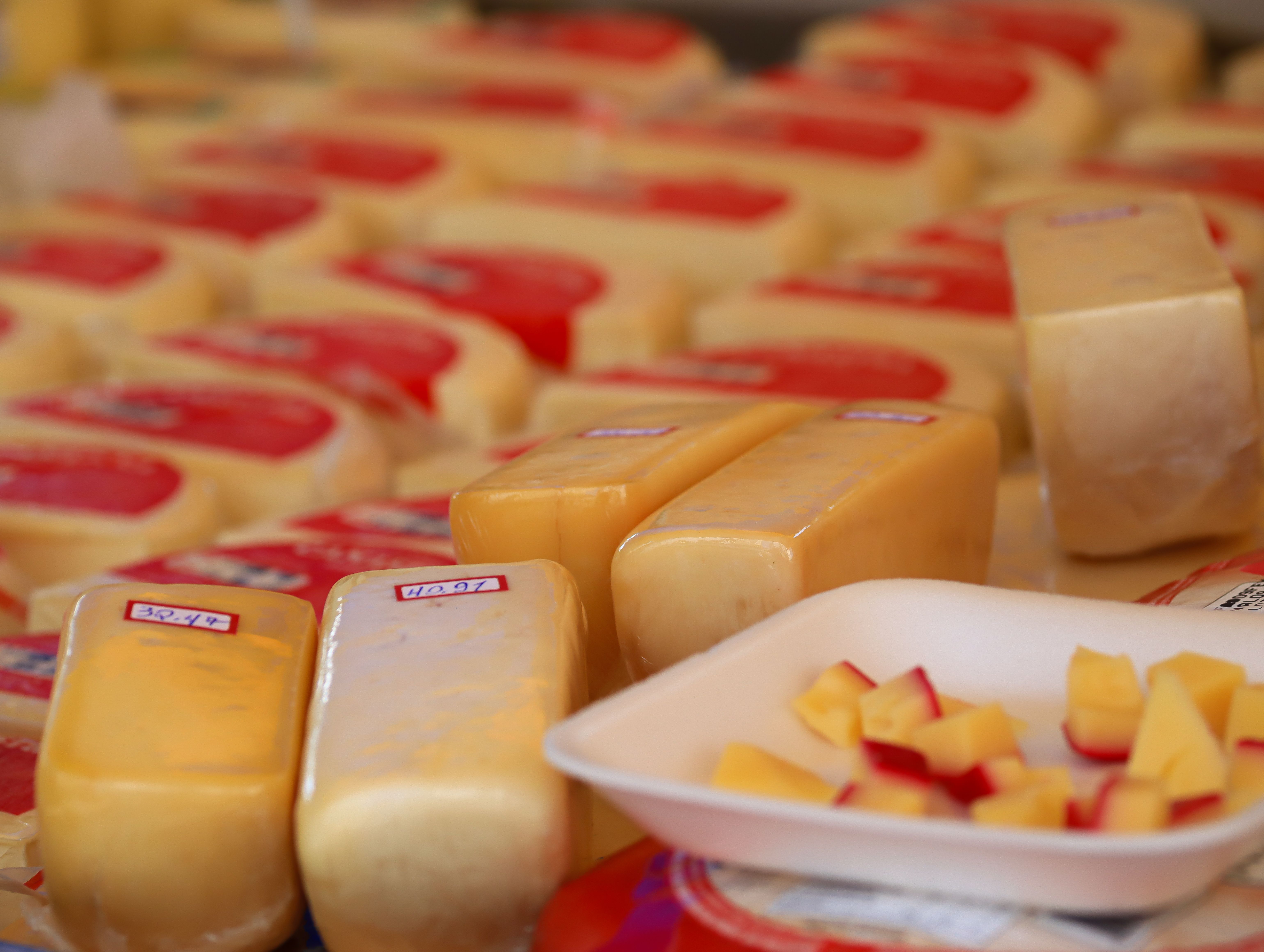
Soft cheeses and fresh dairy sit at the top of the risk list, and recent enforcement bears that out. La Colonia, Selectos Latinos, and Clover Hill were all flagged for L. monocytogenes risk in soft ricotta and Mexican-style cottage cheese products.
These categories share the traits Listeria exploits. They are high-moisture, minimally processed, and eaten without a consumer cook step. Soft and fresh cheeses often skip the aging and acidification that would suppress pathogen growth. The finished product is a hospitable environment, so contamination that survives production keeps growing in cold storage.
Ready-to-eat prepared foods carry the same exposure. On the USDA side, recent Listeria public health alerts covered products from Taher, Olympia Food Industries, and Crawford Sausage. Different plants, different products, but the same failure mode: a pathogen finding purchase in the post-lethality environment.
Why imported produce keeps showing up
The most recent Listeria recalls were not cheese at all — they were imported enoki mushrooms testing positive for L. monocytogenes. HH Fresh Trading, IQ Produce, and Hemu Trading were each named in separate actions.
Enoki mushrooms have become a recurring Listeria vehicle. They are grown in cool, humid conditions, handled extensively, and frequently eaten raw or lightly cooked despite labeling that may suggest otherwise. When the growing and packing controls upstream are weak, the contamination arrives with the product. Your own plant may be spotless and still ship an adulterated finished good because the hazard entered through an ingredient you never tested. For any brand sourcing RTE or minimally processed ingredients from overseas, imported produce is a live risk — not a hypothetical one.
The control failures behind the recalls
Strip away the product differences and the recalls trace back to a short list of preventive control breakdowns. 21 CFR Part 117, the FSMA Preventive Controls for Human Food rule, names every one of them.
The most common failure is inadequate environmental monitoring. Listeria lives in the plant, not just on the product. It colonizes drains, floor-wall junctions, standing water, and equipment framework. If your environmental monitoring program is not aggressively sampling these zones, you are blind to the reservoir that seeds finished-product contamination.
Wet niches and harborage sites are the second failure. Hollow rollers, cracked seals, worn conveyor belts, and condensation points give the organism a protected home that routine cleaning misses. Once a harborage site is established, it reseeds the line repeatedly until it is physically found and eliminated.
Sanitation preventive controls are the third. Part 117 requires sanitation controls where hazard analysis identifies environmental pathogens as a concern for RTE foods exposed to the environment. Weak sanitation cadence, inadequate verification, and no corrective-action loop turn a one-time positive into a persistent strain. FDA's guidance on the Control of Listeria monocytogenes in Ready-To-Eat Foods lays out the zone-based environmental testing framework that catches these problems early.
The fourth is the zero-tolerance reality itself. Because presence equals adulteration in RTE food, there is no margin. A control program built to hit a numerical limit is already too lax. The target is absence, verified.
What this means for your brand
If you produce soft cheese, fresh dairy, or any ready-to-eat food, treat Listeria as a plant-environment problem, not a product problem. Build the program around finding the organism before it finds your product.
Run a zone-based environmental monitoring program that samples drains, floors, and non-contact surfaces on a defined cadence, with a written escalation plan when Zone 3 or 4 goes positive.
Document sanitation preventive controls under Part 117, including verification steps and records that prove the cleaning actually worked.
Apply supplier verification to every RTE and minimally processed ingredient — especially imported produce like enoki mushrooms — under your foreign supplier and preventive-control programs.
Use hold-and-test on finished RTE lots so product does not ship ahead of results when the hazard analysis calls for it.
Close every positive with a corrective action that includes root-cause investigation, intensified sampling, and confirmed elimination of the harborage site.
The brands that stay off the recall list are not lucky. They monitor the environment relentlessly, verify their sanitation, and treat a single positive as a signal to hunt rather than a number to explain away.
See where your compliance gaps are before FDA does
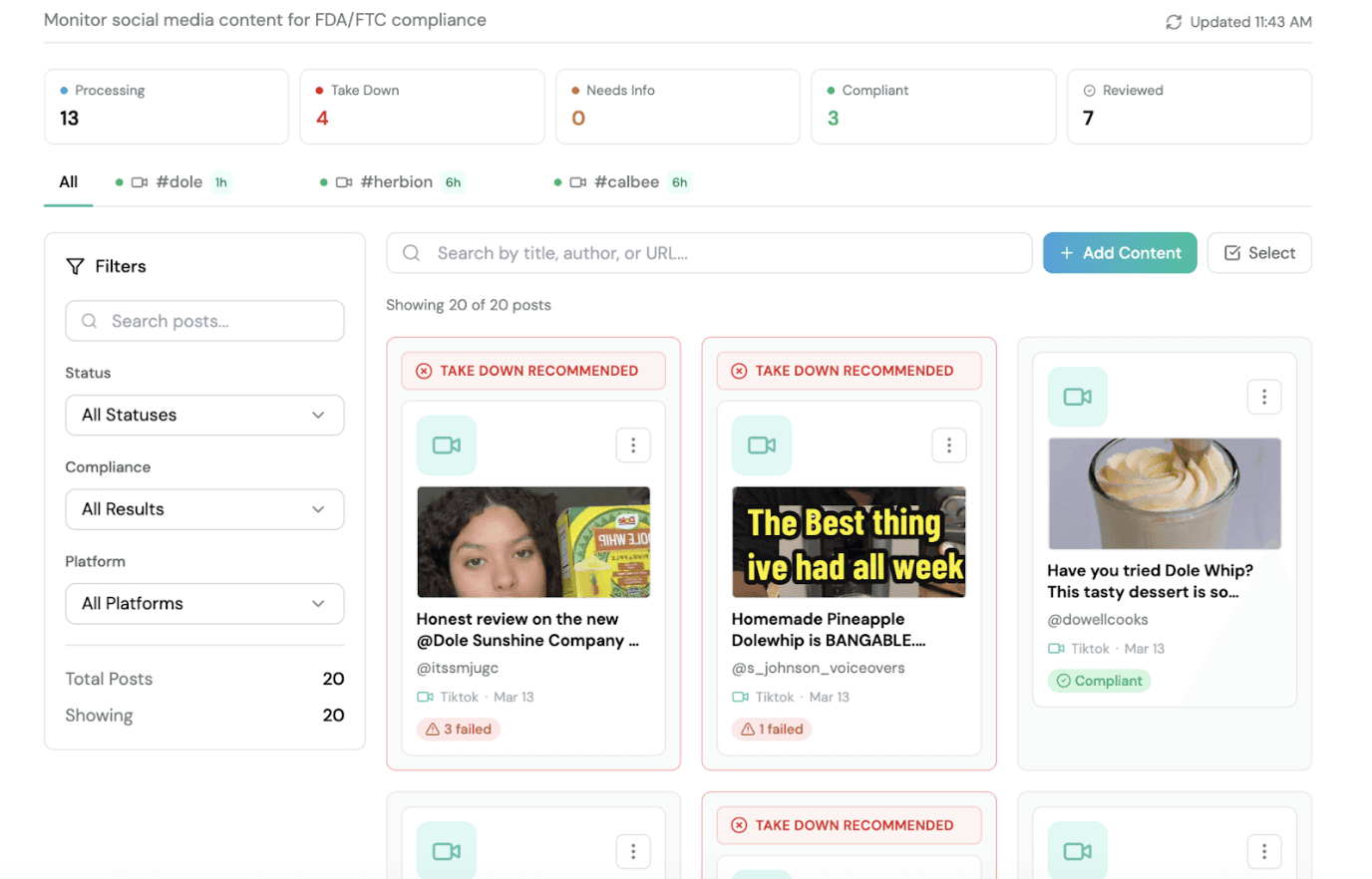
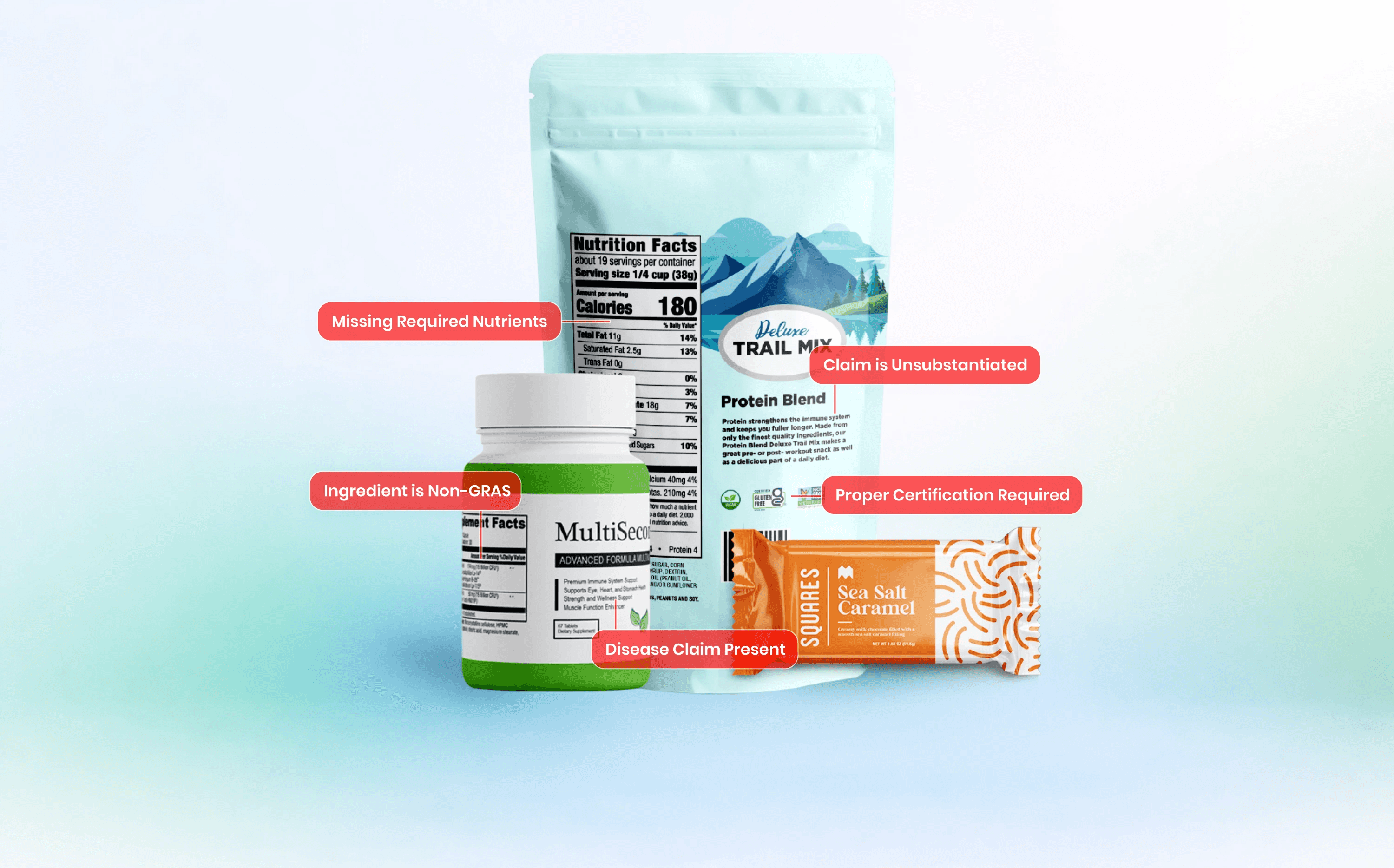
Truli's AI compliance platform audits your labels, packaging, marketing, and ingredient sourcing against FDA and FTC requirements, citing the exact regulation and suggesting fixes. Regulatory Radar tracks warning letters, recalls, and litigation trends for your product categories — including the Listeria signals surfacing across dairy and RTE foods — so you see the pattern forming before enforcement reaches you. Book a demo.
About

Truli is an AI compliance platform for food, beverage, and supplement brands. Automate FDA/FTC label reviews, claims validation, and post-market monitoring — 10x faster.

Platform
See Truli in action
If regulatory delays are consuming months and thousands in fees, see how Truli delivers fast and continuous compliance coverage at a fraction of the cost.
Book a demo