Gluten-Free and Organic Claims on Alcohol — TTB Policy
Gluten-free and organic are two of the highest-converting claims in beverage alcohol — and two of the most technically constrained. TTB borrows FDA's gluten standard but adds its own conditions, and USDA's organic rules split wine into categories most consumers have never heard of. Get the qualifiers wrong and your COLA gets rejected.

Michael Wu
| Co-founder at Truli

Two voluntary claims drive real velocity in beverage alcohol: "gluten-free" and "organic." Neither is governed by TTB alone. Gluten claims run through TTB policy that is deliberately harmonized with FDA's food standard, and organic claims run through USDA's National Organic Program, with TTB checking that your label matches your organic certification. Three agencies can touch a single front label — and each has rejection power over a different word on it.
Here is how both claims actually work, with the section numbers to back them up.
Gluten-free claims — TTB Ruling 2020-2
When can an alcohol beverage say "gluten-free"?
The answer depends entirely on your ingredients. Under TTB Ruling 2020-2, products made without any gluten-containing grains — think wines from grapes, ciders from apples, spirits from potatoes or corn, beers brewed from sorghum or rice — may be labeled "gluten-free" outright, applying the same standard as FDA's rule at 21 CFR 101.91. That standard requires, among other things, that any unavoidable gluten from cross-contact stay below 20 parts per million. So your supply chain matters: a sorghum beer brewed on shared barley equipment without controls can lose the claim.
The 2020 ruling also brought a meaningful change for spirits: aligned with FDA's 2020 final rule on fermented and hydrolyzed foods, TTB now allows "gluten-free" on spirits distilled from gluten-containing grains — wheat vodka, barley-based whiskey — because distillation removes gluten protein, provided good manufacturing practices prevent reintroduction of gluten afterward (through flavorings, additives, or cross-contact).
Why barley beer can only say "crafted to remove gluten"
Fermented products made from gluten grains and then treated to reduce gluten — the entire "gluten-removed" barley beer category — cannot be labeled "gluten-free." The reason is scientific, not bureaucratic: TTB agrees with FDA that no validated test can quantify gluten in fermented products in terms of intact gluten protein, so a below-20-ppm claim cannot be verified.
Instead, these products may state they are "Processed," "Treated," or "Crafted" to remove gluten — but only with a qualifying statement disclosing all three of the following:
The product was fermented or distilled from a grain that contains gluten
The gluten content cannot be verified
The product may contain gluten
TTB will not approve the COLA unless the application also includes a detailed description of the gluten-removal method. For consumers with celiac disease, that qualifier is the entire point — treat it as untouchable copy, not fine print your designer can shrink.
Organic claims — USDA's rules, enforced at the TTB gate
Organic alcohol is certified under the USDA National Organic Program at 7 CFR Part 205, and your operation needs an accredited certifying agent before any organic claim goes to TTB. TTB then reviews the organic references on your label as part of the COLA process — a mismatched claim is a label rejection even with valid certification.
The four organic categories
Label category | Organic content | Sulfite rule (wine) | USDA seal? |
|---|---|---|---|
"100% organic" | 100% organic ingredients | No added sulfites | Yes |
"Organic" | At least 95% organic | No added sulfites (naturally occurring only) | Yes |
"Made with organic grapes" | At least 70% organic | Added sulfites allowed, total ≤ 100 ppm | No |
Ingredient-list mention only | Under 70% | No restriction from NOP | No |
The sulfite line that splits the wine aisle
Why do so few wines carry the USDA seal? Sulfites. Sulfur dioxide appears on the National List at 7 CFR 205.605 with an annotation permitting it only in wine labeled "made with organic grapes," and only if total sulfite concentration does not exceed 100 ppm. A wine labeled "organic" — the 95% category — may not have any added sulfites at all.
That single annotation creates the market structure: most certified-organic vineyards sell wine as "made with organic grapes" because winemakers want SO2 for stability, and that choice costs them the seal. If your label says "organic wine" and your winemaking notes show added SO2, you have a federal labeling problem, not a marketing nuance. Added sulfites must also still be declared with the standard "contains sulfites" statement once they hit 10 ppm.
Beer and spirits follow the same category logic — a "made with organic [ingredient]" claim needs 70% organic content and forgoes the seal — but the sulfite annotation is wine-specific.
Where brands actually get caught
Three failure patterns come up again and again in this claim territory. First, qualifier drift: the "crafted to remove gluten" disclosure or the "contains less than 100 ppm" reality gets separated from the marketing claim as packaging is redesigned, or dropped entirely from the website and social captions — where the same rules apply. Second, seal misuse: the USDA organic seal on a "made with organic grapes" wine is a straightforward violation. Third, cross-agency blind spots: a label team that clears TTB requirements but never checks the FDA gluten standard, or vice versa, because each assumed the other agency's rules were "handled."
The claims also interact. A gluten-removed barley beer marketed as "gluten-free" on Instagram — even with a compliant label — invites both TTB advertising scrutiny and consumer-protection exposure, since advertising is held to the same standard as the label. The same goes for organic language: a tasting-room page that says "organic wine" about a "made with organic grapes" bottling has overstated the certification, and screenshots of that page have shown up in complaints. Audit the claim everywhere it appears, not just on the COLA.
Check every claim against the rule behind it
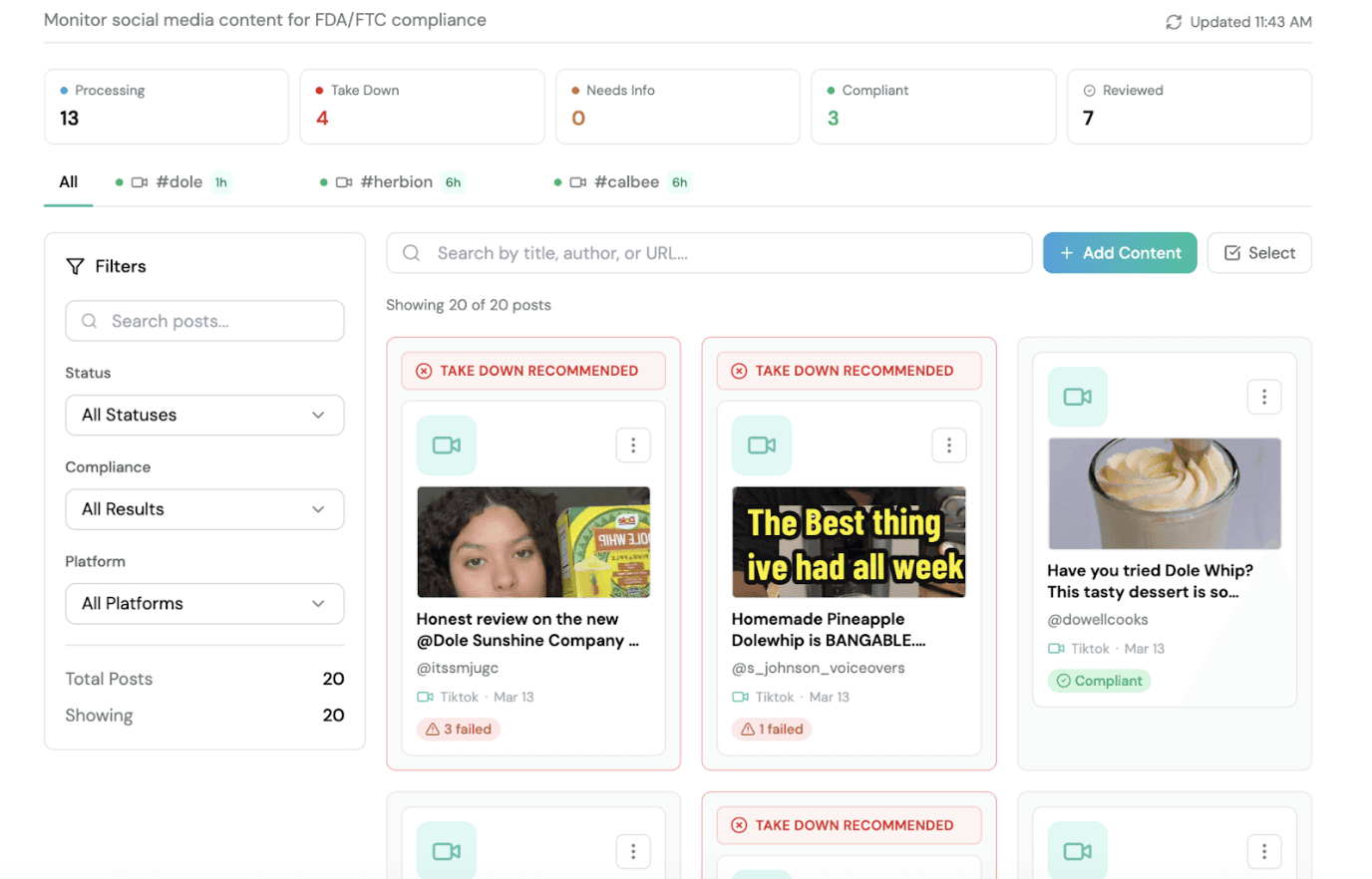
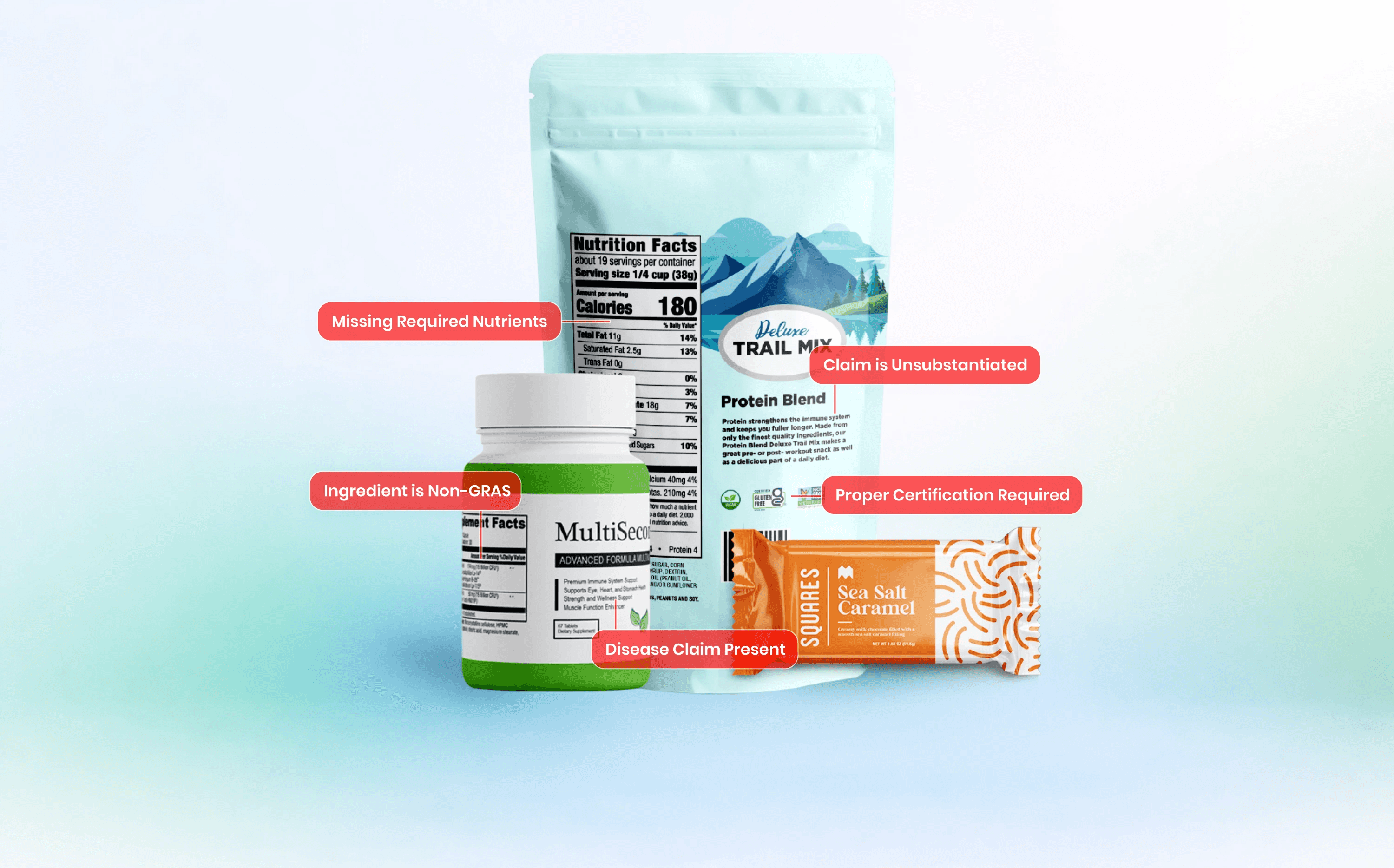
Truli's AI agents scan labels, packaging, websites, and social content against the actual regulatory text — TTB rulings, FDA's gluten-free standard, and USDA organic labeling categories included — and cite the specific rule for every finding. If a qualifier goes missing or a seal shows up where it should not, you will catch it before TTB or a certifier does. Book a demo to run your claims through it.
A note from Truli: Truli is not a law firm, and this article does not constitute or contain legal advice or create an attorney-client relationship. When determining your obligations and compliance with respect to relevant laws and regulations, you should consult a licensed attorney.
About

Truli is an AI compliance platform for food, beverage, and supplement brands. Automate FDA/FTC label reviews, claims validation, and post-market monitoring — 10x faster.

Platform
See Truli in action
If regulatory delays are consuming months and thousands in fees, see how Truli delivers fast and continuous compliance coverage at a fraction of the cost.
Book a demo