How a Functional Beverage Brand Avoided an Amazon Listing Suspension Before It Happened
Amazon is the largest supplement and functional beverage marketplace in the country — and one of the most compliance-sensitive. Amazon's own policy enforcement team reviews listings for FDA claim violations independently of the FDA itself. Getting a listing suspended after launch doesn't just mean lost revenue for the days it's down. It means re-review, appeals, and a flag on your account that follows you. For a brand that built its launch strategy around Amazon, avoiding that outcome was non-negotiable.

Catherine Zhou
| Co-founder at Truli

The brand had been working on their launch for seven months. Two SKUs — a focus blend and an energy blend, both positioned as functional beverages with supplement facts panels. They'd put real effort into the branding, the formulation, and the DTC pre-launch. Amazon was supposed to be the main channel at launch, with a wholesale play to follow once they had the sales data to support it.
They had a marketing agency handling copy and a network of creators lined up for launch-day content. Everything was on track. What they hadn't done was run any of it through a compliance lens.
The claim problem they didn't know they had
The copy their agency had written was good — it was compelling, benefit-forward, and exactly the kind of language that performs well in consumer marketing. It was also, in several places, non-compliant.
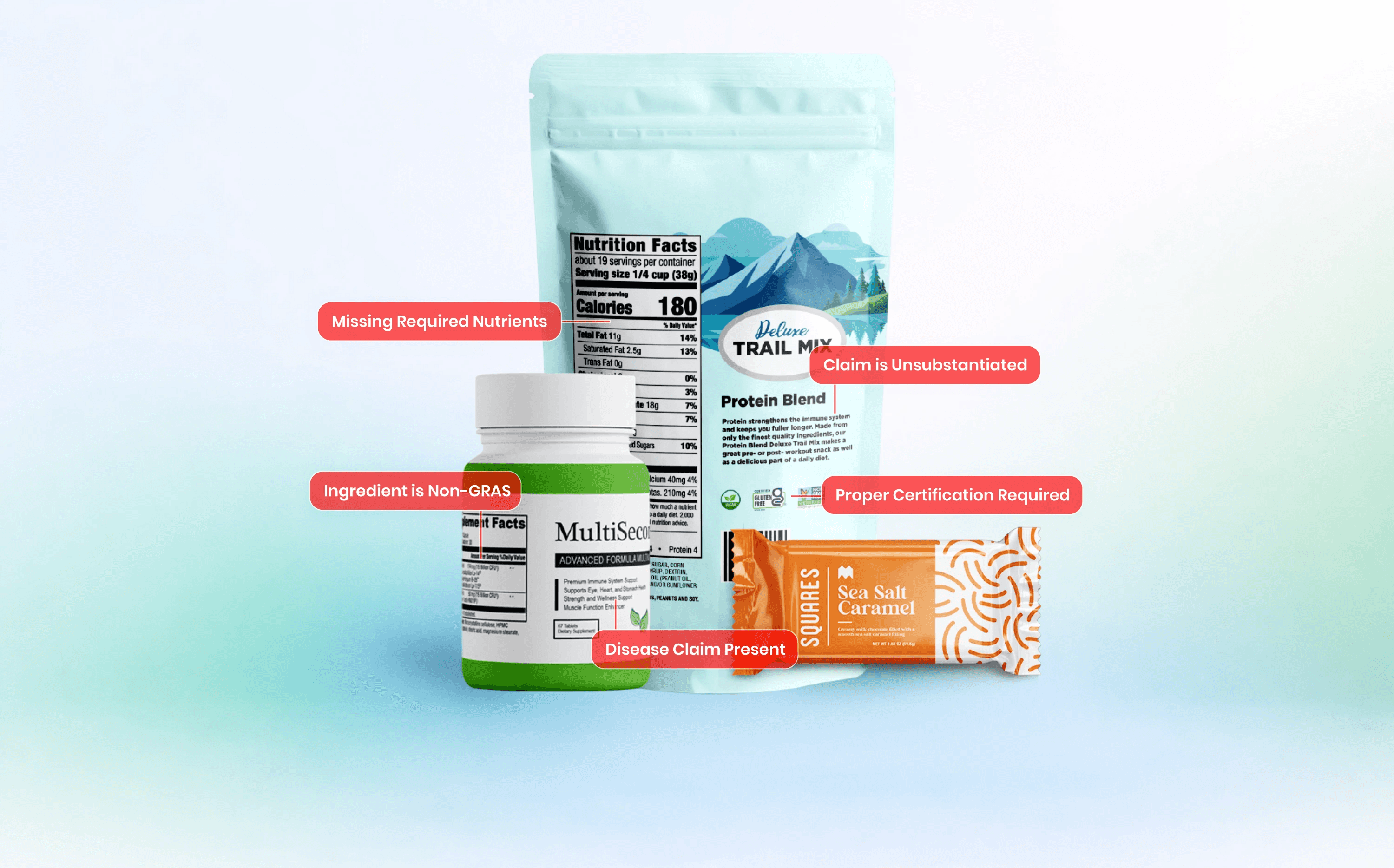
The energy blend listing described the product as something that "fights fatigue" and "reduces brain fog." The focus blend promised to "sharpen mental clarity for people who struggle to focus." On their website, the product was positioned as a solution for people who "deal with low energy and mental exhaustion." All of it read naturally. None of it was written with any intent to deceive. And all of it either crossed into disease claim territory or made unsubstantiated structure/function claims that FDA and the FTC would scrutinize — and that Amazon's policy team would act on without warning.
Amazon routinely suspends listings that contain disease claims or claims it categorizes as drug-level outcomes. Appeals can take days to weeks. During that window, the listing doesn't exist. For a brand counting on a coordinated launch, there is no good version of that outcome.
The Scan Two Weeks Before Launch
A contact at their co-manufacturer had worked with brands that used Truli. He suggested they run the listings and website copy through it before going live. They did, with two weeks to spare.
Truli flagged the disease-adjacent claim language across both listings and the website, identified the specific phrases that would trigger Amazon's automated content review, and returned suggested rewording that preserved the marketing intent — benefit-forward, compelling language — while staying within what FDA and FTC standards permit for functional beverages. It also flagged a formatting issue in the Supplement Facts panel on one SKU that would have been caught eventually regardless.
The agency revised the copy in a day. The listings went live clean.
What would have happened without it
Amazon's listing review doesn't give you a warning. The listing either goes live or it doesn't — and if it gets flagged after going live, it comes down while the appeal is processed. For a brand that had pre-sold inventory and coordinated a creator push around launch day, a suppressed listing on day one would have been a significant setback. The cost of fixing non-compliant copy before launch was a few hours of revision time. The cost of fixing it after would have been much higher.
The Creator Problem They Didn't Know About
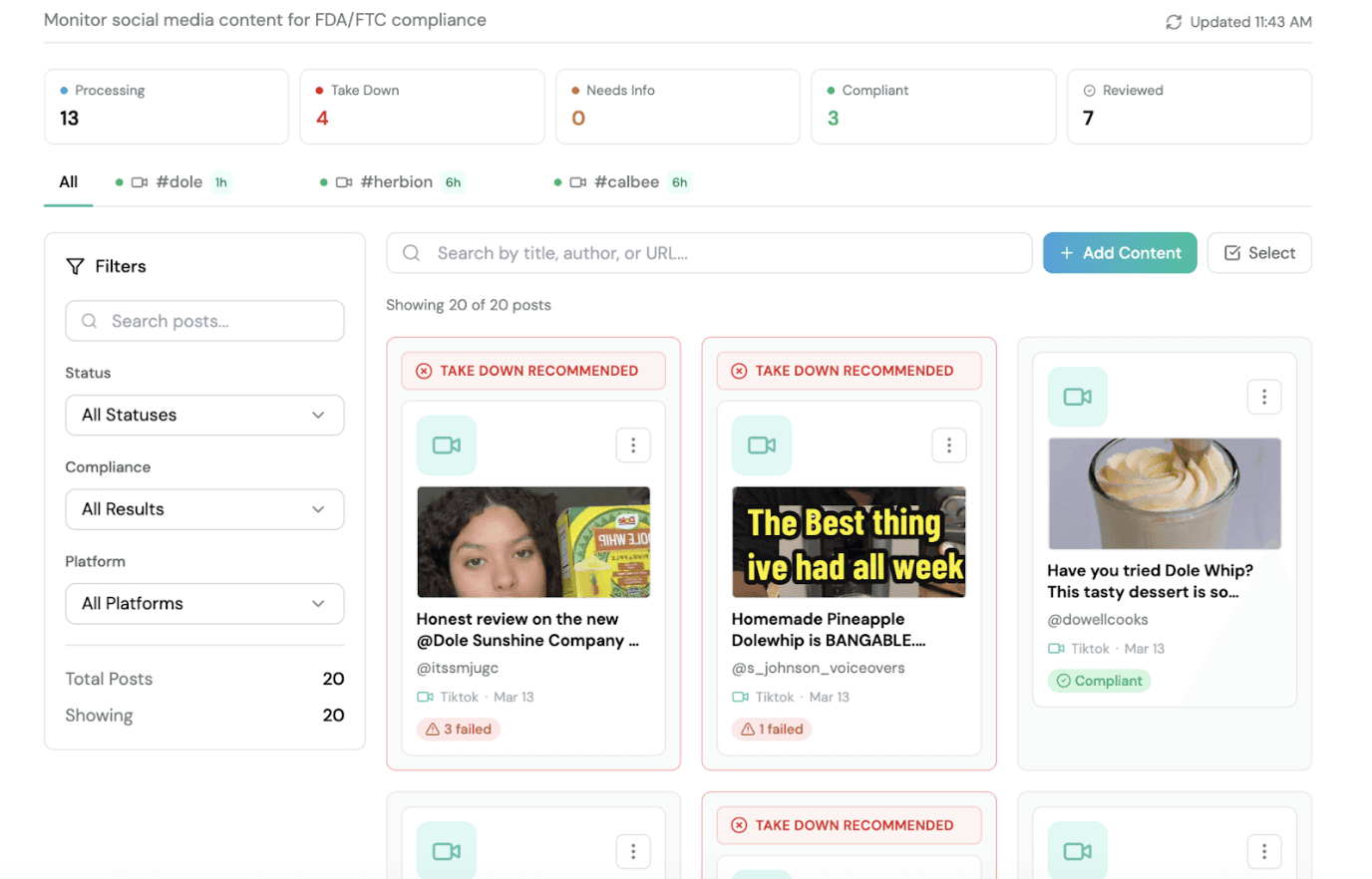
At the same time they were revising their listing copy, they set up Truli's Social Monitoring on the creator accounts they'd activated for the launch. Two of the creators — both with substantial followings — had already posted teaser content in the week before launch.
One of those posts described the focus blend as something that "actually works for ADHD." The creator hadn't been told to say that. They'd tried the product, liked it, and written what felt natural to them. Under FTC guidelines, the brand is responsible for claims made by anyone promoting their product in exchange for compensation or free product — regardless of whether the brand approved the specific language. A post describing the product as effective for ADHD is a disease claim. If that post had been live on launch day when the listing went up, it would have created a regulatory footprint that connected the brand to a claim it had never made on its own label.
Truli flagged the post the same morning it went live. The brand reached out to the creator, explained the issue, and the caption was updated before the launch campaign was in full swing. The creator was cooperative — they had no idea the language was a problem. Most don't.
Why creator content is the compliance gap most brands underestimate
Influencer and creator marketing is how most functional beverage and supplement brands build awareness. It's also where claims tend to drift furthest from what the brand itself would say. Creators write in their own voice, describe their personal experience, and don't know — or think about — the regulatory rules that govern what can and can't be claimed about a supplement. The result is a steady stream of posts that carry the brand's implicit endorsement and the FTC's legal attention.
The brand now has monitors running on every creator account they activate, regardless of follower count. New posts get flagged the same day they go live.
What the Launch Looked Like
The listings went live without incident. No suspensions, no flags, no appeals. The corrected Supplement Facts panel cleared Amazon's review without issue. The launch campaign ran as planned.
They've since expanded to a third SKU and run every piece of marketing copy — listings, website updates, email campaigns — through Truli before it goes live. The compliance process that used to be an afterthought is now built into how they work.
Getting to launch is hard enough
Most functional beverage and supplement brands invest everything in product development, branding, and channel strategy. Compliance is the thing that stops launches, pulls listings, and creates legal exposure — and it's almost always caught too late. Building a compliance review into the pre-launch process doesn't slow anything down. It just means fewer surprises on the other side of it.
A note from Truli: Truli is not a law firm, and this article does not constitute or contain legal advice or create an attorney-client relationship. When determining your obligations and compliance with respect to relevant laws and regulations, you should consult a licensed attorney.
About

Truli is an AI compliance platform for food, beverage, and supplement brands. Automate FDA/FTC label reviews, claims validation, and post-market monitoring — 10x faster.
Platform
See Truli in action
If regulatory delays are consuming months and thousands in fees, see how Truli delivers fast and continuous compliance coverage at a fraction of the cost.