Plastic, Metal, and Glass — The Physical Contamination Problem
Not every recall is a pathogen or a mislabeled allergen. A steady share of 2026 food recalls come from physical contamination — plastic, metal, and glass fragments that made it into finished product. These are engineering failures, and they're preventable. Here's what the data shows and how to control it.

Catherine Zhou
| Co-founder at Truli
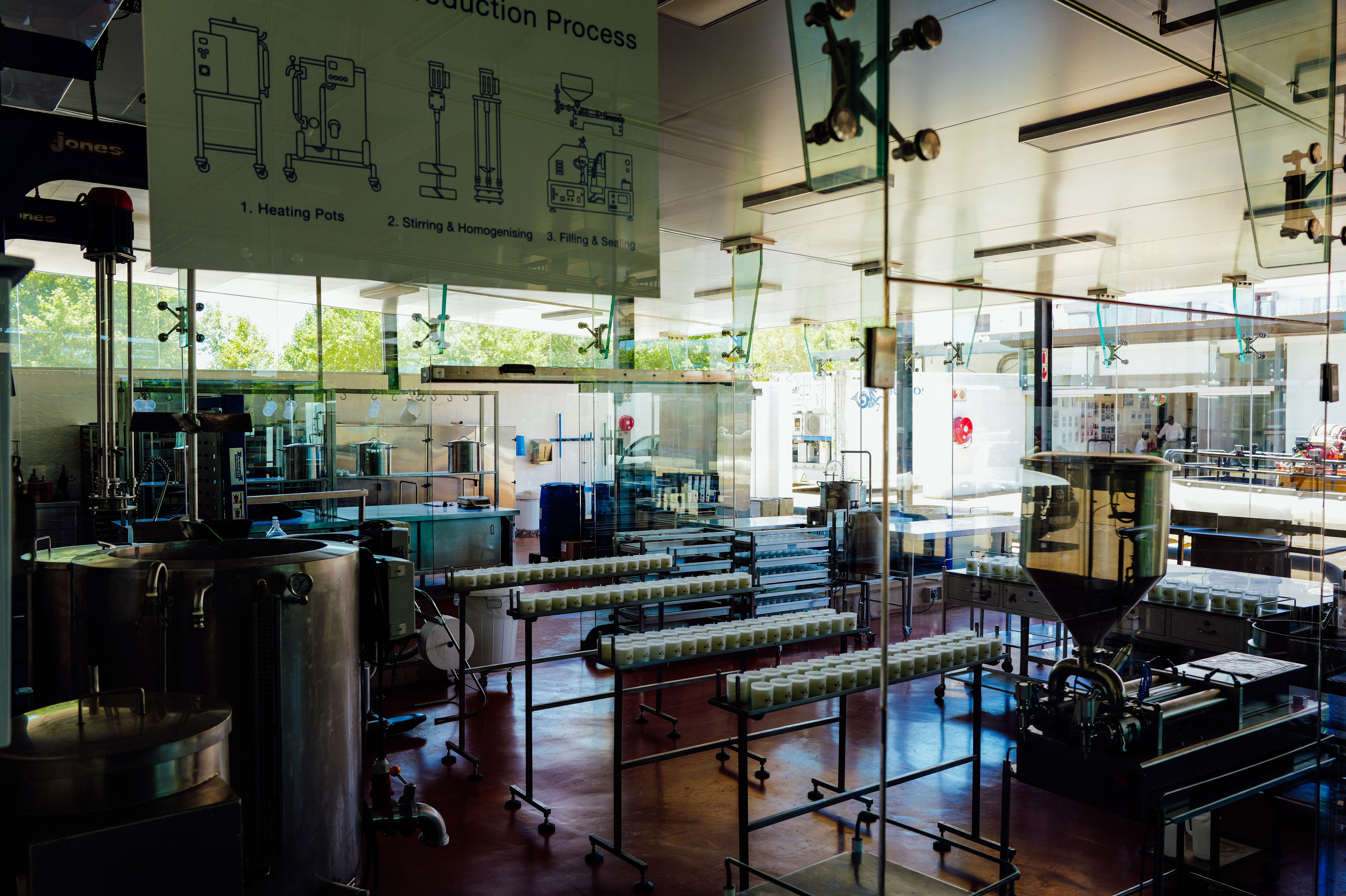
Not every recall is a pathogen or a mislabeled allergen. A steady share of 2026 food recalls come from physical contamination — plastic, metal, and glass fragments that made it into finished product. These are the recalls nobody talks about at conferences, but they cost the same money and burn the same trust. Over the last four months, foreign material accounted for roughly 22 FDA recalls, a smaller but persistent share behind allergens and Salmonella. The pattern matters more than the count: these fragments are engineering failures, and engineering failures are preventable.
Physical hazards are an engineering failure, not bad luck
A metal shaving in a finished product did not fall from the sky. It came from a worn blade, a cracked screen, a chipped machine part, or an ingredient that arrived contaminated. Every one of those has a root cause and a control point. That is the whole premise of modern food safety regulation.
Under 21 CFR Part 117, the Preventive Controls for Human Food rule, your hazard analysis must evaluate physical hazards — not just biological and chemical ones. If the analysis shows a physical hazard requires a control, you must apply a process preventive control and verify it works. Metal detectors, sieves, screens, magnets, X-ray systems, and filters are the named tools. They are not optional nice-to-haves; they are how you meet the rule when the hazard analysis says a control is needed.
The severity side is just as concrete. FDA's long-standing compliance policy treats hard or sharp foreign objects in a specific size range — roughly 7 mm to 25 mm — as the fragments most associated with injury like laceration or a broken tooth. Objects in that range can render a product adulterated under section 402 of the FD&C Act. The lesson: a fragment does not have to be large to trigger a recall. It has to be hard, sharp, and the wrong size.
Where fragments come from
Foreign material has a short list of usual sources, and a mature program controls each one. When you know where fragments originate, you know where to put your detection and your monitoring.
Common entry points for physical contamination:
Equipment wear — worn blades, chipped grinder plates, degraded gaskets, and metal-on-metal abrasion that sheds fragments into product
Maintenance failures — loose bolts, broken screen mesh, and tools or hardware left behind after a repair
Packaging materials — brittle plastic, glass from jars or bottles, and film or liner pieces that break during filling
Incoming ingredients — contamination that arrives with raw materials, especially bulk agricultural inputs and co-manufactured components
Each source maps to a different control. Equipment wear calls for preventive maintenance schedules and inspection of contact surfaces. Packaging risk calls for supplier specs and glass-and-brittle-plastic policies. Incoming ingredient risk pushes control upstream to your suppliers and your receiving checks. You cannot inspect your way to safety at the end of the line if fragments are entering at the start.
Why co-packers and plant-based and novel formats show up
Truli's Regulatory Radar flags "Plastic and Physical Contamination in Food Products" as a recurring contaminant risk. Recent plastic-contamination alerts span categories from pet food to plant-based meat, and the common thread is inadequate foreign-material detection systems. That pattern is not random.
Novel formats and co-packed products carry structural risk. Plant-based and reformulated products often run on newer or repurposed equipment, with recipes and process lines that have less operating history behind them. Co-packing adds distance between the brand and the plant floor, so the brand owning the label may not directly control the detection layer. When you outsource production, you do not outsource the recall. If your co-packer's metal detector is out of calibration, your brand name is on the press release.
Building the detection layer
A defensible foreign-material program runs in three stages: analyze, control, verify. Skip any one and the other two stop protecting you.
Start with the hazard analysis. Walk the process flow and identify every point where a physical hazard could enter or where one could be removed. Decide, for each hazard, whether it is reasonably likely to occur and require a preventive control. Document that reasoning — it is what an investigator and your own team rely on later.
Then apply the controls the analysis demands. The core toolkit is well established:
Metal detectors — positioned late in the line to catch ferrous, non-ferrous, and stainless fragments after most processing is done
X-ray systems — for dense contaminants metal detectors miss, including glass, stone, dense plastic, and bone
Sieves and screens — to catch oversized foreign material in powders, slurries, and liquids
Magnets — to pull ferrous metal from flowing product streams ahead of final detection
Filters — for liquid lines where fine particulate must be removed
Verification is where most programs quietly fail. A metal detector that nobody tests is a decoration. You need routine calibration, test-piece challenges at defined intervals, and monitoring records that prove the equipment was working during every production run. Records of reject rates, sensitivity checks, and corrective actions turn a device on the line into a control you can stand behind. When a fragment does slip through, those records are how you scope the problem to one shift instead of one quarter.
What this means for your brand
Physical contamination is the most controllable recall category you face. It rewards discipline and punishes assumptions. Here is where to focus.
Confirm your hazard analysis actually addresses physical hazards, not just microbial and chemical ones — this is an explicit Part 117 requirement
Match each fragment source to a named control: maintenance for equipment wear, supplier specs for packaging and ingredients, detection at the line
Treat verification as the point of the program — calibration logs, test-piece challenges, and monitoring records are your proof of control
Hold co-packers to your standard in writing, and require access to their detection and calibration records
Watch enforcement patterns in your categories, because a cluster of plastic-fragment recalls in an adjacent product type is an early warning for yours
The brands that avoid these recalls are not lucky. They have a hazard analysis that names physical hazards, controls tied to real entry points, and verification records that prove the controls ran. Everything else is hoping a worn blade does not shed on the wrong day.
Catch the gap before a fragment does
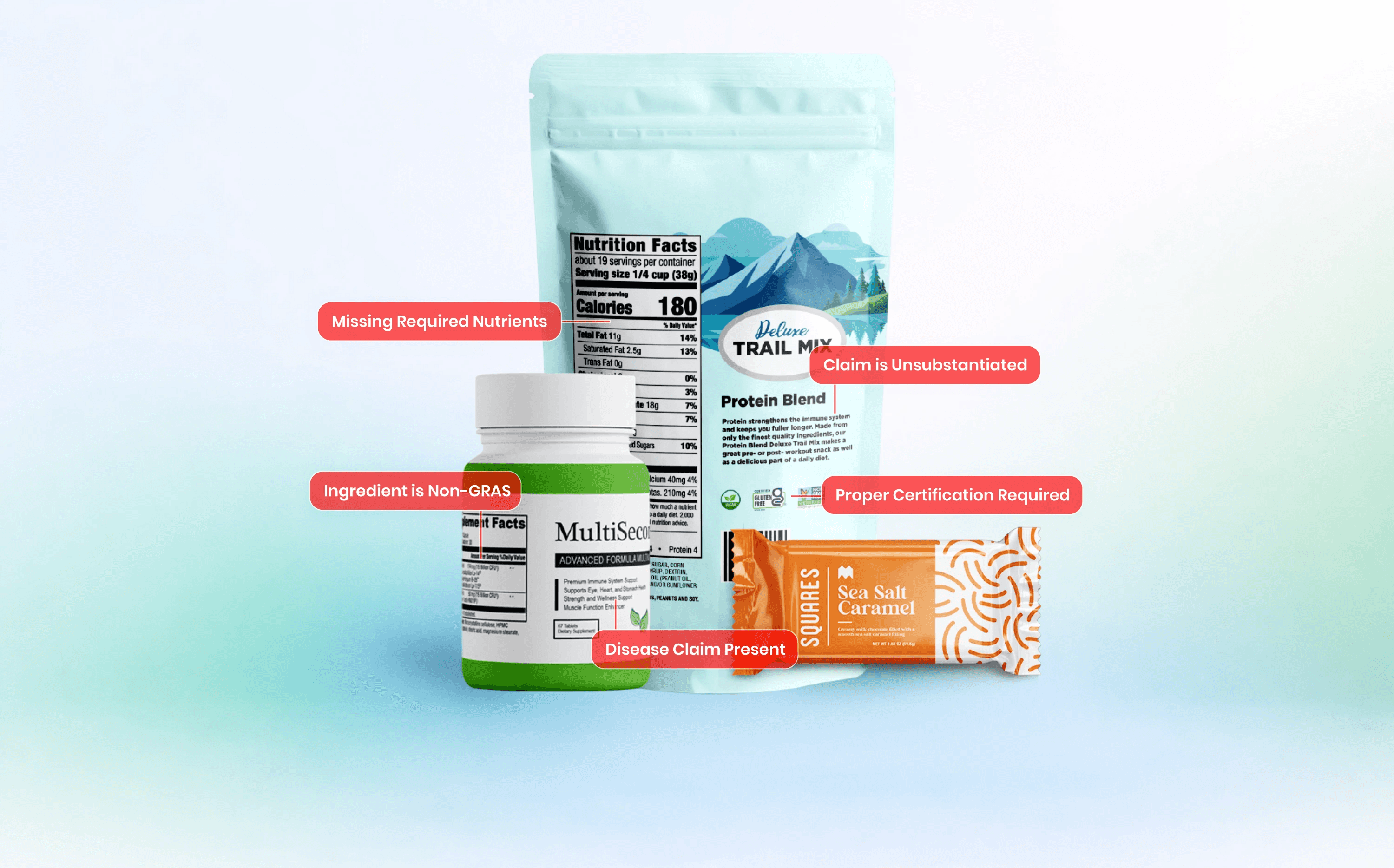
Truli is an AI-native compliance platform built for food and supplement brands that cannot afford a preventable recall. Our AI agents audit labels, packaging, marketing, and ingredient data against FDA and FTC requirements, citing the specific regulation and suggesting the fix. Regulatory Radar watches FDA and USDA warning letters, recalls, and litigation trends in your product categories — so a wave of plastic-contamination alerts in an adjacent format reaches you before it reaches your line. Truli does not replace your food safety plan or give legal advice, but it makes the gaps visible while you can still close them. Book a demo.
About

Truli is an AI compliance platform for food, beverage, and supplement brands. Automate FDA/FTC label reviews, claims validation, and post-market monitoring — 10x faster.

Platform
See Truli in action
If regulatory delays are consuming months and thousands in fees, see how Truli delivers fast and continuous compliance coverage at a fraction of the cost.
Book a demo