FDA Front-of-Package Labeling — The Nutrition Info Box Rule
FDA's proposed front-of-package rule would require a standardized Nutrition Info box — rating saturated fat, sodium, and added sugars as Low, Med, or High — on the front of most packaged foods. The agency targeted a spring 2026 final rule, then signaled everything is on the table. Here's where it stands and how to prepare.

Michael Wu
| Co-founder at Truli

Front-of-pack nutrition labeling is the biggest proposed change to US food labels since the 2016 Nutrition Facts overhaul. Published January 16, 2025, FDA's proposed rule would end the era of purely voluntary front-of-pack schemes — the industry's Facts Up Front program, retailer badges, brand-invented icons — and replace them with one mandatory, standardized box on nearly every packaged food.
For label and packaging teams, this is a redesign of the principal display panel across the entire portfolio. Here's what the rule requires, where it actually stands in 2026, and what's worth doing before it's final.
What the Proposed Nutrition Info Box Requires
The proposed rule would require a compact "Nutrition Info" box on the principal display panel of most packaged foods, showing three nutrients per serving:
Saturated fat — rated Low, Med, or High
Sodium — rated Low, Med, or High
Added sugars — rated Low, Med, or High
The interpretive ratings are keyed to the Daily Value: Low is 5% DV or less, High is 20% DV or more, and Med covers the range between. That's the same 5/20 rule of thumb FDA has long taught consumers for reading the Nutrition Facts panel — now printed as a verdict on the front of the pack.
Notably, the proposal covers only "nutrients to limit." Calories aren't in the box, and neither are beneficial nutrients — FDA's consumer research concluded the interpretive Low/Med/High scheme outperformed numeric-only formats at helping shoppers identify healthier options quickly.
Who Would Have to Comply, and When
The proposed compliance runway is tiered by revenue:
Businesses with $10 million or more in annual food sales: three years after the final rule's effective date
Businesses under $10 million: four years after the effective date
Standard Nutrition Facts exemptions would generally carry over, and small packages get format accommodations. But for the vast majority of conventional foods sold at retail, the box would be mandatory — placement, size, and format standardized, with none of the discretion brands currently enjoy on the front panel.
Where the Rule Actually Stands in 2026
The comment period closed in mid-2025 after an extension, drawing thousands of comments. FDA's regulatory agenda projected a final rule in spring 2026 — a deadline that has come and gone.
In March 2026, FDA's Deputy Commissioner for Human Foods said the agency was actively reviewing comments and that "everything is on the table," explicitly including revisions or even rescission of the proposal. At the same time, the administration's broader nutrition agenda — the MAHA platform, the pending federal ultra-processed foods definition, the updated "healthy" claim rule — all push toward more interpretive front-of-pack signaling, not less.
The realistic read for brands: the rule's final shape and timing are uncertain, but the direction isn't. Some version of standardized front-of-pack disclosure — federal, state, or retailer-driven — is coming to US shelves, and every peer market (Chile's warning octagons, the UK's traffic lights, Canada's high-in symbols) has already made the move.
What the Box Changes for Brand Strategy
Your nutrition profile becomes front-of-pack copy
Today, a high-sodium soup discloses that fact in small print on the back. Under the proposal, "Sodium: High" appears next to your brand name at the shelf. Products near the 20% DV threshold have a strong incentive to reformulate just under it — and products already low get a free marketing asset.
Front-panel real estate gets tighter
The box claims mandatory space on the PDP, forcing layout tradeoffs with claims, badges, and brand elements. Packaging redesign across a full portfolio takes 12–24 months with print cycles; the three-year runway is shorter than it sounds.
Claim consistency gets audited by shoppers
A front panel that says "wholesome" directly above "Added Sugars: High" is a class action exhibit waiting to be filed. Every existing front-of-pack claim needs to be re-read against what the box will say beside it.
What to Do Before the Final Rule
Model every SKU against the 5/20 thresholds now. You already have the data — the Nutrition Facts panel. Sorting the portfolio into Low/Med/High per nutrient shows exactly which products the box helps, hurts, or sits neutral on.
Flag near-threshold products for reformulation review. A product at 21% DV sodium wears "High"; at 19% it doesn't. Those margins are where reformulation ROI concentrates.
Re-review front-panel claims against the future box. Anything health-forward on a product that would rate High in any nutrient deserves scrutiny today — that combination is already what FTC and plaintiffs' firms look for.
Don't print around a guess. Until the final rule lands, keep FOP redesign concepts flexible — format, placement, and even the rule's survival could change.
Audit your front panel before FDA does
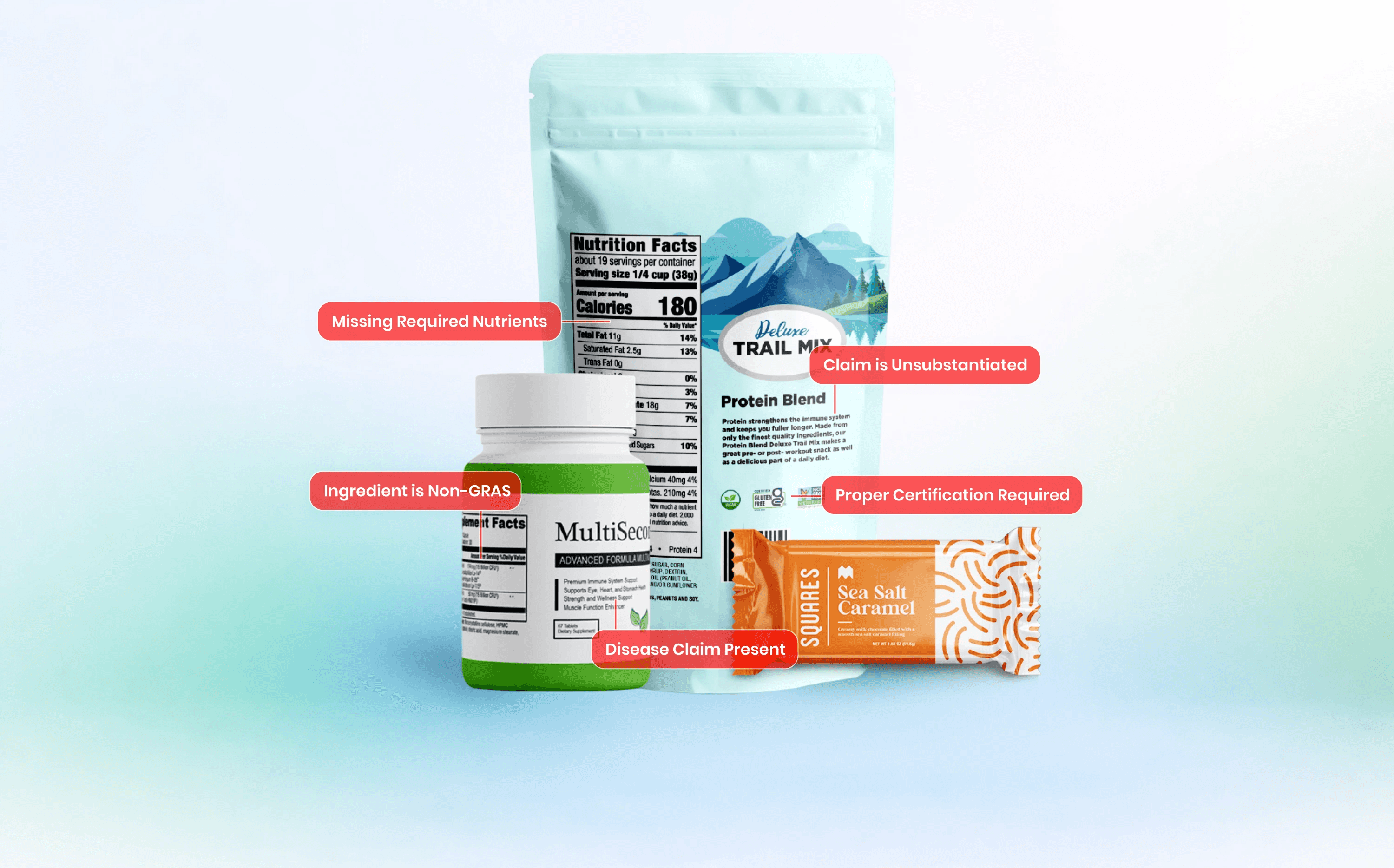
Truli reviews your labels and claims against current FDA and FTC requirements and flags the claim-versus-nutrition-profile conflicts that front-of-pack disclosure will put under a spotlight. Book a demo to run your portfolio through it.
A note from Truli: Truli is not a law firm, and this article does not constitute or contain legal advice or create an attorney-client relationship. When determining your obligations and compliance with respect to relevant laws and regulations, you should consult a licensed attorney.
About

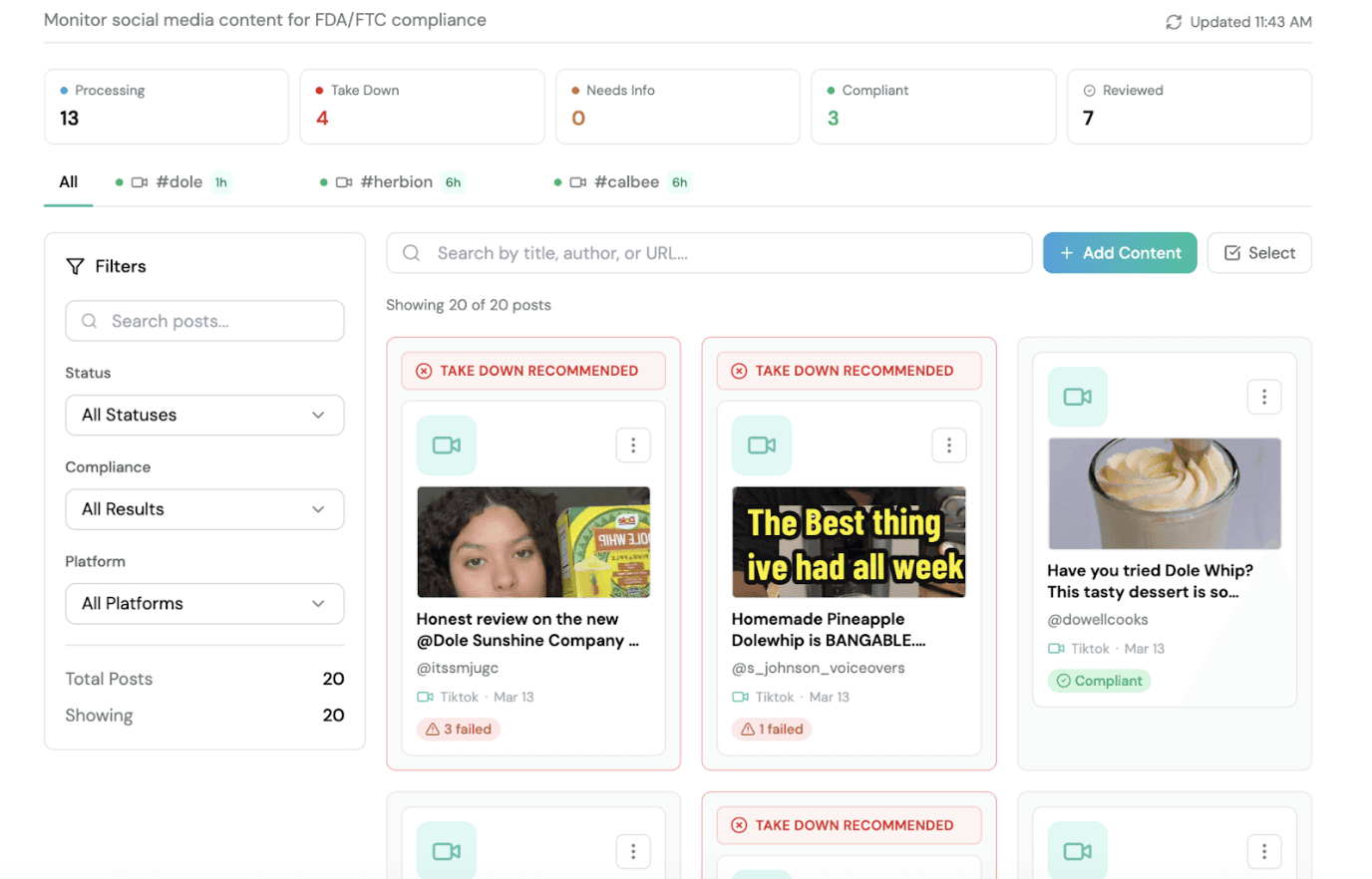
Truli is an AI compliance platform for food, beverage, and supplement brands. Automate FDA/FTC label reviews, claims validation, and post-market monitoring — 10x faster.

Platform
See Truli in action
If regulatory delays are consuming months and thousands in fees, see how Truli delivers fast and continuous compliance coverage at a fraction of the cost.
Book a demo