FAA Act — The Federal Alcohol Administration Act Explained
Nearly every federal rule an alcohol brand encounters — basic permits, COLAs, labeling standards, advertising restrictions, tied house bans — traces back to one statute: the Federal Alcohol Administration Act of 1935. Understanding the FAA Act's structure, its interstate commerce trigger, and its narrow commodity definitions is the fastest way to understand why some alcoholic beverages are labeled under TTB rules and others under FDA food labeling.

Catherine Zhou
| Co-founder at Truli

The Federal Alcohol Administration Act (FAA Act), enacted in August 1935 in the wake of Prohibition's repeal, is the statutory foundation of federal alcohol beverage regulation. Codified at 27 U.S.C. 201 et seq., it is administered today by the Alcohol and Tobacco Tax and Trade Bureau (TTB) — which inherited the function in 2003 when the Homeland Security Act split the Bureau of Alcohol, Tobacco and Firearms (ATF), moving tax and trade regulation to Treasury's new TTB. TTB implements the Act through regulations in Title 27 of the CFR, including Part 4 (wine), Part 5 (distilled spirits), Part 7 (malt beverages), and Part 13 (label approval proceedings).
The Act has three pillars: occupational permits, labeling and advertising authority, and trade practice rules designed to prevent the pre-Prohibition saloon system from re-emerging.
Basic Permits: Who Needs One
Under 27 U.S.C. 203, it is unlawful to engage in the following businesses without a basic permit from TTB:
Importing distilled spirits, wine, or malt beverages into the United States
Producing: distilling spirits, producing wine, or rectifying, blending, or bottling distilled spirits or wine
Wholesaling: purchasing distilled spirits, wine, or malt beverages for resale at wholesale
Two structural quirks matter. First, brewers do not need an FAA basic permit — domestic malt beverage production is qualified instead through a Brewer's Notice under the Internal Revenue Code. Second, retailers are outside the permit system entirely; they are licensed by the states. Permits can be conditioned, suspended, or revoked, which gives TTB enforcement leverage over labeling and trade practice violations well beyond fines.
Section 205(e): Labeling Authority
27 U.S.C. 205(e) is the provision every alcohol label ultimately answers to. It makes it unlawful to sell, ship, or deliver in interstate or foreign commerce distilled spirits, wine, or malt beverages that are not bottled, packaged, and labeled in conformity with TTB regulations — regulations the statute directs to, among other things:
Prohibit deception of the consumer and statements that are false or misleading
Provide the consumer with adequate information as to the identity and quality of the product, its alcohol content, and the net contents
Prohibit disparaging, obscene, or indecent statements
Require a certificate of label approval (COLA) before bottling or removal from customs custody — the system administered under 27 CFR Part 13
This is also the authority under which TTB's pending Alcohol Facts and major food allergen labeling proposals were issued in January 2025 — both are proposed rules, not final requirements, as of this writing.
Section 205(f): Advertising Authority
27 U.S.C. 205(f) extends parallel authority to advertising of wine, distilled spirits, and malt beverages in interstate commerce — mandatory statements (responsible advertiser name, class designation), prohibited false or misleading claims, and prohibited curative or therapeutic claims. TTB implements it in the advertising subparts of Parts 4, 5, and 7. Unlike labeling, there is no pre-approval system for ads; enforcement is after the fact.
The Interstate Commerce Trigger
The FAA Act reaches only products in interstate or foreign commerce. Two consequences follow:
Intrastate-only products are outside 205(e) and (f). Wine and spirits sold only within one state can be bottled under a certificate of exemption from label approval rather than a COLA; purely intrastate beer needs neither
Malt beverages carry an extra wrinkle: the FAA Act's labeling and advertising requirements apply to malt beverages shipped into a state only to the extent that state's law imposes similar requirements on in-state products — a deference to state beer regulation with no parallel for wine or spirits
In practice, the Part 16 government warning still applies to intrastate products, because the Alcoholic Beverage Labeling Act of 1988 — a separate statute codified in the same title at 27 U.S.C. 213–219a — has no interstate commerce limitation for products sold in the United States.
The Commodity Definitions — and the Malt Beverage Quirk
The Act only covers products meeting its definitions in 27 U.S.C. 211(a). The boundaries decide whether TTB or FDA governs your label:
Product | FAA Act definition | If outside the definition |
|---|---|---|
Distilled spirits | Ethyl alcohol and other distilled spirits, including all dilutions and mixtures, for non-industrial use | Effectively all beverage spirits are covered |
Wine | Wine and similar fermented products of not less than 7% and not more than 24% ABV, for non-industrial use | Wine under 7% ABV (many ciders, low-alcohol wines) takes FDA food labeling |
Malt beverage | A beverage fermented from an infusion or decoction of malted barley with hops (or their parts or products) in potable brewing water, with or without other malted or unmalted cereals | Beers without both malted barley and hops take FDA food labeling |
The malt beverage quirk is the one that catches modern brands. The Internal Revenue Code's definition of "beer" is broader than the FAA Act's "malt beverage" — so a product can be taxed as beer by TTB yet fall outside TTB's labeling jurisdiction. Sugar-based hard seltzers, gluten-free beers brewed from sorghum or rice without malted barley, and beers made without hops are IRC beer but not FAA malt beverages: they are labeled under FDA food regulations (ingredient list, Nutrition Facts, allergen labeling) rather than 27 CFR Part 7, while still owing the Part 16 government warning and TTB excise tax.
Trade Practice Rules
Sections 205(a) through (d) prohibit four categories of practices by industry members (producers, importers, wholesalers) against retailers, each implemented in its own CFR part:
Exclusive outlets (205(a), 27 CFR Part 8) — requiring a retailer to purchase products to the exclusion of competitors
Tied house (205(b), 27 CFR Part 6) — inducing purchases through interests in retail businesses, free equipment, or things of value furnished to retailers
Commercial bribery (205(c), 27 CFR Part 10) — bonuses or payoffs to employees of trade buyers
Consignment sales (205(d), 27 CFR Part 11) — sales with a right of return or contingent on resale
Each requires an interstate commerce nexus and, for most violations, an effect of excluding competitors' products. These rules underpin the three-tier distribution system alcohol brands navigate in every state.
How the CFR Parts Implement the Act
Part 4 — wine labeling and advertising: standards of identity, appellations, varietal and vintage rules
Part 5 — distilled spirits labeling and advertising, including the standards of identity for whisky, gin, vodka, and other classes
Part 7 — malt beverage labeling and advertising
Part 13 — COLA issuance, denial, appeal, and revocation procedures under 205(e)
Part 16 — the government health warning, implementing the companion ABLA statute rather than the FAA Act itself
How Truli Helps with FAA Act Compliance
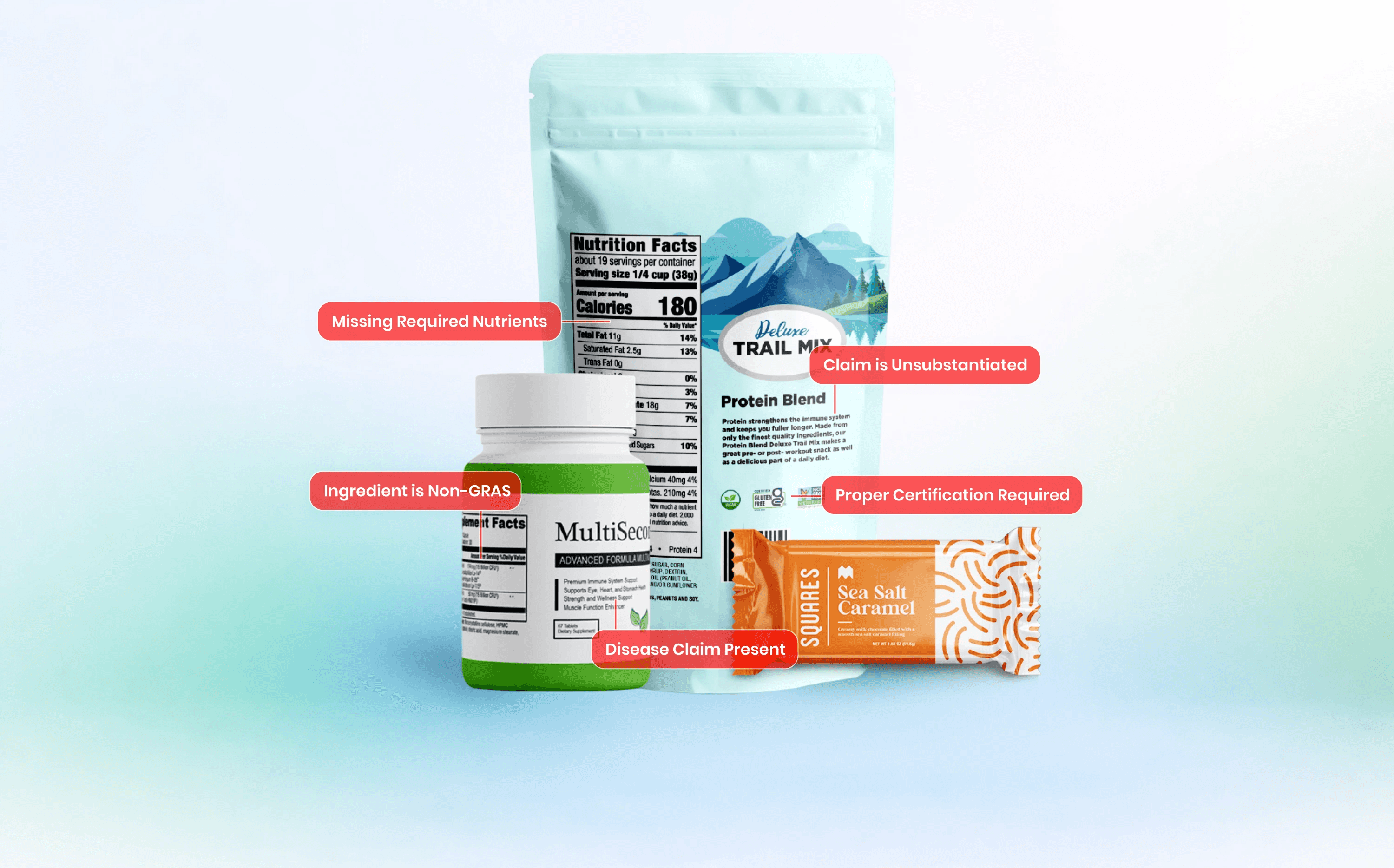
Jurisdiction routing: Truli's AI agents determine whether a product falls under TTB Part 4/5/7 labeling or FDA food labeling based on its composition and ABV, citing the controlling definition for the call
Label scans against the actual rule text: Truli reviews label artwork against the mandatory statements, prohibited practices, and standards of identity in the implementing parts, with a regulation citation on every finding
COLA-readiness checks: For FAA-covered products, Truli verifies the label is approvable under Part 13 before you file, including the Part 16 warning TTB checks at approval
Advertising review: Truli screens marketing and social content against the 205(f) advertising rules in Parts 4, 5, and 7, catching curative claims and missing mandatory statements
Related Regulations
27 CFR Part 13 — COLA Certificates of Label Approval — The label pre-approval system created under section 205(e)
27 CFR Part 16 — Government Warning Statement — The ABLA health warning that applies even where the FAA Act does not
27 CFR Part 4 — Wine Labeling — FAA Act labeling rules for wines 7–24% ABV
27 CFR Part 5 — Distilled Spirits Labeling — FAA Act labeling rules and standards of identity for spirits
27 CFR Part 7 — Malt Beverage Labeling — FAA Act labeling rules for malt beverages
Frequently Asked Questions
Why does my hard seltzer have a Nutrition Facts panel when beer does not?
Because a sugar-based hard seltzer is "beer" under the Internal Revenue Code but not a "malt beverage" under the FAA Act, which requires fermentation of malted barley with hops. Products outside the FAA definition are labeled under FDA food regulations — ingredient list, Nutrition Facts, allergen declarations — instead of 27 CFR Part 7, while still paying TTB excise tax and carrying the Part 16 government warning.
Do craft breweries need an FAA basic permit?
No. Section 203's permit requirement covers importers, distillers, wine producers, rectifiers and blenders, and wholesalers — but not domestic brewers, who instead qualify with TTB through a Brewer's Notice under the Internal Revenue Code. A brewery that also imports or wholesales other suppliers' products does need a permit for those activities.
If I sell only within my state, does the FAA Act apply to me?
Its labeling and advertising provisions generally do not, because they require interstate or foreign commerce — intrastate wine and spirits can use certificates of exemption instead of COLAs, and intrastate beer needs neither. But the government warning under 27 CFR Part 16, state labeling law, and TTB tax provisions still apply, and for malt beverages most states impose requirements that mirror the federal rules anyway.
Is the FAA Act the reason alcohol advertising is regulated by TTB instead of only the FTC?
Largely yes. Section 205(f) gives TTB direct statutory authority over false, misleading, and curative claims in wine, spirits, and malt beverage advertising in interstate commerce. FTC retains its general deceptive advertising jurisdiction, so alcohol advertisers effectively answer to both agencies.
A note from Truli: Truli is not a law firm, and this article does not constitute or contain legal advice or create an attorney-client relationship. When determining your obligations and compliance with respect to relevant laws and regulations, you should consult a licensed attorney.
Last updated: August 2026. Reflects the Federal Alcohol Administration Act (27 U.S.C. 201 et seq.) and its implementing regulations, including 27 CFR Parts 4–16, as of August 2026. Truli monitors TTB rulemaking and enforcement. Book a demo to see how.
About

Truli is an AI compliance platform for food, beverage, and supplement brands. Automate FDA/FTC label reviews, claims validation, and post-market monitoring — 10x faster.

Platform
See Truli in action
If regulatory delays are consuming months and thousands in fees, see how Truli delivers fast and continuous compliance coverage at a fraction of the cost.
Book a demo