Digestive Enzyme Supplement Claims - FDA Rules and Where They Cross Into Drug Territory
Digestive enzyme supplements — amylase, protease, lipase, lactase, bromelain, papain — are among the most widely sold and most claim-sensitive products in the gut health category. Digestive function sits at the boundary between normal physiology and clinical conditions like IBS, SIBO, enzyme deficiency diseases, and inflammatory bowel disease. Getting the claim framing right requires understanding exactly where that boundary is.

Catherine Zhou
| Co-founder at Truli

Digestive enzymes are proteins that catalyze the breakdown of food components — carbohydrates, proteins, fats, and fibers. They have a legitimate physiological role in normal digestion, and products containing supplemental enzymes may support healthy digestive function. The compliance challenge is that the conditions most commonly associated with enzyme insufficiency — lactase deficiency, exocrine pancreatic insufficiency, IBS — are clinical conditions requiring drug-level treatment claims.
What FDA Permits for Digestive Enzyme Claims
Under 21 CFR 101.93(f), permissible structure/function claims for digestive enzyme supplements include:
"Supports healthy digestion"
"Promotes the breakdown of proteins, carbohydrates, and fats"
"Supports healthy gut function"
"Promotes comfortable digestion after meals"
"Supports healthy digestive enzyme activity"
"Helps maintain healthy digestion"
"Supports nutrient absorption from food"
"Promotes digestive comfort"
These claims describe support for normal digestive function in healthy individuals. They are appropriate for products marketed to people who want to support digestion without implying treatment of digestive disease.
Where Digestive Enzyme Claims Cross the Line
Prohibited disease claims:
"Treats IBS" — irritable bowel syndrome is a named disease
"For people with Crohn's disease" — named inflammatory bowel disease
"Treats leaky gut syndrome" — while contested as a clinical diagnosis, marketing to this condition in disease terms implies treatment
"Corrects enzyme deficiency" — enzyme deficiency (e.g., exocrine pancreatic insufficiency) is a diagnosed medical condition
"For lactose intolerance" in a treatment-focused context — lactose intolerance is a clinical condition; "treats lactose intolerance" is a disease claim
"For SIBO" (small intestinal bacterial overgrowth) — named clinical condition
"Reduces symptoms of digestive disorders" — implies treatment of a disease class
"For malabsorption syndromes" — named clinical condition category
"Helps repair damaged intestinal lining" — repair of damaged tissue implies treatment of injury or disease
Lactase and lactose intolerance: a nuanced case
Lactase enzyme products have an established history of marketing around lactose digestion. The question is framing. "Supports healthy dairy digestion" and "helps break down lactose" are structure/function claims. "Treats lactose intolerance" and "for people diagnosed with lactose intolerance" are disease claims. The product is the same; the claim framing determines the regulatory status.
Pancreatic Enzyme Products: Drug Territory
Pancreatic enzyme replacement therapy (PERT) — high-dose pancreatic enzyme products for exocrine pancreatic insufficiency (EPI) — is FDA-regulated as a drug category. FDA has issued guidance requiring prescription pancreatic enzyme products to obtain drug approval. Supplement-level enzyme products at typical doses are not equivalent to PERT and should not be marketed to EPI patients.
Brands making claims about "replacing" digestive enzymes or "correcting" enzyme deficiencies are edging toward drug claim territory — particularly if the dose and indication overlap with the PERT drug category.
Systemic Enzyme Claims
Some enzyme products are marketed for systemic (beyond digestive) effects — "systemic enzyme therapy" claims about bromelain, serrapeptase, or nattokinase for cardiovascular health, inflammation management, or fibrin breakdown. These claims typically fall into cardiovascular or anti-inflammatory disease claim territory and should be evaluated against those claim categories separately from digestive enzyme claims.
Bloating and Gas Claims
Claims about reducing bloating and gas are common in digestive enzyme marketing. "Helps reduce occasional bloating" and "supports comfortable digestion" are structure/function claims. "Treats chronic bloating" or "eliminates gas for people with digestive disorders" implies treatment of a clinical digestive condition.
The word "occasional" does significant regulatory work in digestive claims — it frames the product as supporting normal digestive variability, not treating a chronic condition.
Digestive enzyme claims require consistent structure/function framing across all channels
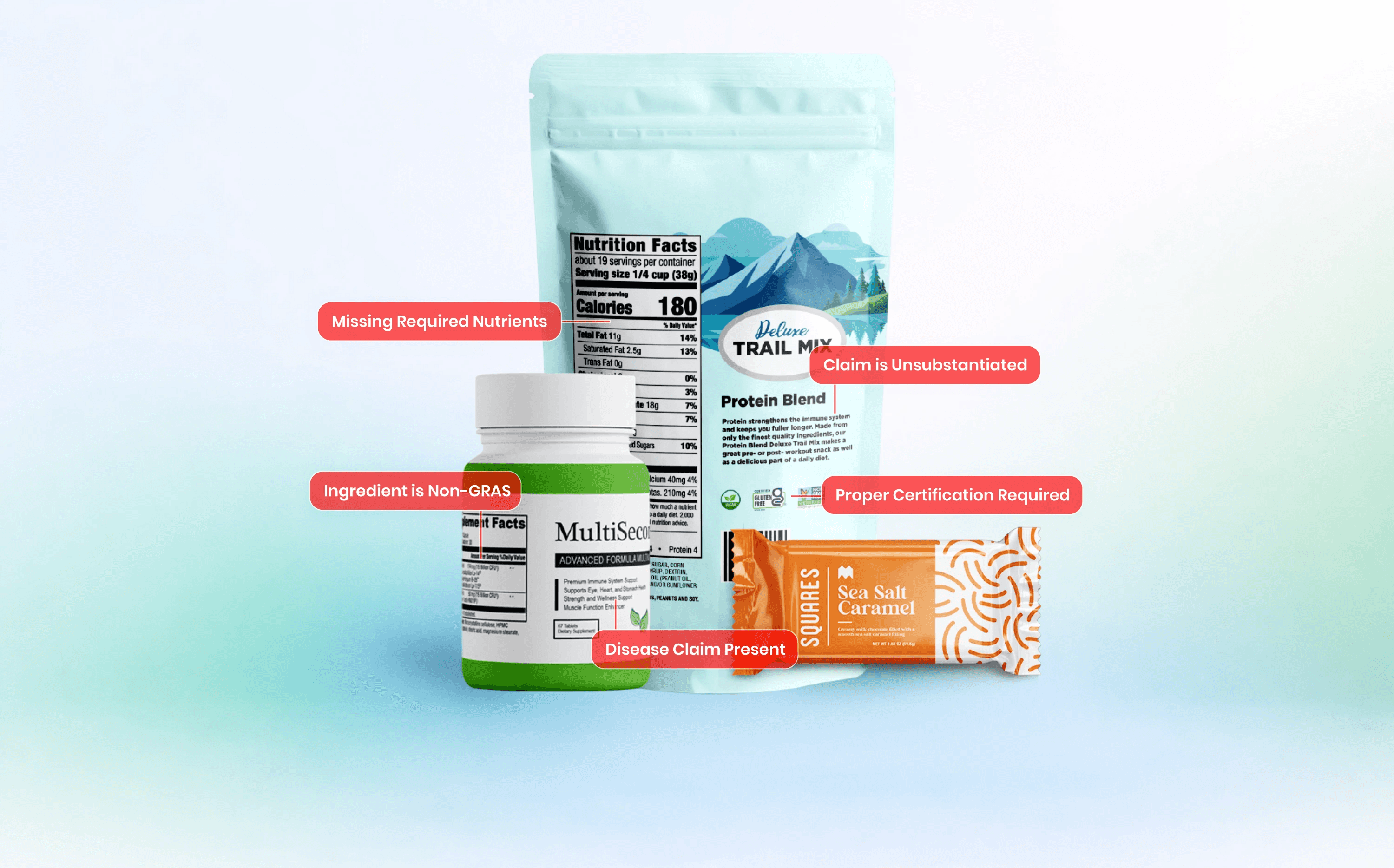
Truli reviews digestive enzyme supplement claims for disease population targeting (IBS, Crohn's, EPI, SIBO), drug-level treatment language, and bloating/gas claims that convert from structure/function framing into implied digestive disease treatment — scanning labels, product pages, and influencer content across all distribution channels.
A note from Truli: Truli is not a law firm, and this article does not constitute or contain legal advice or create an attorney-client relationship. When determining your obligations and compliance with respect to relevant laws and regulations, you should consult a licensed attorney.
About

Truli is an AI compliance platform for food, beverage, and supplement brands. Automate FDA/FTC label reviews, claims validation, and post-market monitoring — 10x faster.

Platform
See Truli in action
If regulatory delays are consuming months and thousands in fees, see how Truli delivers fast and continuous compliance coverage at a fraction of the cost.
Book a demo