Delta-8 THC — Legal Status and Labeling After the Hemp Ban
Delta-8 THC was built on a loophole, and Congress has now closed it. The November 2025 spending law bans cannabinoids synthesized outside the hemp plant and caps total THC at 0.4 mg per container, effective November 12, 2026. Delta-8 is the named target. Here's the legal status today, the enforcement record, and what sellers should do with the time left.

Michael Wu
| Co-founder at Truli

Delta-8 THC exists as a mass-market product for one reason: chemistry outran a statute. The 2018 Farm Bill legalized hemp and its derivatives at up to 0.3% delta-9 THC on a dry-weight basis. It said nothing about delta-8, an isomer that occurs in hemp only in trace amounts but can be manufactured cheaply from legal CBD through acid-catalyzed conversion. Producers argued the output was a "hemp derivative," and an intoxicating national market grew inside that argument — gummies, vapes, and tinctures sold in gas stations with no age gate in many states.
That era now has an end date. Congress wrote delta-8 out of federal hemp law in November 2025, with a one-year fuse that burns out on November 12, 2026.
What the Federal Ban Actually Says
The FY 2026 spending package (H.R. 5371, signed November 12, 2025) rewrites the federal definition of hemp in two moves that together eliminate delta-8's legal basis:
A synthesis ban. Cannabinoids that are "synthesized or manufactured outside the plant" no longer qualify as hemp at any concentration. Because commercial delta-8 is converted from CBD in a reactor, not extracted from the plant, this provision captures essentially the entire delta-8 supply chain — along with delta-10, HHC, THCP, and similar converted cannabinoids.
A 0.4 mg total THC cap. Finished consumer products may contain no more than 0.4 milligrams of total tetrahydrocannabinols per container — measured across THC variants, not just delta-9. Even a hypothetical naturally extracted delta-8 product would fail this ceiling at any intoxicating dose.
Enforcement is delayed 365 days from enactment, so both provisions take full effect November 12, 2026. After that date, products outside the new definition revert to Schedule I marijuana status under federal law. We've covered the beverage-side fallout separately; for delta-8, the analysis is simpler — the ban was written with this molecule in mind, and there is no formulation workaround. Carve-out bills introduced in 2026 focus on beverages and non-intoxicating CBD, not synthesized isomers.
The States Didn't Wait for Congress
Delta-8's legal map was already fractured before the federal ban. As of early 2026, roughly a dozen states ban delta-8 outright, eight more restrict or regulate it (age limits, licensing, potency caps), and about thirty still allow it. Two recent moves show the direction of travel:
California barred delta-8 and other intoxicating hemp products from hemp retail under AB 8, effective January 1, 2026, building on emergency rules that began in 2024.
Texas has moved to treat converted cannabinoids as controlled substances through DSHS scheduling action, a move still being contested in court after the legislature's own ban attempt was vetoed in 2025.
The practical point for sellers: "legal in my state" was already a shrinking claim, and after November 2026 no state framework can restore federal hemp status to a synthesized cannabinoid.
The Enforcement Record — Packaging Was the Trigger
Federal agencies didn't wait for the ban either. The enforcement history is a case study in how packaging and claims, not just ingredients, draw fire:
Action | Date | What was cited |
|---|---|---|
FDA warning letters (5 companies) | May 2022 | Unapproved drug claims (cancer, pain, nausea, anxiety), misbranding, marketing that appealed to children |
FDA + FTC cease-and-desist letters (6 companies) | July 2023 | Delta-8 edibles in packaging nearly identical to Doritos, Cheetos, and Nerds |
FDA + FTC second round (multiple companies) | July 2024 | Copycats of Froot Loops, Chips Ahoy, Sour Patch Kids, Jolly Rancher, and Flamin' Hot Cheetos trade dress |
Behind the letters sits the safety record: FDA received more than 300 adverse event reports involving delta-8 products from 2021 through 2023, roughly two-thirds tied to edibles, with a significant share involving children. Copycat candy packaging plus imprecise dosing is exactly the fact pattern that turns a labeling issue into an FTC Act Section 5 deception case.
The labeling lessons apply to whatever you sell next
Every citation in those letters — lookalike trade dress, child-appealing graphics, unsubstantiated therapeutic claims, unclear per-serving dosing — applies with equal force to compliant hemp products, THC beverages under a future carve-out, or state-licensed marijuana products. Brands exiting delta-8 should carry the lesson, not the packaging, into the next category.
What Sellers Should Do in the Wind-Down Window
The answer to "can I keep selling delta-8" is: federally, only until November 12, 2026, and only where state law still allows it. What to do with the months remaining:
Run inventory math against the date. Model sell-through so no delta-8 stock remains after the effective date. Product that qualifies as hemp today becomes a Schedule I substance in your warehouse the day after.
Renegotiate supply and distribution contracts now. Check force majeure, regulatory-change, and buyback clauses. Distributors and retailers are already refusing delivery windows that cross the deadline.
Stop acquiring category-specific liabilities. New SKUs, long-dated inventory buys, and annual marketing commitments in a category with a statutory end date are unforced errors.
Scrub claims and packaging immediately. The pre-deadline enforcement risk is unchanged: therapeutic claims and child-appealing packaging draw FDA and FTC letters today, ban or no ban.
Plan the pivot on real regulatory rails. The realistic destinations are state-licensed marijuana channels, sub-0.4 mg formulations, or non-intoxicating CBD — each with its own labeling regime that deserves a compliance review before launch, not after.
Watch Litigation, but Don't Bet the Company on It
Industry groups have signaled court challenges to the federal provisions, and hemp-friendly legislators keep introducing rescue bills. Any of these could shift the timeline. None has yet. A compliance plan built on enacted law says the delta-8 category ends in November 2026, and every operating decision between now and then should price that in.
Get every label and claim clean before the rules tighten further
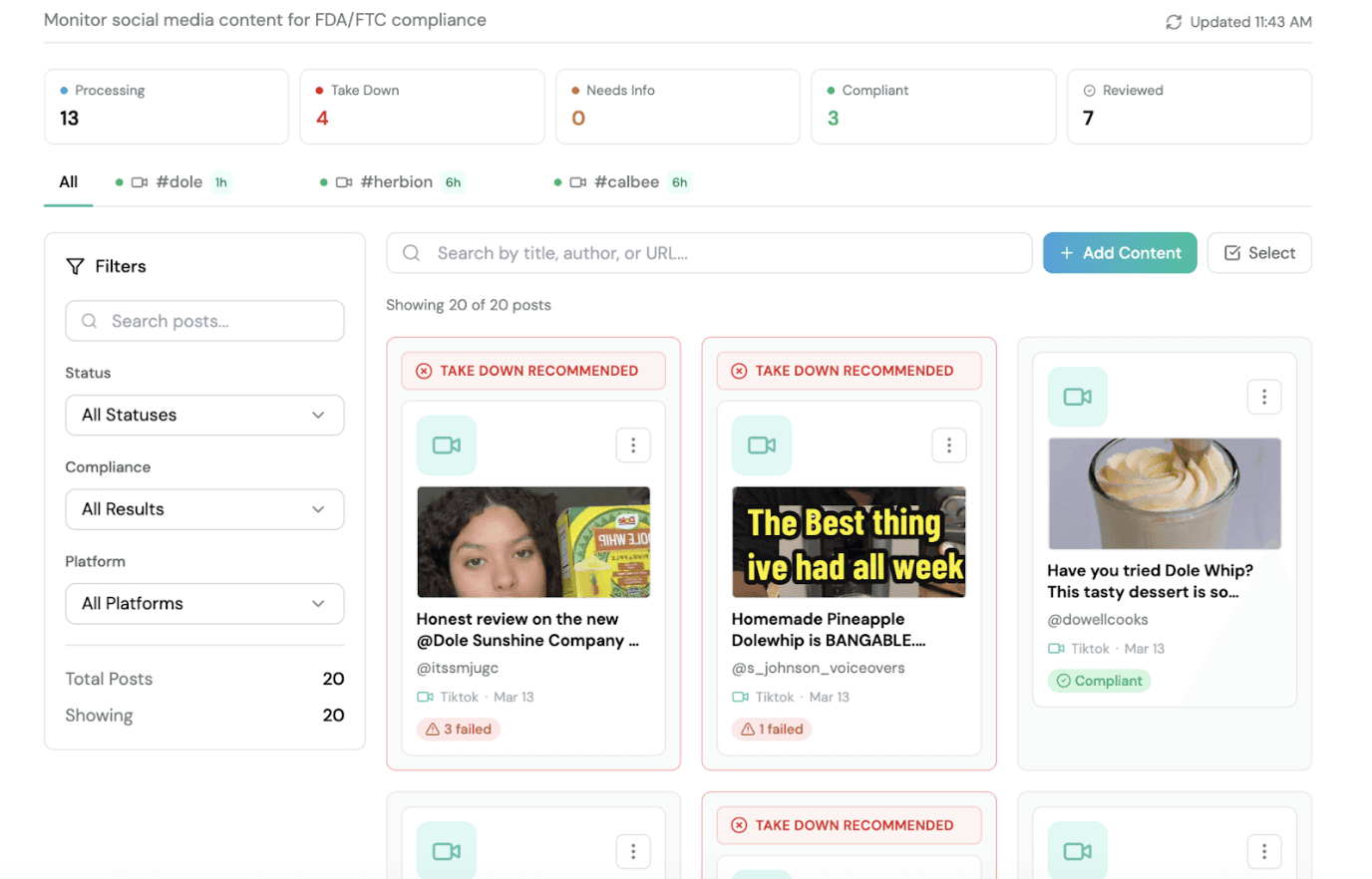
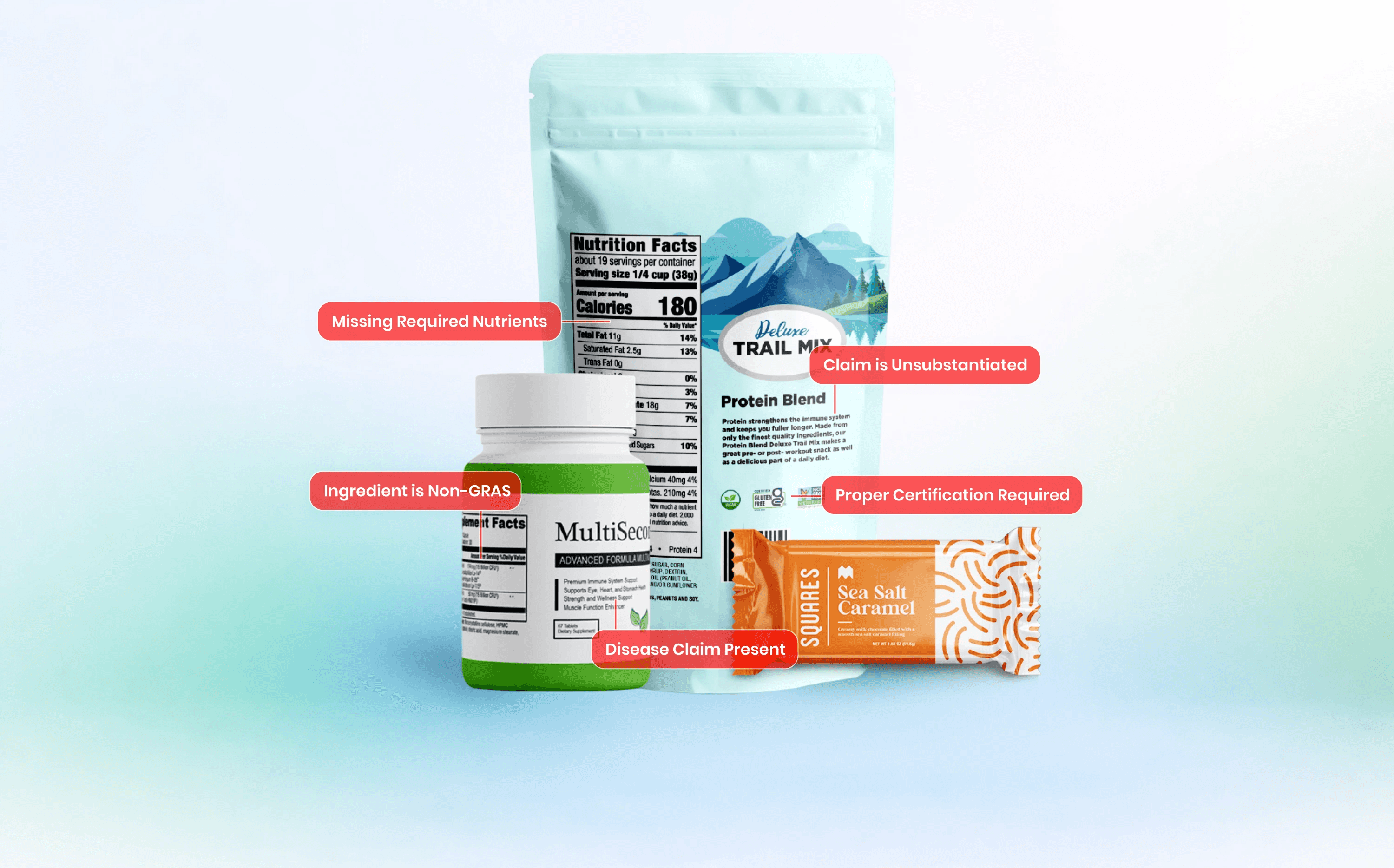
Truli's AI agents scan labels, packaging, websites, and social content against FDA and FTC regulations — flagging the therapeutic claims, dosing gaps, and lookalike packaging risks that drive cannabinoid enforcement, with the specific rule cited for every finding. Book a demo to pressure-test your products before November.
A note from Truli: Truli is not a law firm, and this article does not constitute or contain legal advice or create an attorney-client relationship. When determining your obligations and compliance with respect to relevant laws and regulations, you should consult a licensed attorney.
About

Truli is an AI compliance platform for food, beverage, and supplement brands. Automate FDA/FTC label reviews, claims validation, and post-market monitoring — 10x faster.

Platform
See Truli in action
If regulatory delays are consuming months and thousands in fees, see how Truli delivers fast and continuous compliance coverage at a fraction of the cost.
Book a demo