CPG Labeling Regulations in 2026 — What Brands Must Track
Regulatory requirements for CPG labels don't stay static. FDA updates definitions, FTC revises its guidance, state legislators add new obligations, and enforcement priorities shift based on warning letter patterns. Brands that set their label compliance once and don't revisit it are operating against rules that may no longer match what's on their packaging.

Michael Wu
| Co-founder at Truli

The regulatory changes most relevant to CPG brands in 2026 aren't all dramatic rule rewrites — several are enforcement priority shifts that don't change the underlying regulation but substantially change the risk of operating under the existing one. Others represent final rules or guidance that completed rulemaking cycles that started years earlier and are now binding. Here's what brands need to be tracking.
FDA's Updated Definition of "Healthy" — 21 CFR 101.65
FDA's updated definition of "healthy" under 21 CFR 101.65 finalized in late 2024 represents the most significant change to nutrient content claim standards in decades. The prior definition, written in 1994, limited "healthy" to products meeting specific total fat, saturated fat, sodium, and cholesterol thresholds — a framework that inadvertently excluded foods like salmon, avocado, and nuts while permitting low-fat processed foods.
The updated definition aligns with current dietary science. A food can now bear a "healthy" claim if it:
Contains a meaningful amount of food from at least one of the food groups or subgroups recommended by the Dietary Guidelines (fruits, vegetables, grains, dairy, protein foods)
Does not exceed sodium, saturated fat, and added sugar limits specific to the food category
The sodium and added sugar limits vary by food type and serving size. Brands that relied on the prior "healthy" definition need to verify their products still qualify — many that met the old threshold for fat content don't meet the new limits on added sugar. Conversely, brands that avoided "healthy" claims because their products contained naturally occurring fats (nuts, seeds, fatty fish) may now qualify.
FDA has not yet announced a formal compliance date for enforcement of the updated definition, but enforcement is actively monitored. Warning letters citing misuse of "healthy" claims are expected to increase through 2026.
FASTER Act Sesame Enforcement — Three Years In
The FASTER Act added sesame as the ninth major food allergen, effective January 1, 2023. Three years into enforcement, undeclared sesame remains a recurring cause of recalls and warning letters — not because brands are ignoring the requirement, but because sesame is embedded in supply chains in ways that aren't visible from brand-level formulation records.
The current enforcement pattern shows most sesame violations coming from:
Flavor systems and seasoning blends purchased from ingredient suppliers who haven't updated their allergen documentation
Contract manufacturers running sesame-containing products on shared equipment without disclosing cross-contact risk to all customers
Botanical extract carriers and natural flavor systems that incorporate sesame-derived compounds
A brand that conducted an initial FASTER Act review in late 2022 and hasn't revisited it since may have new exposure from supplier changes made in 2023 or 2024. Allergen compliance requires ongoing supplier documentation review, not a one-time audit.
FDA's Digital Channel Enforcement Expansion
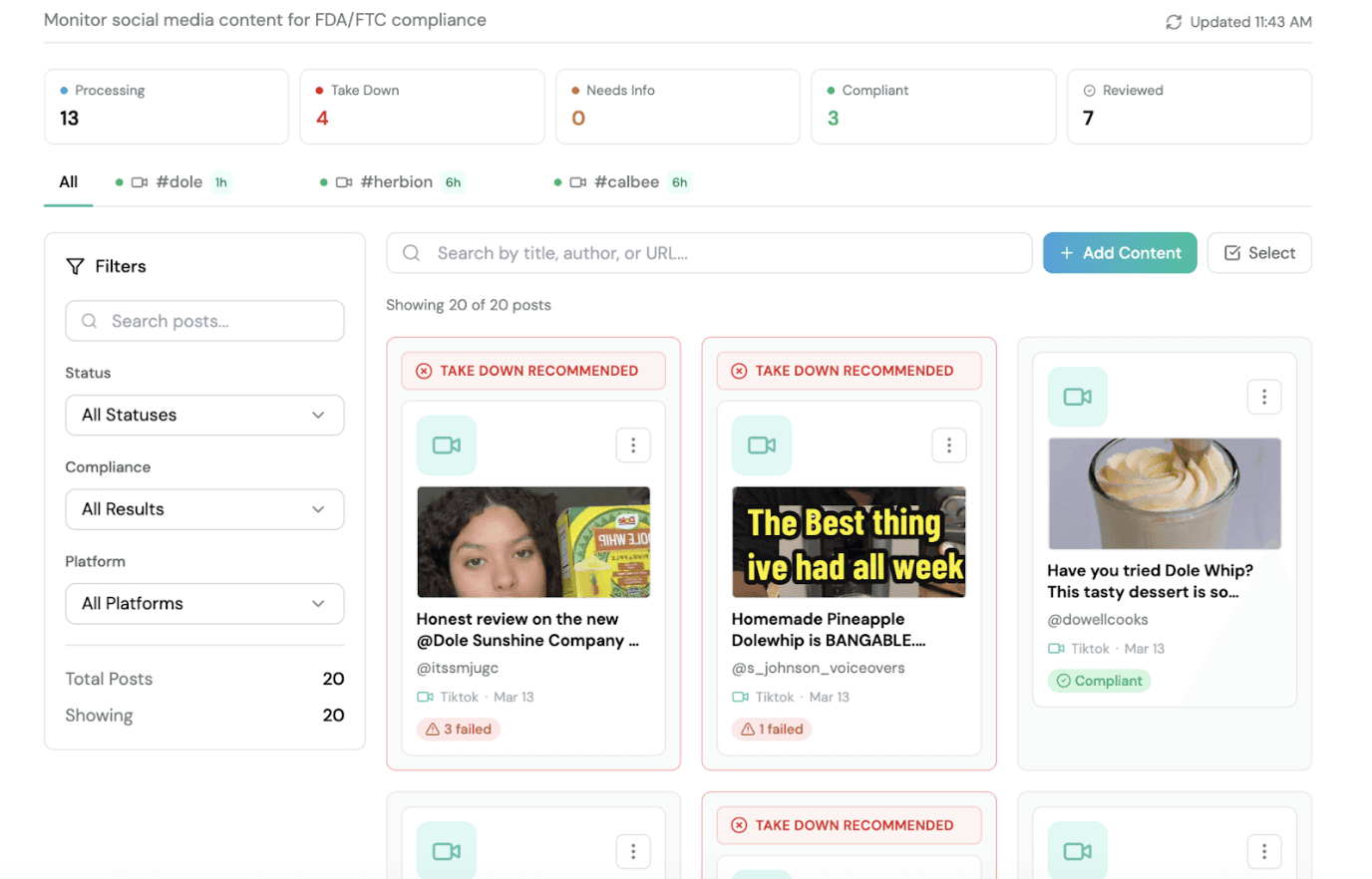
The most significant enforcement shift of the past two years isn't a rule change — it's where FDA is looking. Warning letters in 2024 and 2025 consistently quoted product websites, Amazon storefronts, and social media posts with the same regulatory authority as physical label text.
This reflects FDA's expanded monitoring of digital channels for disease claim language. The enforcement pattern shows FDA finding supplement brands through search queries for health conditions — then following the search results to the brand's Amazon listing or website, where disease claim language appears that doesn't show up on the physical label.
The practical implication: brands that maintain careful physical label copy but allow broader claim language online have a structural compliance gap that FDA is now actively exploiting. A supplement with a legally reviewed physical label that carries an Amazon listing saying "reverses joint damage" or a website with a "customer testimonials" section citing disease outcomes is exposed to warning letter enforcement through the digital channel, not the package.
FDA's jurisdiction over online claims is well-established. 21 U.S.C. 321(m) defines "labeling" to include all written, printed, or graphic material accompanying a product — including websites and promotional materials. There's no carve-out for digital channels.
FTC's Revised Endorsement Guides — Influencer Compliance
The FTC's updated Endorsement Guides under 16 CFR Part 255, effective August 2023, introduced several changes that affect how CPG brands manage influencer partnerships.
The most significant changes:
Disclosure placement. Endorsements on social media must include a clear and conspicuous disclosure of the material connection between the endorser and the brand. The updated guides clarify that platform-native disclosure tools (Instagram's "paid partnership" tag) are not automatically sufficient if they're easy to miss. Disclosure must appear in the content itself, not just in a tag.
Clear and conspicuous. The standard for "clear and conspicuous" now explicitly requires that disclosures appear before the consumer sees the endorsement — not at the end of a post or buried in hashtags. "#ad" buried among other hashtags doesn't meet the standard.
AI-generated content. The updated guides address AI-generated endorsements. If a brand uses AI to generate consumer testimonials or reviews that aren't from real consumers, those must be disclosed. Using AI to create the appearance of consumer validation for a product is deceptive under the updated standard.
Brand liability. The guides reaffirm that brands are responsible for the claims made by sponsored influencers, including health claims made by influencers who happen to also be the brand's customers. A micro-influencer receiving free product in exchange for a post is making a sponsored endorsement, and disease claims in that post are attributable to the brand.
State-Level Labeling Obligations
Federal compliance sets the floor, but state law adds obligations that federal compliance doesn't satisfy.
California Proposition 65 requires warning labels on products sold in California that contain chemicals on the state's list of known carcinogens and reproductive toxins above specified thresholds. The list is updated annually. For food products, the most commonly triggered chemicals include acrylamide (in cooked starchy foods), lead (in certain supplements and teas), and cadmium and mercury (in some seafood and supplements). Brands that haven't conducted a Prop 65 assessment for their California distribution are potentially exposed.
California's AB 1201 (composting labeling, effective January 2024) requires that packaging labeled as compostable in California meet certain performance standards and display the California-specific compostable logo. Packaging certified under other standards but not meeting California's performance threshold cannot use compostable claims in the state.
New York's Climate Corporate Data Accountability Act, if signed, would require large brands doing business in New York to disclose Scope 1, 2, and 3 greenhouse gas emissions — creating downstream labeling implications for brands making climate-related claims to New York consumers.
NDI Notification Rule — Proposed Updates
FDA's proposed revisions to the New Dietary Ingredient (NDI) notification framework, originally proposed in 2016 and revised in subsequent guidance, remain in regulatory limbo but relevant to supplement brands launching products with novel ingredients.
Under current policy, supplements containing ingredients not marketed in the United States before October 15, 1994 require NDI notification to FDA before marketing. The notification must include safety data supporting a reasonable expectation of safety under the conditions of use. FDA's enforcement of NDI notification requirements has historically been limited, but recent warning letters have specifically cited failure to file required NDI notifications as a violation.
Supplement brands using trending novel ingredients — NMN, NR, various adaptogens, novel botanical extracts — should assess whether those ingredients require NDI notification and, if so, whether a notification has been filed. Selling a supplement with an undisclosed NDI is a per se violation, regardless of the safety profile of the ingredient.
Building a Regulatory Monitoring Function
The brands that stay ahead of enforcement don't wait for warning letters to signal that the regulatory landscape has changed. They track FDA's warning letter database, monitor eCFR updates for relevant regulations, subscribe to FDA and FTC regulatory announcements, and conduct periodic reviews of their labels against current requirements — not the requirements as they existed when the label was first designed.
Regulatory monitoring for a focused brand isn't a full-time job, but it does require a systematic process. The brands that get caught by regulatory changes are almost always the ones that treated label compliance as a one-time project rather than an ongoing function.
Truli keeps your compliance current
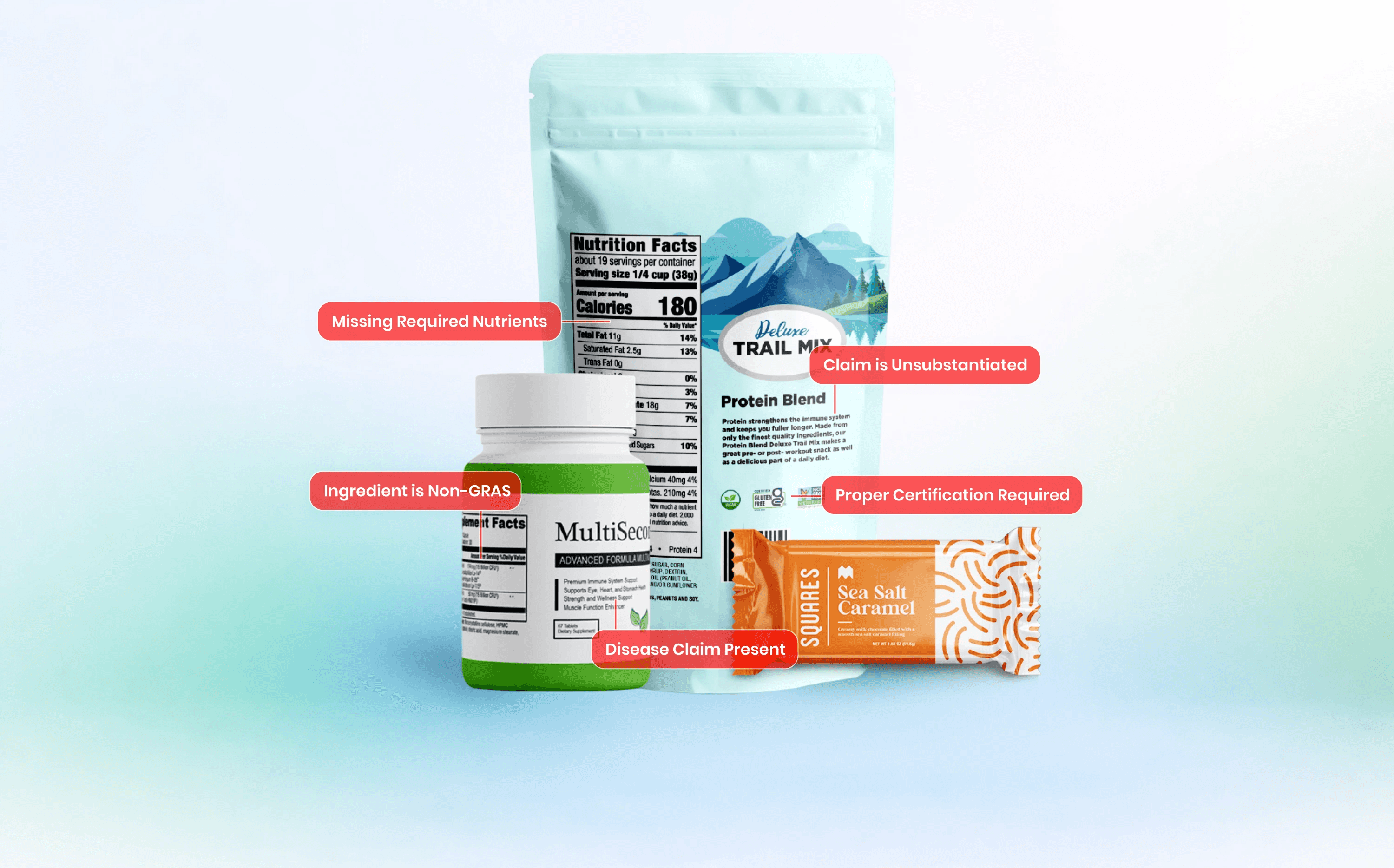
Truli retrieves current regulation text at review time — not from a static ruleset — so compliance analysis reflects what the regulation says now, not what it said when the software was last updated. When you run a label review through Truli, the claims analysis is grounded in the current FDA framework, including updated definitions and enforcement guidance. If you haven't reviewed your labels since 2023, that review is overdue.
A note from Truli: Truli is not a law firm, and this article does not constitute or contain legal advice or create an attorney-client relationship. When determining your obligations and compliance with respect to relevant laws and regulations, you should consult a licensed attorney.
About

Truli is an AI compliance platform for food, beverage, and supplement brands. Automate FDA/FTC label reviews, claims validation, and post-market monitoring — 10x faster.

Platform
See Truli in action
If regulatory delays are consuming months and thousands in fees, see how Truli delivers fast and continuous compliance coverage at a fraction of the cost.
Book a demo