CPG Label Compliance in 2026 — What Every Food Brand Must Know
CPG label compliance means two different things, and most brands only manage one of them. The physical label has to meet FDA format requirements — panel placement, type size, required elements. But the claims, health statements, and marketing language on that label also have to meet a separate, higher-stakes body of law. Brands that treat compliance as a layout problem miss the half that generates FDA warning letters.

Michael Wu
| Co-founder at Truli

The distinction matters because the enforcement consequences are completely different. Format errors — missing net quantity statements, wrong font size, information panel in the wrong location — tend to get caught at retail inspection or during FDA facility reviews. Claims errors — disease claims on supplement labels, unsubstantiated health language, missing FDA disclaimers — drive warning letters, import alerts, and in some cases, product injunctions.
This guide covers both dimensions of CPG label compliance in 2026: what the regulations actually require, where enforcement is focused, and what a systematic compliance review process looks like for food and supplement brands.
What CPG Label Compliance Actually Covers
The FDA's food labeling regulations under 21 CFR Part 101 govern most of what appears on a food product label. These requirements fall into two categories: mandatory elements and claims.
Mandatory elements are the structural requirements every food label must meet regardless of what the product is:
Statement of identity (the common or usual name of the food) on the Principal Display Panel (PDP)
Net quantity of contents, declared in both metric and U.S. Customary units, in the bottom 30% of the PDP under 21 CFR 101.7
Name and place of business of the manufacturer, packer, or distributor under 21 CFR 101.5
Ingredient list in descending order of predominance by weight under 21 CFR 101.4
Nutrition Facts panel under 21 CFR 101.9 (or Supplement Facts for dietary supplements under 21 CFR 101.36)
Allergen declarations under the Food Allergen Labeling and Consumer Protection Act (FALCPA) and the FASTER Act
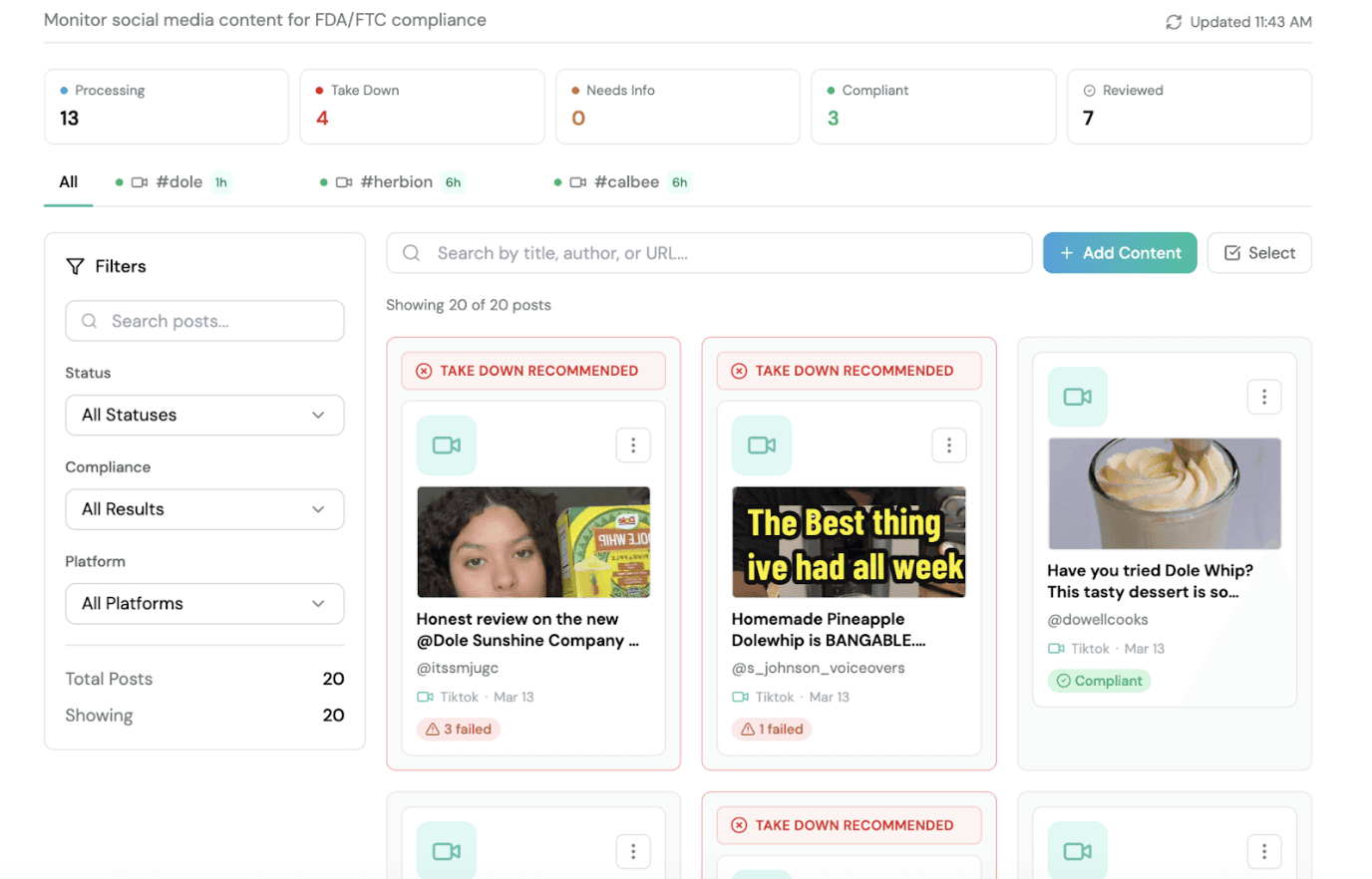
Claims are anything on the label — or in labeling, which FDA defines broadly to include websites, ads, and social media — that communicates a benefit, function, or relationship between the product and health. Claims are where most enforcement action concentrates.
The Claims Layer — Where Most Enforcement Originates
FDA draws a sharp line between what a food or supplement can claim about itself. The line determines whether a product is legally a food, a dietary supplement, or a drug.
For dietary supplements, 21 CFR 101.93(f) permits structure/function claims — statements describing how a nutrient or ingredient affects the structure or function of the body. These are the claims DSHEA created: "supports immune health," "promotes healthy joints," "maintains cardiovascular function." They don't require FDA pre-approval, but they require substantiation, notification to FDA within 30 days of first use, and an accompanying disclaimer stating the claim has not been evaluated by FDA and the product is not intended to diagnose, treat, cure, or prevent any disease.
That disclaimer requirement is one of the most commonly violated rules in supplement labeling. A brand can write the world's most careful structure/function claim and still generate a warning letter by omitting or misplacing the disclaimer.
The other side of the line is disease claims — statements that imply the product diagnoses, treats, cures, or prevents a disease. "Reduces blood sugar" is a disease claim. "Lowers cholesterol" is a disease claim. "Fights inflammation" is typically a disease claim. "Treats arthritis" is a disease claim. Products bearing disease claims are regulated as drugs, not supplements. FDA does not need to wait for injury reports to act on a mislabeled product — misbranding is a per se violation.
For conventional food products, the permitted claim categories are different: nutrient content claims (defined thresholds for terms like "low fat," "high fiber," "excellent source"), health claims (FDA-authorized or qualified statements about the relationship between a nutrient and a disease), and structure/function claims for conventional foods (less commonly used, but permitted under the same basic framework). Each category has its own regulatory requirements, and blurring between them — claiming a food "reduces the risk of heart disease" without meeting the qualifying criteria for the authorized health claim — generates enforcement exposure.
Allergen Labeling — The Highest Recall Driver
Undeclared allergens are consistently the leading cause of FDA food recalls. The Food Allergen Labeling and Consumer Protection Act established the original nine major food allergens that must be declared: milk, eggs, fish, shellfish, tree nuts, wheat, peanuts, soybeans, and — added by the FASTER Act effective January 1, 2023 — sesame.
The sesame addition catches brands that haven't audited their formulations since 2022. Sesame appears in unexpected places: shared manufacturing equipment, seasoning blends, flavoring compounds, and carrier ingredients. Brands that reformulated products before 2023 and haven't conducted a post-FASTER Act label review may have unlabeled sesame exposure.
Allergen declarations must appear either in the ingredient list (using the common name of the allergen, e.g., "wheat flour") or in a "Contains:" statement immediately following the ingredient list. Cross-contact language — "manufactured in a facility that also processes peanuts" — is voluntary and does not substitute for mandatory allergen declarations.
The compliance risk isn't just with the declared allergens. It's with contract manufacturers who change ingredient suppliers without notifying the brand. A supplier substitution that introduces an allergen not present in the original formulation creates an undeclared allergen situation the brand may not discover until a consumer reports an adverse reaction.
FTC's Role — Labeling Is Not Just the Physical Label
The Federal Trade Commission applies truth-in-advertising standards to health claims wherever they appear — on product labels, websites, social media, email, influencer content, and advertising. The FTC's substantiation standard requires that health claims be backed by "competent and reliable scientific evidence," which in practice means well-designed human clinical trials for outcome claims.
FDA and FTC enforcement aren't coordinated, but they're additive. A brand can receive an FDA warning letter for disease claims on its label and an FTC action for unsubstantiated claims in its advertising simultaneously. The FTC has specifically targeted supplement brands making weight loss, immune support, and cognitive function claims that lack adequate clinical substantiation.
This means CPG label compliance isn't just about what's printed on the package. It's about the complete claim environment: every channel where the brand communicates with consumers, every claim a sponsored influencer makes about the product, every customer review the brand highlights or reposts.
What FDA Enforcement Is Targeting in 2026
Recent FDA warning letters show consistent focus on:
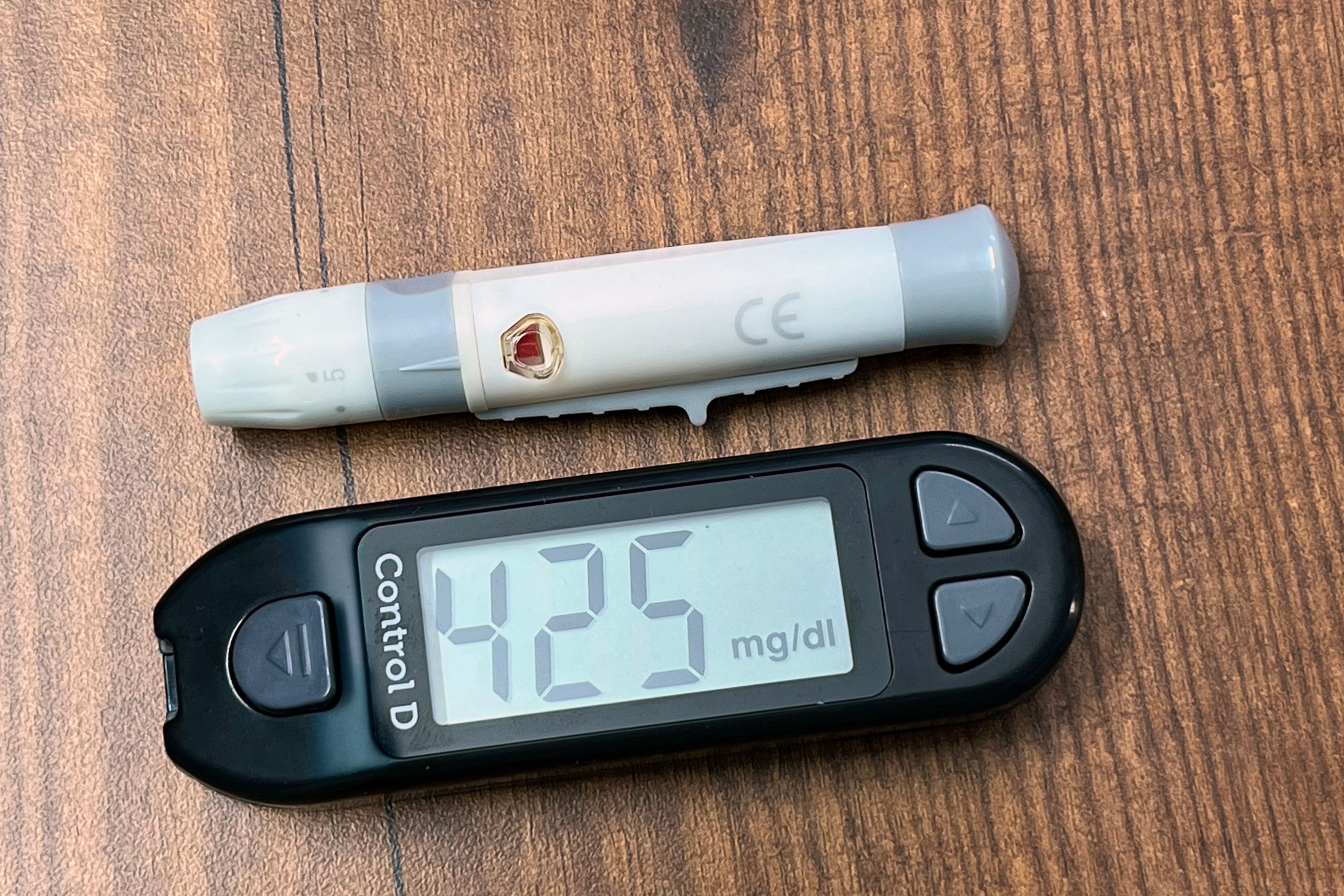
Disease claims in supplement labeling, particularly in the immune support, blood sugar, and cardiovascular categories
Missing or incorrect FDA disclaimers on structure/function claims
Undeclared allergens, especially sesame post-FASTER Act
Claims on websites and social media that exceed what the physical label says
Misleading "natural" and "clean" language applied to products with synthetic ingredients or processing aids
The enforcement pattern reflects FDA's expanded monitoring of digital channels. Warning letters increasingly quote product websites, Amazon listings, and social media posts — not just physical label text. A brand that clears its label through careful review but runs unrestricted marketing copy online is exposed.
A Systematic Compliance Review Process
An effective CPG compliance review in 2026 covers three things: format accuracy, claims compliance, and channel consistency.
Format accuracy means verifying that every mandatory label element is present, correctly placed, and meets the typographic and content requirements under 21 CFR Part 101. This includes panel placement, type size, serving size declaration, Daily Value percentages, and ingredient list ordering.
Claims compliance means reviewing every health, nutrient content, and structure/function claim on the label against the specific regulatory framework that governs it — checking that the claim fits within a permitted category, that required qualifications and disclaimers are present, and that the language doesn't cross into disease claim territory.
Channel consistency means auditing the full marketing surface — website, Amazon listing, social media, influencer content, email — for claims that exceed what the label supports or that fail FTC's substantiation standard.
Most brands separate these three workstreams across different teams with different tooling. The format review happens in the design phase. The claims review, if it happens at all, happens ad hoc through legal. The marketing channel audit rarely happens systematically. That separation is where compliance risk accumulates.
Truli reviews all three
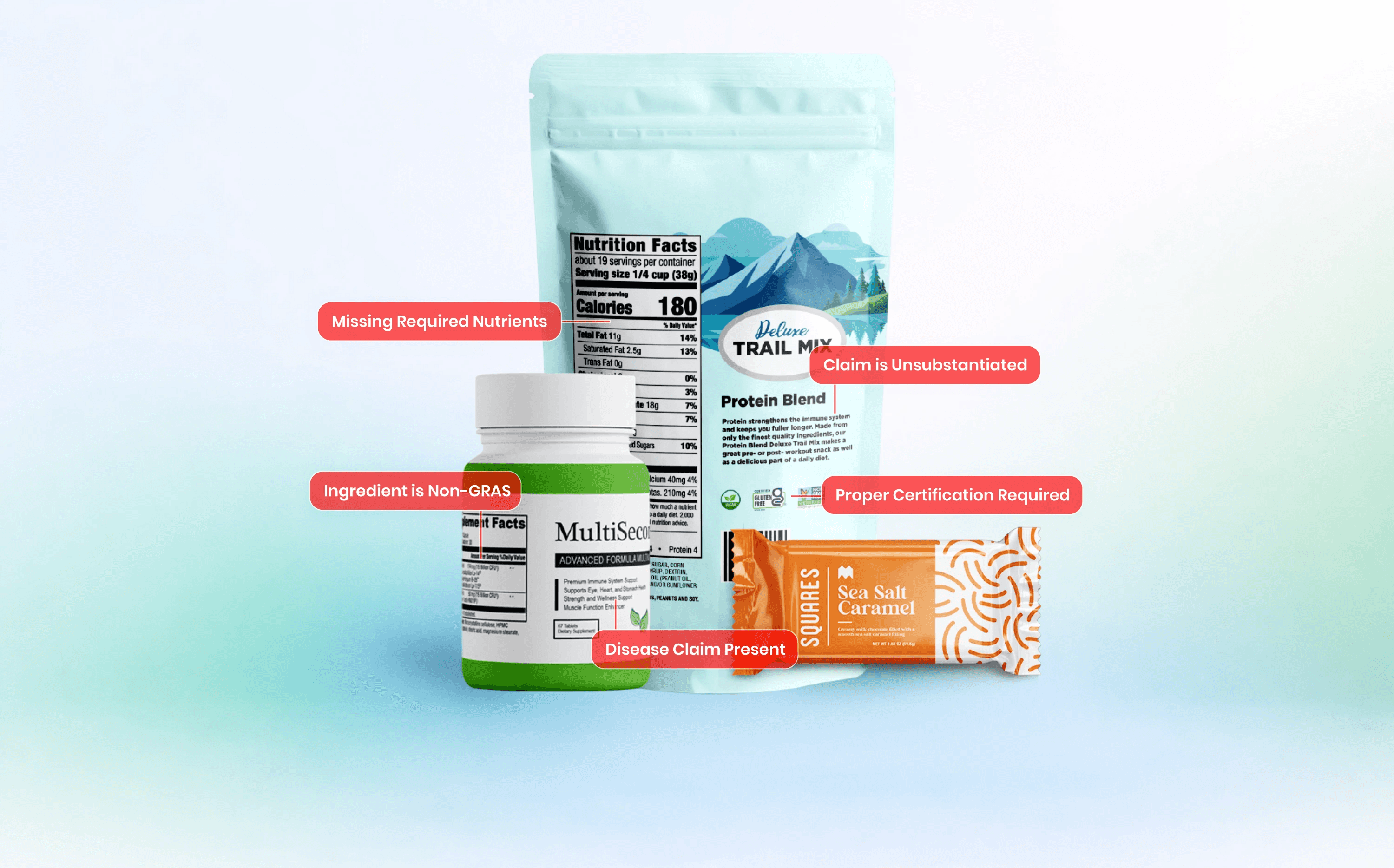
Truli's label compliance scanning runs all three dimensions in a single workflow — scanning label images for format issues, running claims through FDA's regulatory framework to flag disease claim language and missing disclaimers, and extending the same scan to website and marketing copy. If you're bringing a new product to market or doing a periodic compliance audit, Truli surfaces the gaps before they become warning letters.
A note from Truli: Truli is not a law firm, and this article does not constitute or contain legal advice or create an attorney-client relationship. When determining your obligations and compliance with respect to relevant laws and regulations, you should consult a licensed attorney.
About

Truli is an AI compliance platform for food, beverage, and supplement brands. Automate FDA/FTC label reviews, claims validation, and post-market monitoring — 10x faster.

Platform
See Truli in action
If regulatory delays are consuming months and thousands in fees, see how Truli delivers fast and continuous compliance coverage at a fraction of the cost.
Book a demo