Copper Peptide (GHK-Cu) Products — Claims and FDA Status
GHK-Cu is the breakout ingredient of the copper peptide boom — in prestige serums, gray-market injectables, and everything between. The molecule is the same; the regulatory category depends entirely on how you sell it. Brands that miss that distinction are drawing FDA warning letters.

Catherine Zhou
| Co-founder at Truli

Copper tripeptide-1, better known as GHK-Cu, has become one of the most searched ingredients in skincare — and one of the most abused compounds in the gray-market peptide trade. The same three amino acids and copper ion show up in $90 face serums at Sephora, in compounded injectables from med spas, and in "research use only" vials and nasal sprays sold online. Those are three different regulatory categories with three very different risk profiles.
For brand operators, the question isn't whether GHK-Cu is legal. It's which version of the GHK-Cu business you're actually running — because FDA classifies the product by intended use, not by the molecule.
The Cosmetic Lane — Appearance Claims Only
A topical GHK-Cu serum can be a lawful cosmetic, as long as every claim stays about appearance. Under the Federal Food, Drug, and Cosmetic Act, a cosmetic is an article intended to be applied to the body for cleansing, beautifying, promoting attractiveness, or altering the appearance (21 U.S.C. 321(i)). Copper tripeptide-1 appears on ingredient labels across the category, and FDA does not pre-approve cosmetic ingredients.
The trap is the drug definition sitting right next door. Any claim that the product is intended to affect the structure or function of the body — or to treat a condition — makes it a drug under 21 U.S.C. 321(g), regardless of the formula. "Stimulates collagen synthesis," "regenerates skin at the cellular level," and "repairs damaged tissue" are structure/function drug claims. "Reduces the appearance of fine lines" is a cosmetic claim. Marketing teams cross that line constantly because the mechanism story is exactly what sells copper peptides.
Staying in the cosmetic lane still carries real obligations. Under MoCRA, cosmetic brands now face facility registration, product listing, safety substantiation, and adverse event reporting requirements — so "just a cosmetic" no longer means "unregulated." It means a different rulebook, not a lighter one.
Compliant cosmetic claim | Drug claim (draws letters) |
|---|---|
Reduces the appearance of fine lines | Stimulates collagen and elastin production |
Skin looks firmer and smoother | Regenerates skin cells and repairs tissue |
Supports the look of a healthy scalp | Regrows hair / reverses hair loss |
Visibly improves skin texture | Heals wounds and accelerates recovery |
Hair-Growth Claims Are Drug Claims
No peptide is FDA-approved to treat hair loss, so "regrows hair" is an unapproved drug claim — full stop. The only FDA-approved treatments for androgenetic alopecia are topical minoxidil and oral finasteride. That makes the minoxidil comparison, a staple of copper peptide marketing, radioactive: telling consumers your serum "works like minoxidil" or "outperformed minoxidil in studies" explicitly positions the product as a drug for a medical condition.
FDA has a long history of warning hair-growth product sellers for exactly this, and peptide sellers have joined the list — the agency's March 2026 warning letter to Gram Peptides cited unapproved new drug violations across its peptide catalog. The GHK-Cu hair studies that marketers love to cite don't change the analysis. Evidence doesn't make a claim legal; approval does. A scalp serum brand can talk about the appearance of fuller-looking hair and healthy-looking scalp — it cannot promise regrowth, follicle revival, or DHT blocking.
The Injectable and Nasal Spray Market — Unapproved Drugs
Injectable GHK-Cu and GHK-Cu nasal sprays sold direct-to-consumer are unapproved new drugs, no matter what the disclaimer says. A dietary supplement must be intended for ingestion, so injectables and nasal sprays can't claim that category. And the "research use only" label has stopped working as a shield: in April 2026, FDA published seven warning letters to online peptide sellers in a single day, reasoning that dosing guidance, benefit claims, and bacteriostatic water sold in the same cart establish intended human use regardless of the RUO sticker.
GHK-Cu vials ride alongside BPC-157 and GLP-1 copycats on most of these sites, and enforcement doesn't distinguish between the "wellness" peptides and the weight-loss ones. If you sell a vial with anti-aging or healing claims, you're selling an unapproved drug with a cosmetic ingredient's name on it.
The Compounding Status — A Pharmacy Pathway, Not a Retail One
GHK-Cu's compounding position genuinely shifted in 2026, and gray-market sellers are misreading it as legalization. Based on current reporting, FDA removed injectable GHK-Cu from Category 2 of the 503A bulk drug substances list in April 2026 — the category for substances flagged with significant safety concerns — and the Pharmacy Compounding Advisory Committee is slated to review GHK-Cu for potential Category 1 placement by early 2027.
Every step of that pathway runs through licensed compounding pharmacies filling individual prescriptions. It does not create a lawful direct-to-consumer injectable market, it does not make GHK-Cu a supplement ingredient, and it does nothing for websites selling vials with a checkout button instead of a prescriber. FDA had also flagged immunogenicity and sterility concerns for injectable GHK-Cu during the Category 2 era — concerns a med spa's marketing rarely mentions.
What a Compliant GHK-Cu Brand Actually Looks Like
The compliant version of this business exists and is thriving in prestige skincare. It has a few consistent traits:
Topical only — serums, creams, scalp treatments. No vials, no sprays, no "internal use" SKUs sharing the same brand.
Appearance vocabulary everywhere — "visibly," "the look of," "the appearance of" doing consistent work across label, site, and social.
No mechanism claims in consumer copy — collagen-synthesis science stays in R&D decks, not on product pages.
No hair-regrowth or wound-healing promises — and no minoxidil comparisons, ever.
Influencer briefs that mirror the label — because a creator saying "this healed my skin barrier" is your claim under FTC endorsement rules.
The brands drawing warning letters look different: same molecule, but with injection protocols in the FAQ, Reddit-sourced healing testimonials, and a "research use" disclaimer doing legal work it cannot do. FDA reads the totality of your marketing. So should you.
Audit your copper peptide claims before FDA does
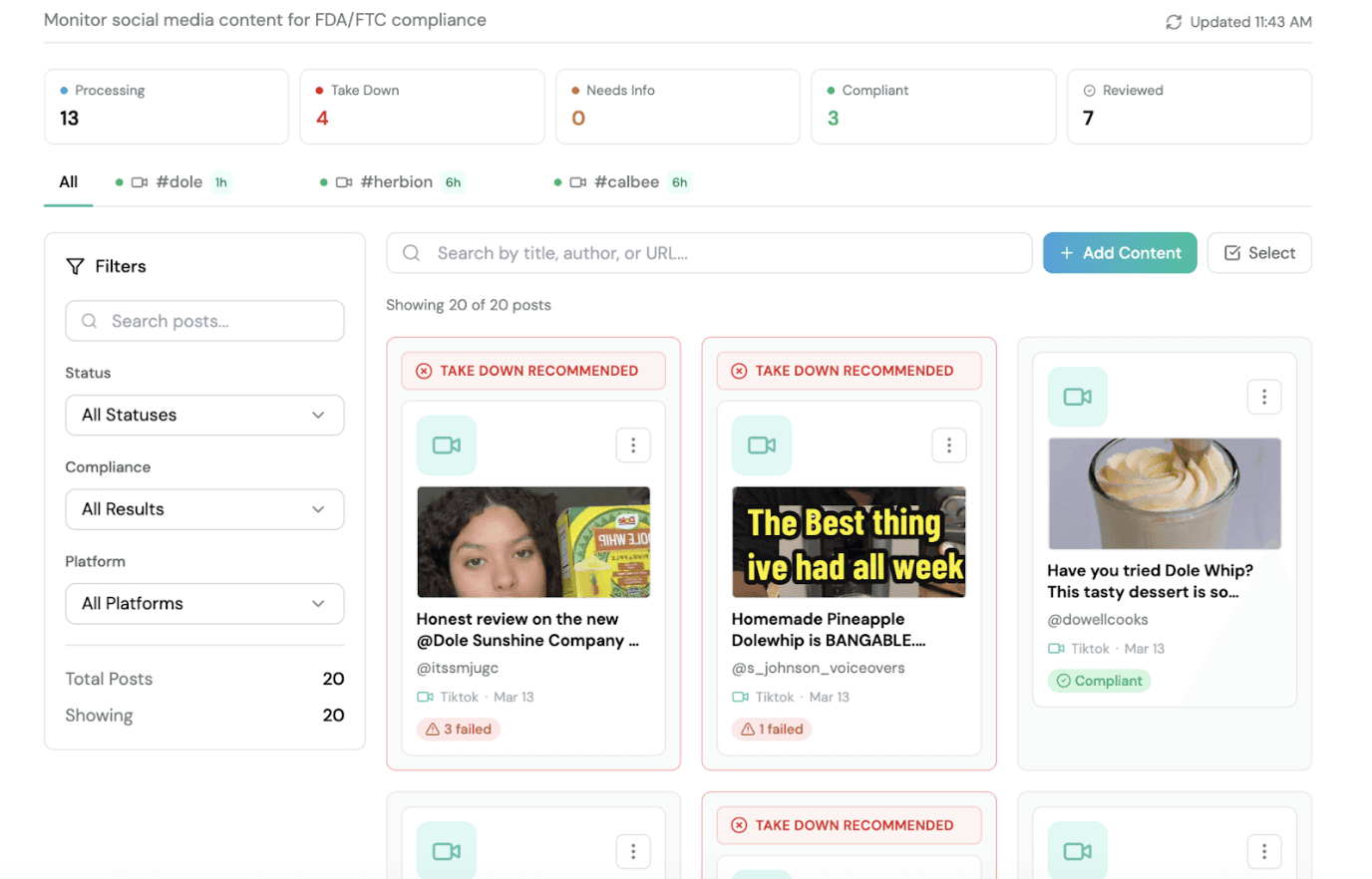
Truli's AI agents scan labels, product pages, and influencer content against FDA and FTC rules — flagging drug claims, appearance-claim drift, and missing disclaimers with the specific regulation cited for every finding. Book a demo to see what it catches across your GHK-Cu line.
A note from Truli: Truli is not a law firm, and this article does not constitute or contain legal advice or create an attorney-client relationship. When determining your obligations and compliance with respect to relevant laws and regulations, you should consult a licensed attorney.
About

Truli is an AI compliance platform for food, beverage, and supplement brands. Automate FDA/FTC label reviews, claims validation, and post-market monitoring — 10x faster.

Platform
See Truli in action
If regulatory delays are consuming months and thousands in fees, see how Truli delivers fast and continuous compliance coverage at a fraction of the cost.
Book a demo