Cannabis Marketing Rules — Ad Platforms, Social, and FTC
Cannabis and hemp brands operate in the strangest marketing environment in CPG: the biggest ad platforms mostly refuse their money, state regulators police their creative, and the FTC holds them to the same substantiation standards as any advertiser. The brands that grow anyway treat marketing compliance as a channel strategy, not a legal afterthought.

Catherine Zhou
| Co-founder at Truli
Marketing a cannabis or hemp product means clearing three separate gates before a single impression runs: the platform's private policy, the state's marketing rules, and federal advertising law. Each gate has different rules, different enforcers, and different failure modes. A campaign can be platform-approved and still violate state audience rules, or state-legal and still draw FTC attention for an unsubstantiated claim. Here is how the three layers actually work in 2026, and where brands most often get caught.
What the Major Ad Platforms Allow in 2026
The short answer: paid ads for THC products are effectively off the table everywhere, and only certified topical CBD has a narrow paid path on Google and Meta.
Platform | THC products | Hemp CBD | Conditions |
|---|---|---|---|
Google Ads | Not allowed | Topicals only, limited states | LegitScript certification, no ingestibles, no health claims |
Meta (FB/IG) | Not allowed | Limited topical/hemp allowance | Certification, 21+ targeting, no ingestion claims |
TikTok | Not allowed | Not allowed | No certification program, no exceptions |
Google and Meta both opened limited CBD ad programs and kept them deliberately narrow: certified advertisers, topical products only, restricted geographies, and zero tolerance for therapeutic claims. Certification itself is a compliance audit: LegitScript reviews your products, COAs, website claims, and refund practices before Google will even accept the ad account, and a single disease claim on a product page can stall the application. Meta's allowance works the same way in practice, with the added requirement that campaigns target only users 21 and over. TikTok prohibits paid cannabis and CBD advertising outright, with no certification program and no approved-advertiser category.
Organic content is its own minefield. All three platforms remove or throttle content that facilitates cannabis sales, so linking product pages from organic posts risks account loss even where the post itself is legal speech. Brands that survive long-term keep commerce off the caption: education, brand story, and community content on social, with conversion happening on owned channels the platform cannot see.
Platform policy is not law, but it behaves like it
Platform rules change without notice and are enforced by classifiers, not regulators. Build the assumption of sudden account suspension into your channel mix, and never let paid social become the single point of failure for revenue.
State Marketing Rules for Licensed Cannabis
For state-licensed THC brands, marketing rules live in the license itself. Two principles repeat across nearly every adult-use state. First, no appeal to minors: no cartoons, toys, candy or snack imagery, slang aimed at youth, or lookalike trade dress. Second, audience composition: advertising may only run in media where the operator has reliable evidence a supermajority of the audience is 21 or over. California's 71.6 percent adult-audience standard became the widely copied benchmark.
Audience composition is where digital campaigns quietly fail. A billboard near a school is an obvious violation. An influencer whose follower demographics skew under 21 is the same violation with better production values, and states increasingly ask for the demographic documentation. Keep audience data on file for every placement, including organic collaborations.
Hemp brands inherit these rules faster than they expect
State legislatures are steadily extending marijuana-style marketing rules to intoxicating hemp products: age-gated websites, no youth-appealing creative, and in several states outright advertising restrictions on hemp THC products. If you sell hemp-derived THC, plan creative to the licensed-cannabis standard now, because that is where state law is converging.
FTC Rules Apply Even Where FDA Is Absent
Hemp brands sometimes assume that FDA's hands-off posture on CBD means federal advertising risk is low. The FTC fills that gap. Under FTC Act Section 5, every objective claim needs competent and reliable scientific evidence before it runs. The FTC's 2023 penalty offense notices and health-claim actions put wellness advertisers, including CBD sellers, on notice that unsubstantiated pain, anxiety, and sleep claims can carry civil penalties.
Endorsements carry their own layer. Under the FTC's endorsement guides, any material connection between a brand and an endorser must be clearly disclosed under 16 CFR 255.5, and that covers free product, affiliate commissions, and discount codes, not just cash. An influencer's claim is legally the advertiser's claim: if your affiliate says a gummy "cured my insomnia," you own that disease claim, on top of the missing disclosure.
The affiliate content gap
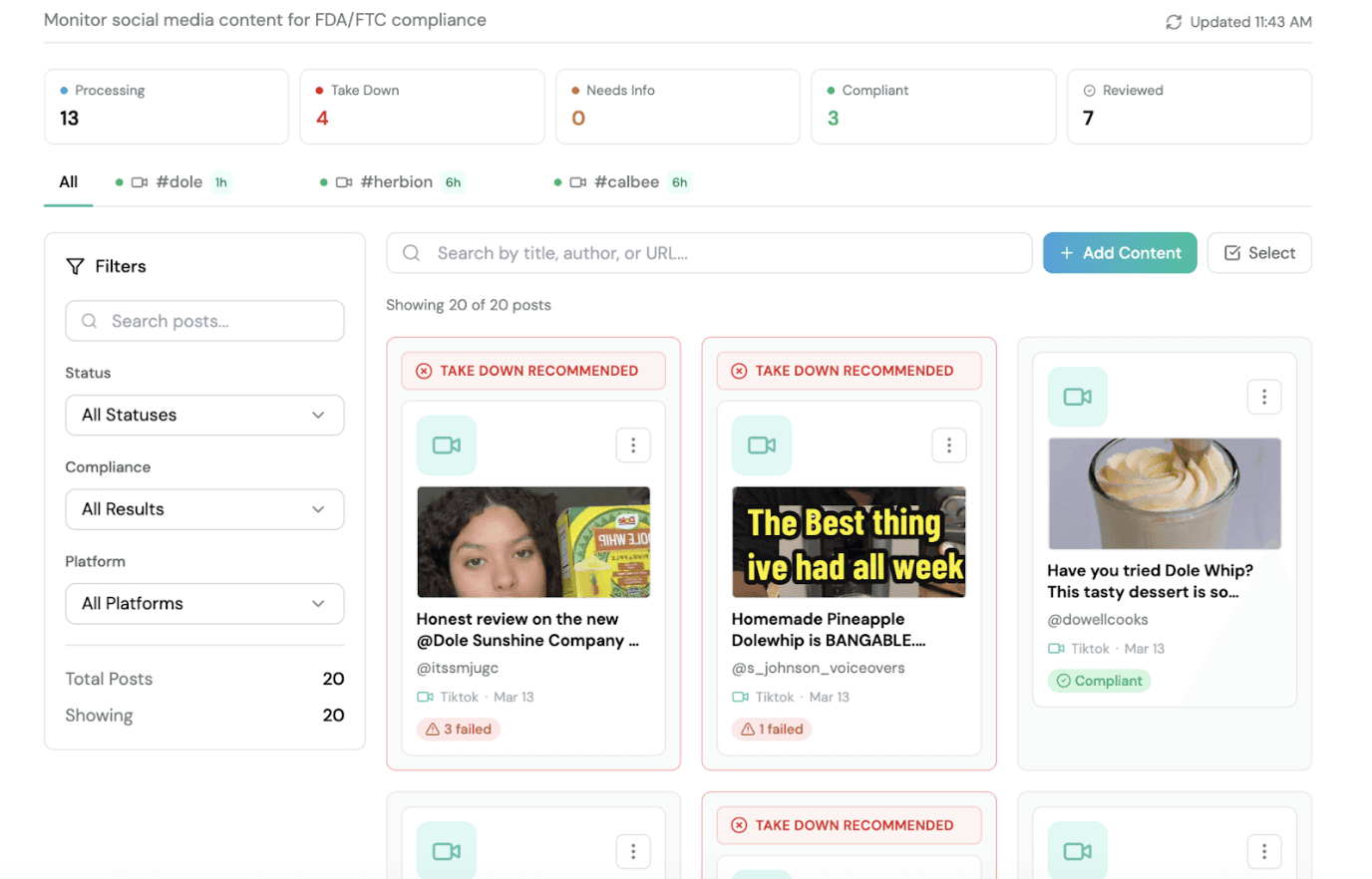
Most cannabis and hemp brands review their own ads and let affiliate and influencer content run unreviewed. That is exactly backwards from a risk standpoint, because commissioned third parties are paid on conversion and reliably overclaim. A functioning program monitors affiliate posts, requires disclosure language in contracts, and pulls links from partners who make health claims, with records showing you did it.
Email and SMS: The Channels You Actually Own
Owned channels are where cannabis marketing compliance pays off, because no platform can deplatform your list. Email and SMS still carry federal obligations: CAN-SPAM for email, and TCPA prior express written consent for marketing texts, where class actions against dispensary and hemp brands over consent and quiet-hours violations are now routine. Age-gate your capture forms, honor opt-outs instantly, and remember that claim rules follow the content, not the channel. A disease claim in an SMS blast is as actionable as one on a label.
The practical takeaway: treat list growth as the primary goal of every compliant social and content play, then do the persuasion in channels you control. That inverts the standard CPG playbook, and it is why cannabis brands with disciplined email programs keep outgrowing competitors who bet everything on rented reach.
Review every channel the way regulators do
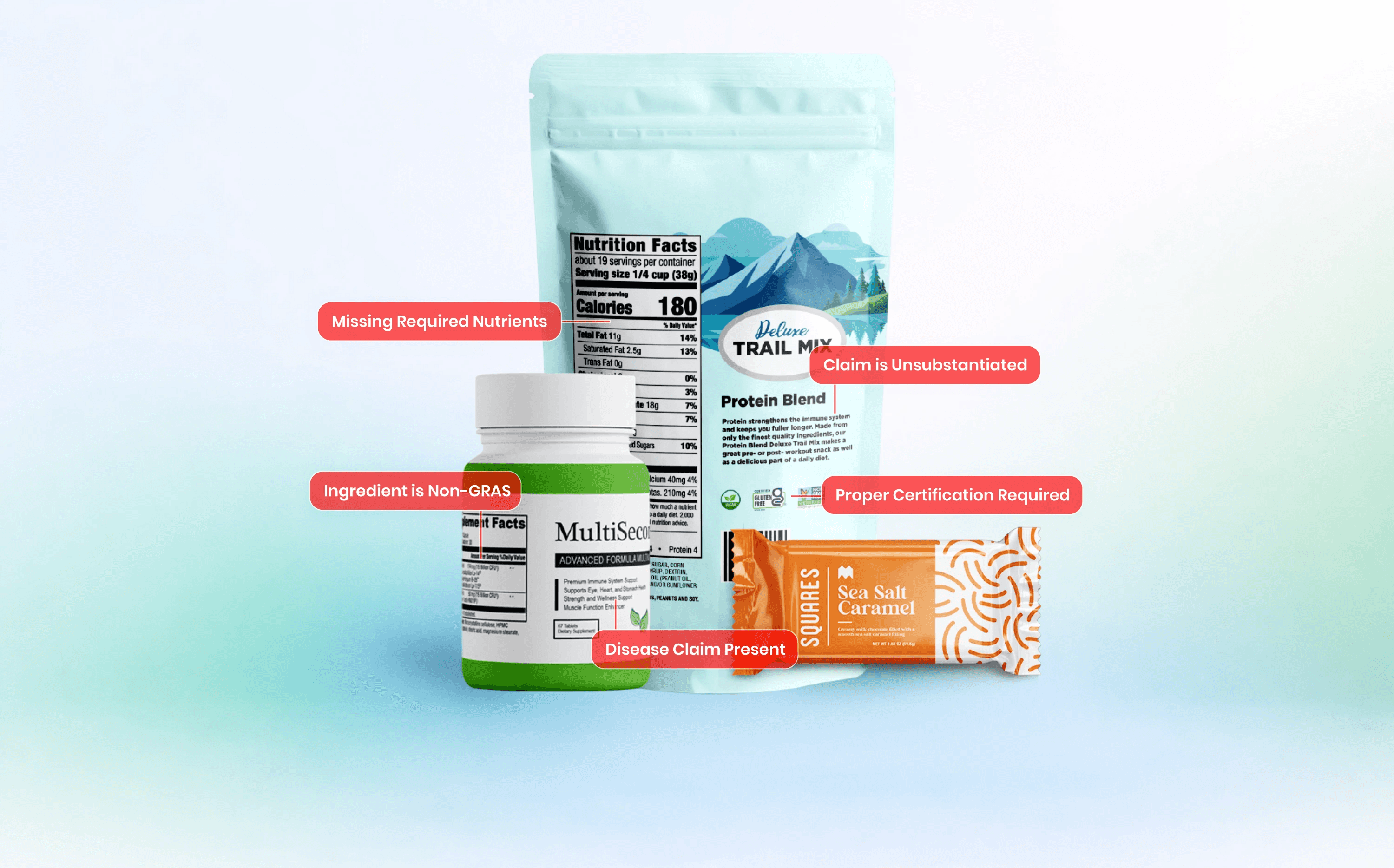
Truli's AI agents scan labels, packaging, websites, and social content against FDA and FTC regulations, citing the specific rule behind every finding, so claims that would sink an ad account or draw a state notice get caught before publication. Point it at your affiliate content too. Book a demo.
A note from Truli: Truli is not a law firm, and this article does not constitute or contain legal advice or create an attorney-client relationship. When determining your obligations and compliance with respect to relevant laws and regulations, you should consult a licensed attorney.
About

Truli is an AI compliance platform for food, beverage, and supplement brands. Automate FDA/FTC label reviews, claims validation, and post-market monitoring — 10x faster.

Platform
See Truli in action
If regulatory delays are consuming months and thousands in fees, see how Truli delivers fast and continuous compliance coverage at a fraction of the cost.
Book a demo