Allergen Labeling for Supplements - FALCPA, the FASTER Act, and the Sesame Requirement
Allergen labeling is a life-safety issue — and it applies to dietary supplements with the same force it applies to conventional foods. The Food Allergen Labeling and Consumer Protection Act (FALCPA) and the FASTER Act together require declaration of nine major allergens on any food or supplement that contains them. The sesame requirement, effective January 1, 2023, is still being missed by brands that haven't updated their labels.

Michael Wu
| Co-founder at Truli

The Food Allergen Labeling and Consumer Protection Act of 2004 (FALCPA) amended the Federal Food, Drug, and Cosmetic Act to require that foods and dietary supplements containing a major food allergen declare that allergen on the label. The FASTER Act of 2021 (Food Allergy Safety, Treatment, Education, and Research Act) expanded the list to nine allergens by adding sesame, effective January 1, 2023.
The Nine Major Food Allergens
Under 21 U.S.C. 343(w), the nine major food allergens that must be declared on supplement labels are:
Milk
Eggs
Fish (with the species named: "fish (salmon)")
Crustacean shellfish (with the species named: "crustacean shellfish (shrimp)")
Tree nuts (with the specific tree nut named: "tree nuts (almonds)")
Wheat
Peanuts
Soybeans
Sesame (added by the FASTER Act, effective January 1, 2023)
How Allergen Declaration Works
Under 21 U.S.C. 343(w)(1), a major food allergen must be declared on the label either:
In the ingredient list, using the common name of the allergen (e.g., "milk," "soy"), or
In a "Contains" statement immediately following or adjacent to the ingredient list (e.g., "Contains: Milk, Soy, Wheat")
For fish and shellfish, the specific species must be identified. "Fish" is not sufficient — "fish (cod)" or "fish (salmon)" is required. For tree nuts, the specific nut must be named — "tree nuts (cashews)" not just "tree nuts."
Allergens present from processing aids, carriers, flavoring agents, or colorings must be declared even if the ingredient itself is not listed by its allergen name. For example, a flavoring that contains milk protein must trigger a milk declaration even if "milk" doesn't appear in the ingredient list.
Sesame: Still Being Missed
Sesame became the ninth major allergen effective January 1, 2023 under the FASTER Act. Brands that formulated products before 2023 and haven't conducted a full label review may still have unlabeled sesame exposure from:
Sesame oil used as a carrier in softgels or liquid supplements
Sesame-derived excipients in tablet or capsule formulations
Contract manufacturer ingredient substitutions that introduced sesame-containing components
Cross-contact declarations for facilities that process sesame
A supplement label that doesn't declare sesame when the product contains it — or was produced in a facility that handles sesame without appropriate cross-contact warnings — is misbranded under 21 U.S.C. 343(w).
Cross-Contact and Advisory Statements
"May contain [allergen]" and "Manufactured in a facility that also processes [allergen]" are voluntary advisory statements — FDA does not require them, and they are not a substitute for mandatory declaration when an allergen is intentionally present. These statements should be used consistently and only when cross-contact is a genuine risk, not as a blanket disclaimer to avoid label revisions.
FDA has noted that overuse of advisory statements can erode their value and make it harder for allergic consumers to rely on them.
Supplements vs. Conventional Foods: Same Rules Apply
FALCPA and the FASTER Act apply to dietary supplements in the same way they apply to conventional foods. There is no supplement exemption. Brands that treat allergen labeling as a food-category issue and not a supplement issue are creating misbranding exposure.
The most common supplement-specific allergen exposures:
Gelatin capsules: Derived from bovine or porcine sources — not a FALCPA allergen, but relevant for consumers avoiding animal products
Soy: Widely used in supplement excipients; soy lecithin must trigger a soy declaration
Milk: Whey, casein, and lactose in protein supplements; milk-derived excipients in non-protein products
Wheat: Wheat germ oil as a carrier; wheat-derived excipients in some tablet formulations
Tree nuts: Nut oils used as carriers in oil-based supplements
Allergen labeling errors are among the most serious misbranding violations — and the most actionable for recalls
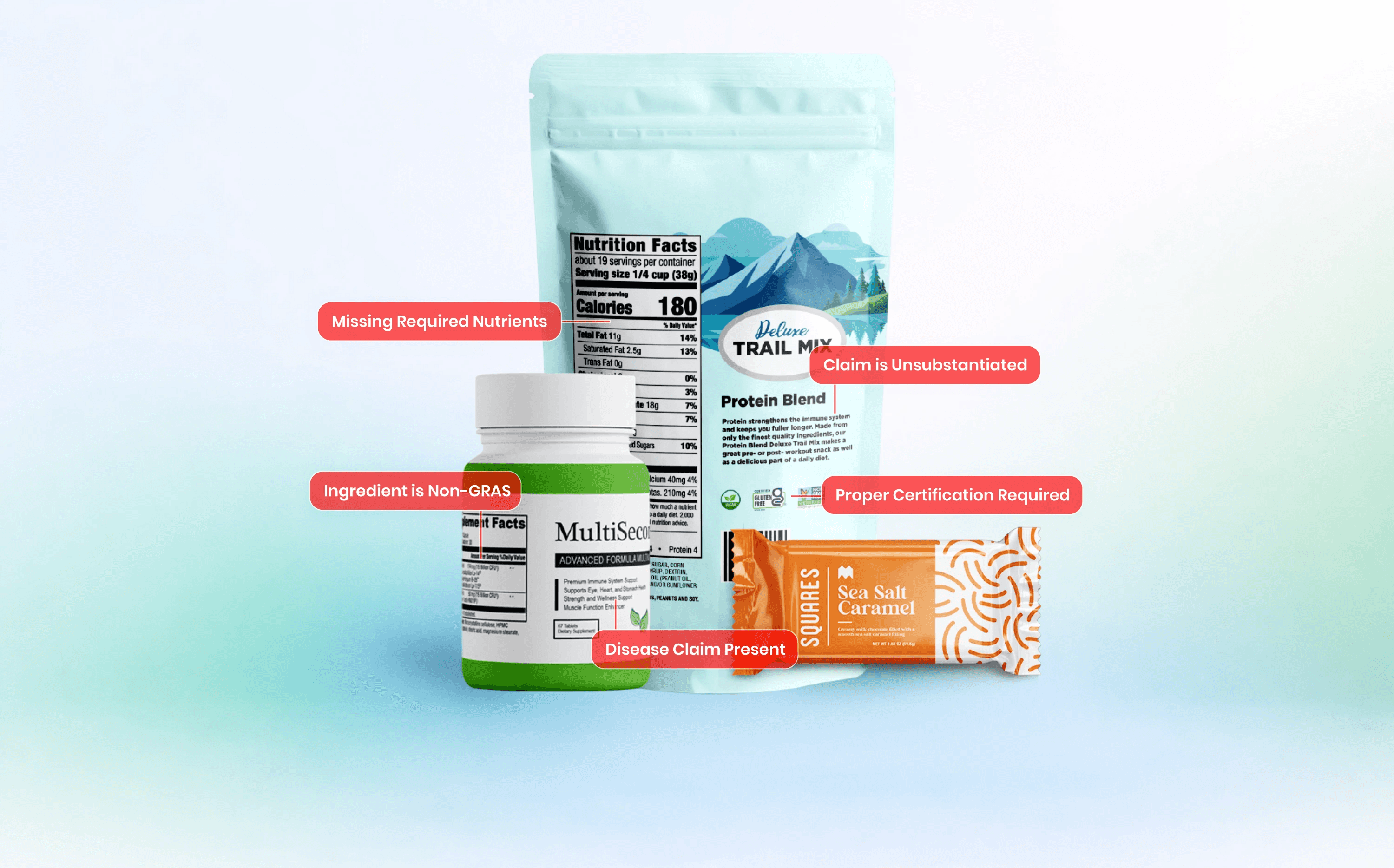
Undeclared allergens are the leading cause of FDA-initiated food recalls. Truli audits supplement labels for complete allergen declarations against the nine-allergen FALCPA/FASTER Act standard — including sesame, species-specific declarations for fish and shellfish, and sourcing-level allergen exposure from ingredient and excipient suppliers.
A note from Truli: Truli is not a law firm, and this article does not constitute or contain legal advice or create an attorney-client relationship. When determining your obligations and compliance with respect to relevant laws and regulations, you should consult a licensed attorney.
About

Truli is an AI compliance platform for food, beverage, and supplement brands. Automate FDA/FTC label reviews, claims validation, and post-market monitoring — 10x faster.


Platform
See Truli in action
If regulatory delays are consuming months and thousands in fees, see how Truli delivers fast and continuous compliance coverage at a fraction of the cost.
Book a demo