Health Claims on Alcohol Labels — What TTB Prohibits
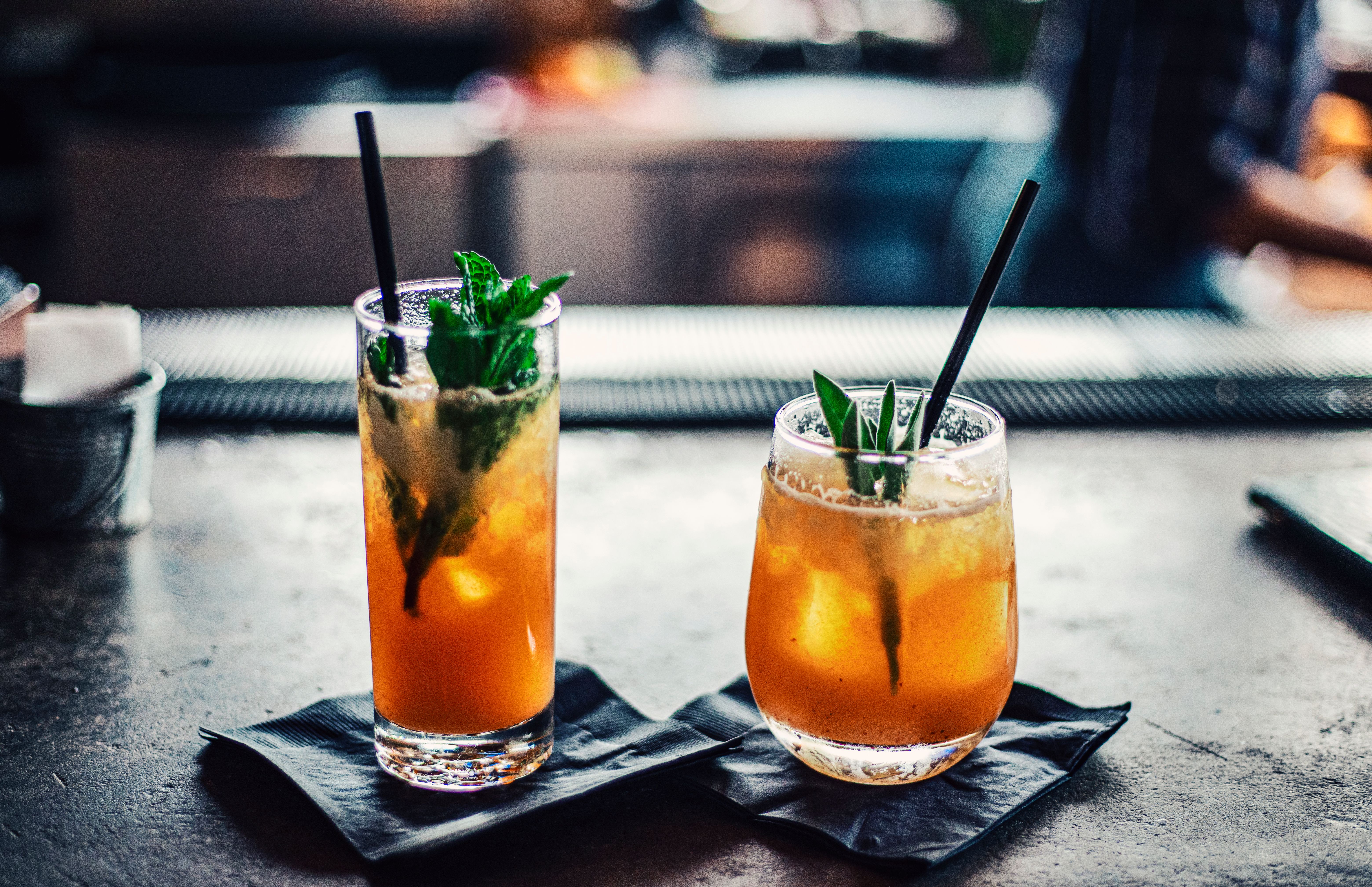
Wellness language is everywhere in alcohol right now — 'clean' seltzers, 'better-for-you' RTDs, adaptogen-spiked spirits. But TTB has some of the strictest health-claim rules in all of CPG, and they cover your ads and social posts, not just your label. Here is where the line actually sits.

Catherine Zhou
| Co-founder at Truli
Alcohol is the one CPG category where a health claim is presumptively a problem. The FDA framework that supplement and food brands work within — structure/function claims, qualified health claims, authorized claims — largely does not exist on the TTB side. Instead, TTB starts from the position that statements connecting alcohol to health tend to mislead, and it puts the burden on you to prove otherwise. Very few brands ever clear that bar.
The rules live in three parallel places: 27 CFR 4.39 for wine, 27 CFR 5.129 for distilled spirits, and 27 CFR 7.129 for malt beverages. If you still have "5.65" in your compliance notes, update them — TTB recodified Parts 5 and 7 in 2022, and the spirits health-statement rule now sits in Part 5's prohibited-practices subparts.
What counts as a "health-related statement"
The definition is much broader than most marketers assume. A health-related statement is any statement related to health — other than the mandatory Government Warning — including curative or therapeutic claims that expressly or by implication connect the product, alcohol, or any substance in the product to health benefits or effects.
The regulatory text sweeps in four things brands routinely miss:
General wellness references, not just disease claims — "supports recovery" is covered just like "prevents heart disease"
Implied claims through imagery: symbols, vignettes, and design elements count as statements under TTB's rules
Physical or psychological sensation claims — copy implying the drink relaxes, energizes, or lifts mood
Nutritional value claims, such as touting vitamin content
One carve-out matters: statements of caloric, carbohydrate, protein, and fat content are explicitly not treated as nutritional claims. That is why "90 calories, 2g carbs" seltzer panels are fine while "packed with electrolytes" is not.
The general rule — untrue or misleading means prohibited
The core prohibition is simple to state. Labels may not carry any health-related statement that is untrue in any particular or that tends to create a misleading impression about the health effects of alcohol consumption. TTB evaluates these case by case and can require a disclaimer or qualifying statement to cure a misleading impression.
Notice the standard: tends to create a misleading impression. TTB does not need to show the claim is false. A technically accurate statement — "contains antioxidants" — still fails if the overall impression suggests drinking the product benefits your health.
Specific health claims are near-impossible in practice
Can you ever put a specific health claim on an alcohol label? Technically yes; practically no. A specific health claim — one characterizing a relationship between the product and a disease or health condition — must be truthful and adequately substantiated by scientific evidence, detailed about who the claim applies to, disclose the risks of both moderate and heavier drinking, and identify people for whom any drinking is risky. All of that disclosure must appear as part of the claim itself.
For wine, TTB also consults FDA, and will refuse the claim if FDA considers it a non-compliant drug claim. No mainstream brand has found this trade worth making — the mandatory risk disclosure is longer and darker than any benefit copy.
There is a third category worth knowing: health-related directional statements, which point consumers to a third party for health information. These are presumed misleading unless they direct consumers to balanced information and carry the prescribed disclaimer: "This statement should not encourage you to drink or to increase your alcohol consumption for health reasons."
The same rules follow you into advertising
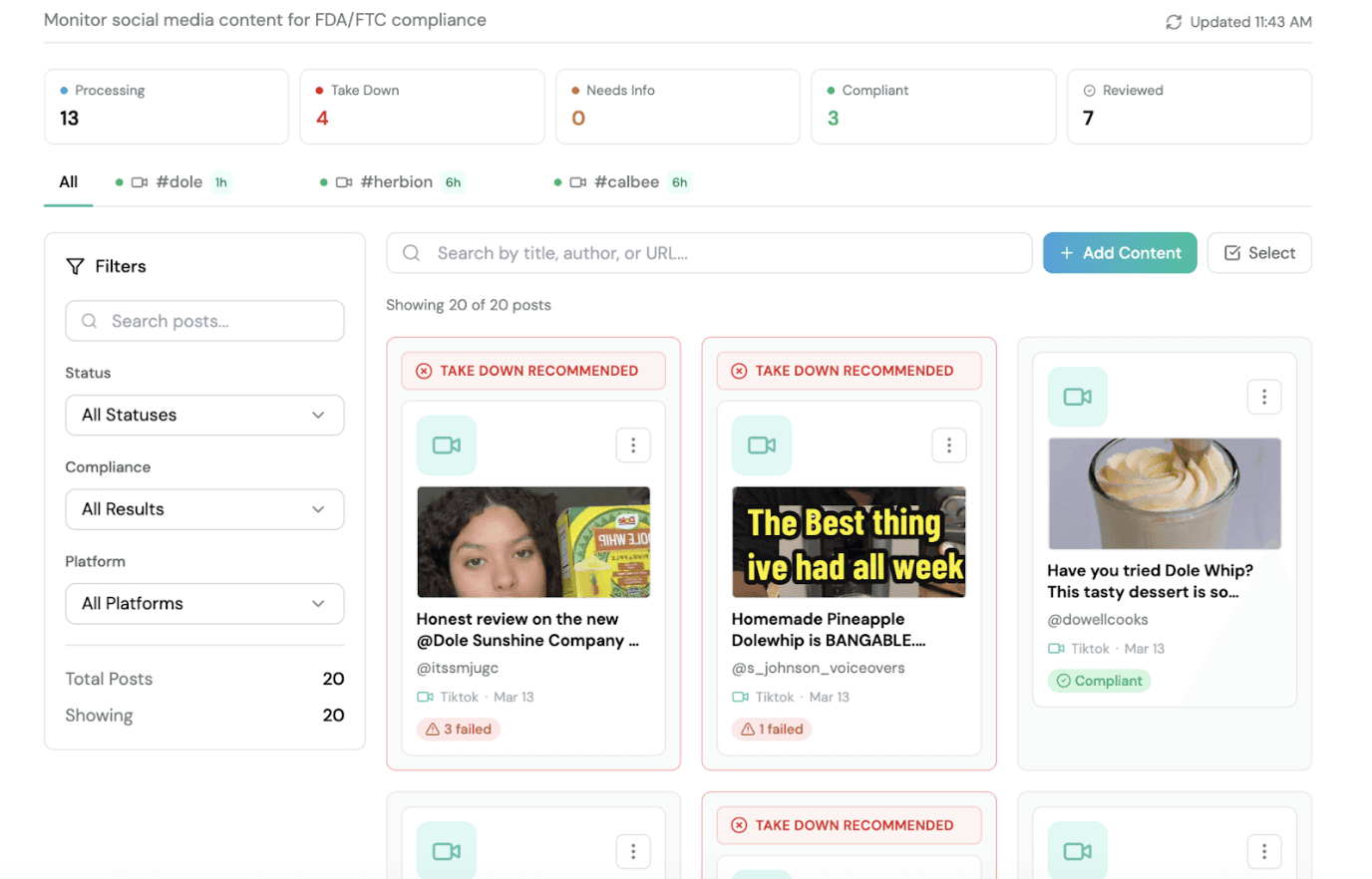
TTB's health-statement rules apply to advertisements with nearly identical text — 27 CFR 4.64 for wine ads, 27 CFR 5.235 for spirits, and 27 CFR 7.235 for malt beverages. TTB treats websites, social posts, and influencer content as advertising, so a "supports your wellness routine" caption on Instagram is judged under the same standard as the label. Any required disclaimer must be as prominent as the health statement it qualifies.
Where "clean" and wellness-washing copy lands
The hard seltzer and RTD boom pulled food-marketing language into a category that legally cannot use most of it. Here is how common phrases map to the rules:
Claim on label or ad | TTB treatment |
|---|---|
"90 calories, 2g carbs" | Permitted — calorie/carb/protein/fat statements are carved out |
"Gluten-free" / "crafted to remove gluten" | Permitted with conditions under TTB Ruling 2020-2 |
"Clean," "better for you" | High risk — implies health benefit; misleading-impression standard |
"With vitamin C," "antioxidant-rich" | Prohibited territory — nutritional value claims are health-related statements |
"Relaxing," "recovery," "immunity" | Prohibited territory — sensation and wellness claims |
"Cures," "treats," "therapeutic" | Prohibited — curative and therapeutic claims are the core target |
"Clean" deserves special attention because it feels safe. It is not defined anywhere, and in a wellness-coded brand context TTB can read it as an implied health claim — and plaintiffs' lawyers read it the same way in false-advertising suits.
Beyond health — the neighboring prohibitions
Health claims sit inside a larger prohibited-practices framework. The recodified rules also ban any statement that is false or untrue in any particular (27 CFR 5.102 for spirits, 27 CFR 7.102 for malt beverages) and any statement that creates a misleading impression — directly, or through ambiguity, omission, or the addition of irrelevant scientific matter (27 CFR 5.122, 27 CFR 7.122). Strength-focused marketing gets caught here too: truthful ABV statements are fine, but copy that leans on intoxicating power as a selling point invites the misleading-impression analysis, and malt beverage labels cannot imply the product contains distilled spirits (27 CFR 7.128).
These are the same authorities behind many COLA rejections — and unlike a rejection, a violation found post-market can mean pulled labels and TTB enforcement.
Catch wellness-washing before TTB does
Truli's AI agents scan your labels, packaging, website, and social content against the actual regulatory text — including TTB's Part 4, 5, and 7 prohibited-practices rules — and cite the specific section behind every finding. If a caption or can panel drifts into health-claim territory, you will know before a regulator or a class-action lawyer does. Book a demo to see it on your own brand.
A note from Truli: Truli is not a law firm, and this article does not constitute or contain legal advice or create an attorney-client relationship. When determining your obligations and compliance with respect to relevant laws and regulations, you should consult a licensed attorney.
About

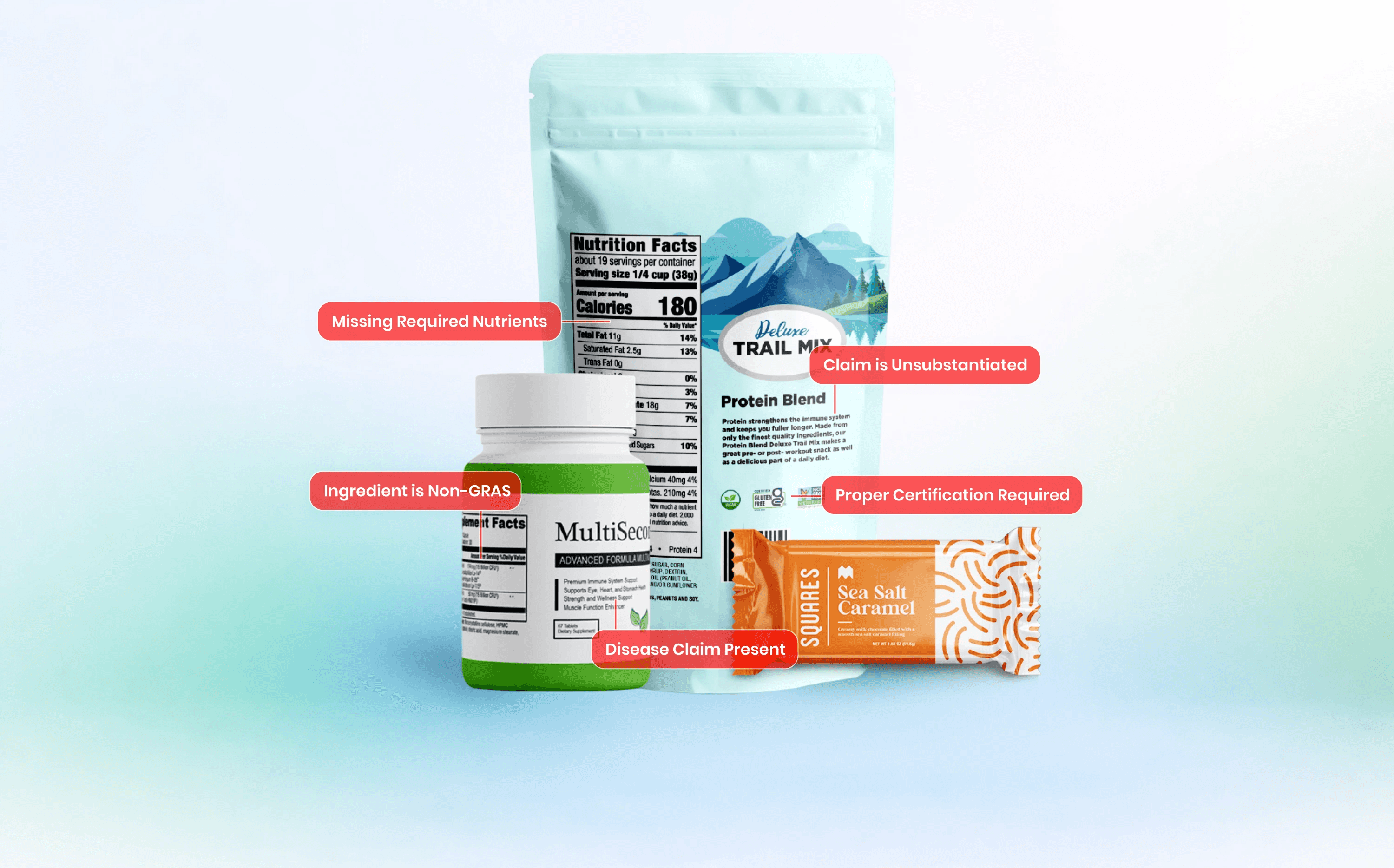
Truli is an AI compliance platform for food, beverage, and supplement brands. Automate FDA/FTC label reviews, claims validation, and post-market monitoring — 10x faster.

Platform
See Truli in action
If regulatory delays are consuming months and thousands in fees, see how Truli delivers fast and continuous compliance coverage at a fraction of the cost.
Book a demo