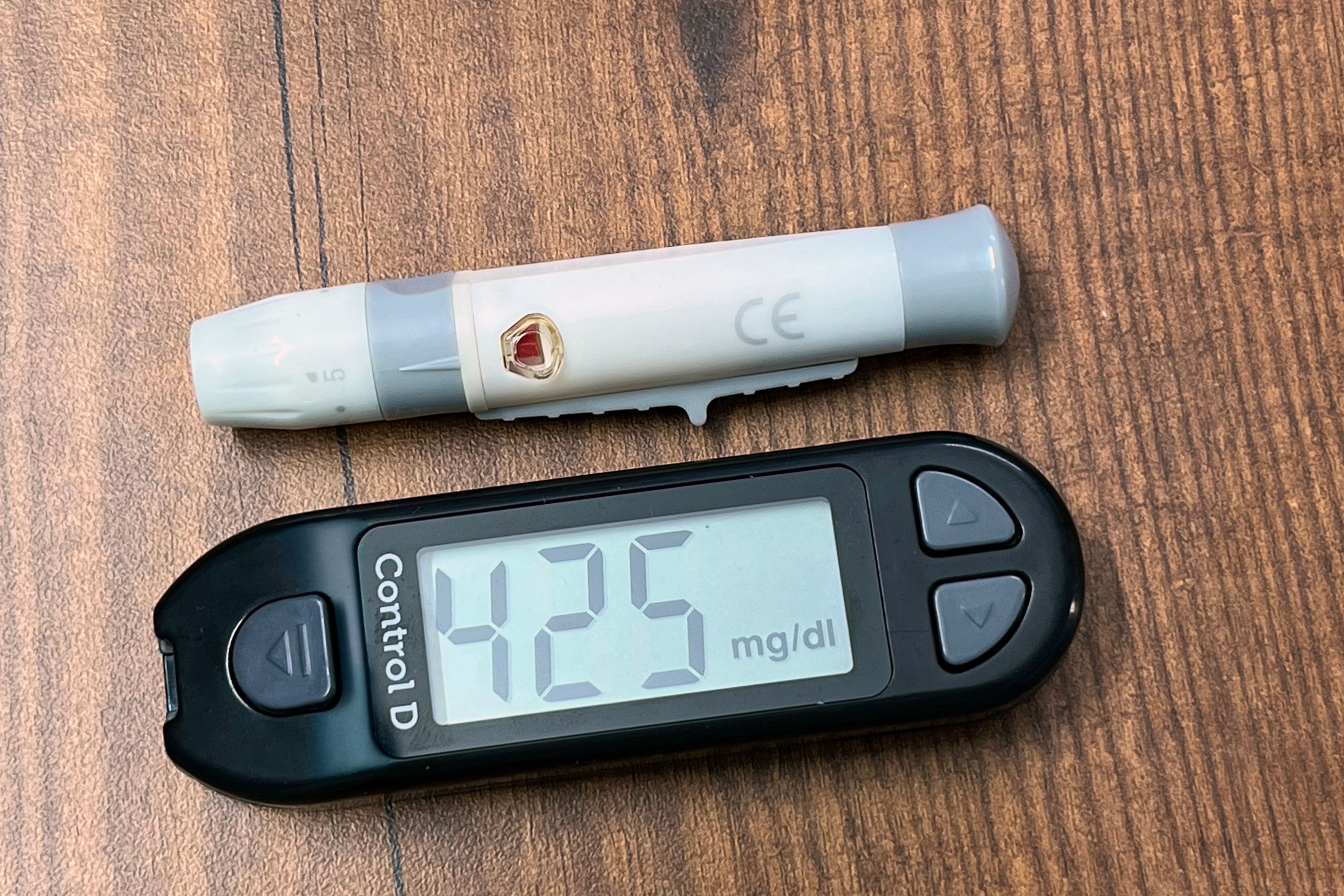
Supplement Facts Panel Requirements — What Every Element Must Show
The Supplement Facts panel is the defining required label element for dietary supplements — and one of the most technically demanding. Unlike food's Nutrition Facts panel, the Supplement Facts panel must list every dietary ingredient in a specific hierarchy, handle Daily Values that exist for some nutrients but not others, deal with proprietary blend disclosure rules, and include correct rounding for everything from milligrams to micrograms. Here's what every element requires.

Catherine Zhou
| Co-founder at Truli

The Supplement Facts panel is governed by 21 CFR 101.36. It is required on all dietary supplement labels and replaces the Nutrition Facts panel that appears on conventional food labels. Understanding the specific requirements — format, ordering, Daily Value presentation, proprietary blend rules — is foundational to supplement label compliance.
The Required Header
The panel must be headed "Supplement Facts" in bold type. The heading must be the largest type in the panel, significantly larger than the other text, and must use the word "Facts," not "Information" or "Details." This is a verbatim requirement — the header is not customizable.
Serving Size and Servings Per Container
The first line below the header must state the serving size — expressed in the common household unit and the metric equivalent (e.g., "2 Capsules (1.4 g)"). The next line states the servings per container.
Serving sizes for dietary supplements are not based on the RACC framework that governs food products. Supplement serving sizes are established by the manufacturer, but must reflect the typical amount consumed and must not be set in a way that is misleading. A serving declared as "1/4 capsule" to reduce the apparent dose per serving on the Supplement Facts panel is manipulative and may be considered misleading.
Calories
Calories per serving must be declared when the supplement contains 5 or more calories per serving. Most capsule and tablet supplements contain negligible calories. Protein powders, meal replacement supplements, and supplement gummies typically have significant calorie content that must be declared.
Calorie rounding follows specific rules under 21 CFR 101.9(c)(1) (applied by reference to supplements): values below 5 calories are declared as zero; values 5 to 50 calories are rounded to the nearest 5-calorie increment; values above 50 are rounded to the nearest 10-calorie increment.
Dietary Ingredient Listing Order
Dietary ingredients must appear in the panel in a specific hierarchy under 21 CFR 101.36(b)(3):
Vitamins — in the order: vitamin A, vitamin C, vitamin D, vitamin E, vitamin K, thiamin, riboflavin, niacin, vitamin B6, folate, vitamin B12, biotin, pantothenic acid, choline
Minerals — in the order: calcium, iron, phosphorus, iodine, magnesium, zinc, selenium, copper, manganese, chromium, molybdenum, chloride, sodium, potassium
Herbs and botanical ingredients — alphabetical order within this category
Amino acids — alphabetical order
Lipids (fatty acids, phospholipids)
Other dietary ingredients — alphabetical order
Departing from this ordering is a labeling violation. Brands that list herbs before vitamins, or minerals in non-specified order, have a non-compliant Supplement Facts panel.
Quantity Per Serving
Every dietary ingredient listed in the Supplement Facts panel must show its quantity per serving. The unit of measure depends on the ingredient:
Macronutrients and fiber: grams (g)
Vitamins and minerals: milligrams (mg) or micrograms (mcg/µg), depending on the DV reference unit
Botanicals and amino acids: milligrams (mg) or grams (g) depending on dose
Very potent compounds (e.g., vitamin B12): micrograms (mcg)
Rounding rules for quantities in the Supplement Facts panel mirror those used in the Nutrition Facts panel for nutrients that are declared in comparable units.
% Daily Value
For nutrients that have an established Daily Value (DV) under FDA regulations, the % Daily Value must be declared in the Supplement Facts panel. The established DVs for vitamins and minerals are set out in 21 CFR 101.9(c)(8)(iv) and apply to supplement labeling as well.
For nutrients that do not have an established DV — most botanical ingredients, many amino acids, most proprietary functional ingredients — the panel must show a dagger symbol (†) in the % DV column. At the bottom of the panel or adjacent to it, the footnote must state: "† Daily Value not established."
Common errors:
Listing a percentage for an ingredient that doesn't have an established DV
Omitting the % DV for an ingredient that does have one
Using outdated DV values — the reference values were updated in 2020 to reflect current dietary guidance, and some values changed significantly (e.g., vitamin D DV increased from 400 IU to 800 IU)
Vitamins Declared as IU vs. Metric Units
FDA updated the Nutrition Facts and Supplement Facts panel requirements to transition certain vitamins from International Units (IU) to metric units (mg or mcg). Under current rules:
Vitamin D: Must be declared in micrograms (mcg) — not IU. The DV is 20 mcg (800 IU). If the label also states the amount in IU, that's permissible but must be parenthetical after the mcg declaration.
Vitamin E: Must be declared in milligrams (mg) — not IU. The DV is 15 mg.
Vitamin A: Must be declared in micrograms of Retinol Activity Equivalents (mcg RAE) — not IU. The DV is 900 mcg RAE.
Supplement labels that still declare vitamin D as "1,000 IU" without a primary mcg declaration are non-compliant under the updated rules.
Proprietary Blends
Proprietary blends are listed in the Supplement Facts panel as a named blend (e.g., "Athletic Performance Blend") with the total weight of the blend declared. The individual ingredients within the blend must be listed by name in descending order of predominance by weight — but their individual amounts are not required to be disclosed.
Requirements for proprietary blend labeling:
The blend must have a name (generic "Proprietary Blend" is permitted)
The total weight of the blend must be declared
Each ingredient in the blend must be listed individually in the blend's ingredient list within the panel, in descending order of predominance
The individual ingredients still must be in the correct ingredient category order (vitamins, minerals, botanicals, etc.) within the blend listing
Proprietary blend labels create an additional compliance risk: brands cannot make specific efficacy claims about individual ingredients within a blend when the per-ingredient doses are undisclosed and may be below the studied efficacy levels.
Other Ingredients
Below the ruled line at the bottom of the Supplement Facts panel, the label must list all Other Ingredients — the non-dietary-ingredient components of the product: excipients, binders, coatings, flavors, colors, and processing aids.
Other Ingredients are listed in descending order of predominance by weight, with the same requirements as a food ingredient list:
Compound ingredients may be declared parenthetically or broken out individually
Certified color additives must be declared by their individual names
Allergen sources must be declared — milk, eggs, fish, shellfish, tree nuts, wheat, peanuts, soy, and sesame in excipients or coatings require allergen declaration under FALCPA
Common errors in the Other Ingredients section: omitting ingredients because they're added in small quantities ("it's just a trace amount of magnesium stearate"), using trade names instead of common or usual ingredient names, and failing to declare allergens present in coating materials.
Format Requirements
The Supplement Facts panel has specific format requirements that parallel the food Nutrition Facts panel:
Bold type for "Supplement Facts" heading, serving size, and nutrient names
Hairlines separating major sections
Minimum type size: 6-point for most text, 8-point for nutrient names and quantities
Heavy rule separating the panel from surrounding label elements
Black type on white or neutral background, or high-contrast equivalent
Supplement Facts panels that reduce type below minimum sizes, use non-contrasting backgrounds, or omit the required hairline separators are non-compliant regardless of whether the information content is correct.
The Supplement Facts Panel Is Both a Compliance Requirement and a Marketing Asset
Getting the Supplement Facts panel right isn't just about regulatory compliance — it's the primary vehicle for communicating ingredient transparency to sophisticated supplement consumers. Errors in the panel (wrong DV percentages, outdated unit conversions, incorrect ordering) undermine both compliance and credibility.
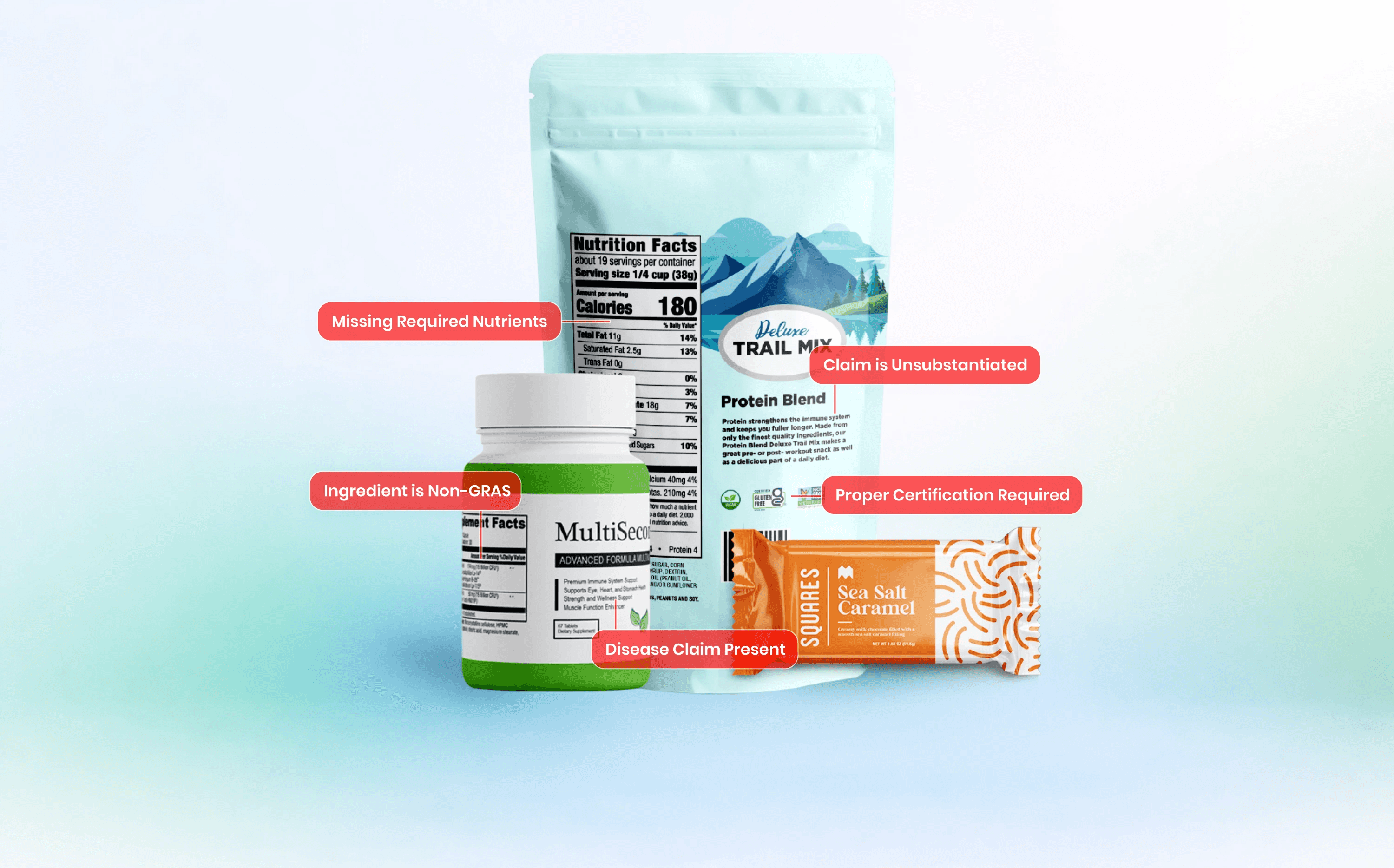
Truli's AI compliance platform audits Supplement Facts panels against current 21 CFR 101.36 requirements — checking ingredient ordering, DV percentage accuracy, unit compliance (metric vs. IU for vitamins D and E), proprietary blend disclosures, and Other Ingredients allergen declarations. Book a demo to see how Truli audits supplement labels.
About

Truli is an AI compliance platform for food, beverage, and supplement brands. Automate FDA/FTC label reviews, claims validation, and post-market monitoring — 10x faster.


Platform
See Truli in action
If regulatory delays are consuming months and thousands in fees, see how Truli delivers fast and continuous compliance coverage at a fraction of the cost.