Protein Bar Label Requirements — FDA Compliance for the Category
Protein bars are one of the most compliance-dense food categories on the market. A single label typically carries three to five nutrient content claims, at least two or three allergens, a serving size that needs to match the RACC, and marketing language that pushes toward the structure/function boundary. Protein bar FDA compliance fails more often than brands realize — and the violations are predictable.

Catherine Zhou
| Co-founder at Truli
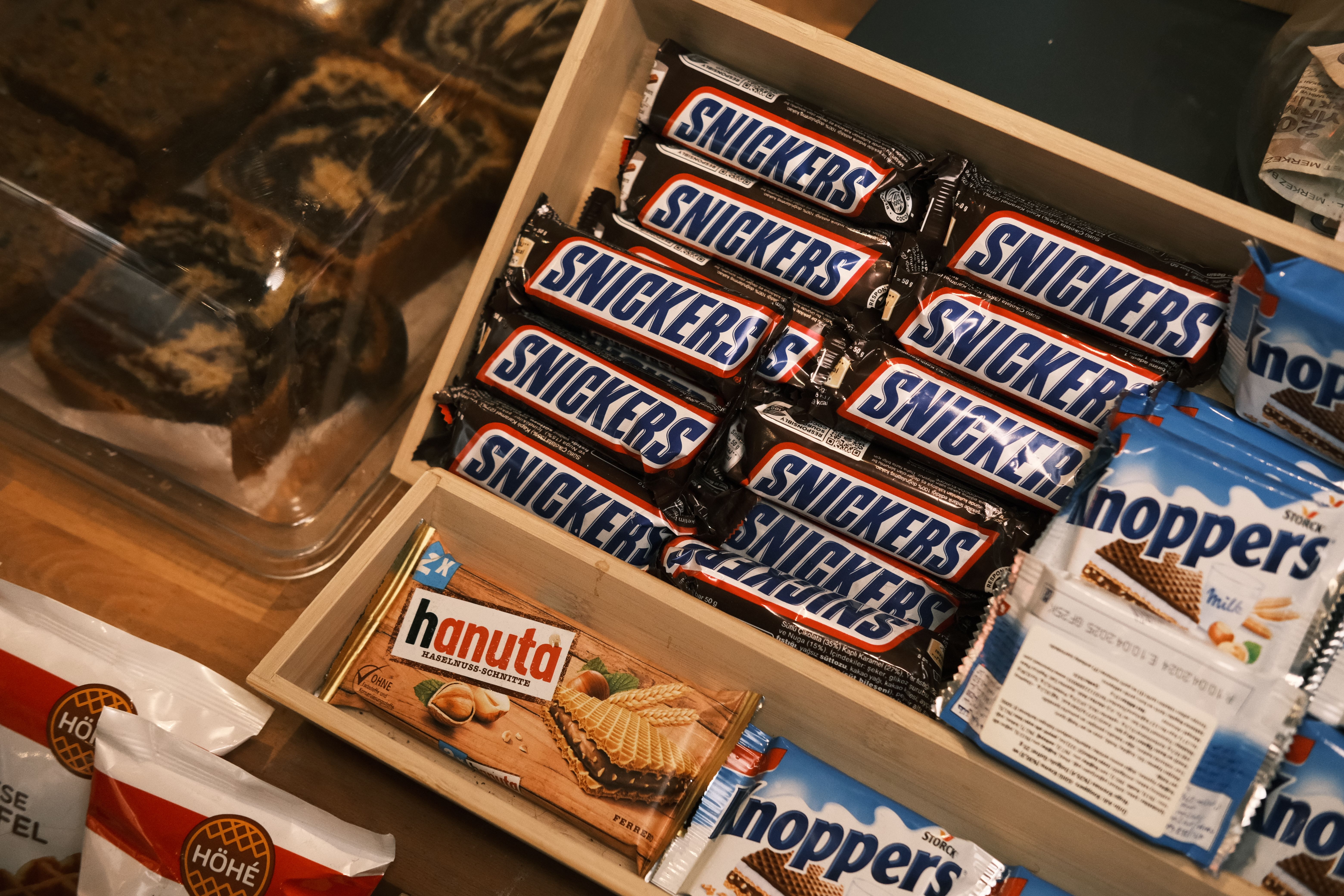
Protein bars sit at the intersection of several high-enforcement FDA labeling categories: nutrient content claims (protein, fiber, sugar), allergen declarations (dairy, soy, tree nuts, wheat, peanuts), and serving size rules. Getting all of them right simultaneously, on a small label with a lot of marketing copy, is where most brands find gaps.
Protein Claims: The Most Misused Claim in the Category
"High protein" is the leading marketing claim in the protein bar category and one of the most frequently violated nutrient content claims on food labels. The threshold under 21 CFR 101.54 is ≥20% of the Daily Value for protein per serving — meaning ≥10g of protein from high-quality sources after protein quality correction.
The complication: the 10g number assumes 100% protein quality (PDCAAS = 1.0). Most protein blends score below 1.0. A bar with 10g of protein from a blend of plant proteins with a PDCAAS of 0.85 effectively has 8.5g of corrected protein — 17% DV, which qualifies for "good source" but not "high protein."
Brands that blend multiple protein sources without validating the PDCAAS-corrected DV for the blend are routinely misclaiming "high protein" on products that don't meet the threshold.
The practical fix: obtain a protein quality score for your specific protein blend — from your ingredient supplier or through third-party testing — and apply it to your protein content before evaluating claim eligibility. Don't assume the declared protein grams translate directly to DV percentage.
Fiber Claims: "Good Source" vs. "High" — and What Counts
Fiber claims are common on protein bars and frequently misapplied. The thresholds are straightforward:
"High fiber" / "excellent source of fiber": ≥20% DV, which is ≥5.6g of dietary fiber per serving (DV is 28g)
"Good source of fiber": 10–19% DV, which is 2.8g–5.3g of dietary fiber per serving
The common violation: a bar with 3g of dietary fiber labeled "high fiber." 3g is 11% DV — a "good source" claim, not a "high" claim.
A secondary compliance issue: not all fiber sources are created equal for DV purposes. Only dietary fiber as defined by FDA — naturally occurring fiber plus FDA-approved isolated and synthetic fibers — counts toward the DV declaration on the Nutrition Facts panel. Some functional fiber ingredients used in protein bars to improve texture are not classified as dietary fiber under FDA's current definition and cannot be counted toward a fiber claim. Verify the regulatory status of fiber ingredients with your supplier before making fiber-based claims.
Sugar Claims: "No Sugar Added," "Low Sugar," and What They Actually Require
Sugar claims are a high-traffic compliance area for protein bars. Several terms are commonly used and frequently misapplied:
"No sugar added": Requires no sugars or ingredients containing added sugars added during processing — no honey, brown rice syrup, fruit juice concentrate used as a sweetener, date paste, or other sugar-containing ingredients. It does not mean the product contains no sugar — naturally occurring sugars (from dairy proteins, dried fruits, or other ingredients) can still be present. Also requires a calorie disclosure if the product isn't low calorie: "not a low calorie food" or equivalent — 21 CFR 101.60(c)(2).
"Low sugar": Not a defined FDA nutrient content claim. There is no established threshold for "low sugar" in 21 CFR Part 101. Using "low sugar" as if it's a defined claim — without qualification — may constitute a misbranding violation if consumers interpret it as a nutrient content claim with no regulatory basis. Brands that want to communicate low sugar content should use defined claims ("reduced sugar," "less sugar") or quantitative statements ("only 5g sugar per serving").
"Sugar free": <0.5g total sugars per serving. Products that are "sugar free" but not low calorie must include "not a low calorie food," "not a reduced calorie food," or "not for weight control."
Allergen Declarations in Protein Bars
Protein bars are among the highest-allergen food products on the market. A typical bar formulation may contain dairy (whey, casein, milk protein), soy (soy protein isolate, soy lecithin), tree nuts (almonds, cashews, macadamias), peanuts, wheat (if using wheat protein or oat-containing ingredients with wheat co-mingling), and increasingly sesame (via sesame oil in coatings or tahini-derived ingredients).
The declaration requirements under FALCPA and the FASTER Act apply to sub-ingredients, not just top-level ingredients. Specific compliance points for protein bars:
Soy lecithin: Soy lecithin is a soy allergen that must be declared. "Contains soy" or "(soy)" after soy lecithin in the ingredient list is required — it cannot be omitted because lecithin is used in small quantities as an emulsifier.
Milk in whey: Whey protein concentrate and whey protein isolate are milk-derived. The milk allergen must be declared parenthetically or in a "Contains:" statement.
Tree nut specificity: If the bar contains almonds, the "Contains:" statement must specifically say "almonds" (or "tree nuts (almonds)"), not just "tree nuts." FDA requires species-level identification for tree nuts and fish.
Oats and wheat cross-contamination: Oats themselves are not a major allergen, but oats are frequently processed on shared equipment with wheat. If your oat supplier doesn't guarantee wheat-free processing, the wheat cross-contact risk may require advisory language.
Sesame in coatings and flavor systems: Dark chocolate coatings and sesame-adjacent flavors on bar surfaces require sesame review. Sesame oil used as a release agent or in a confectionery coating triggers sesame declaration requirements.
Serving Size: The RACC for Snack Bars
Protein bars must use serving sizes based on the Reference Amount Customarily Consumed (RACC) for their product category under 21 CFR 101.12. For grain-based bars and snack bars, the applicable RACC is typically 40g. For candy and confectionery-style products, the RACC may differ.
The compliance implication: a 70g protein bar cannot declare a 35g serving just to make the protein and sugar numbers look better per serving. FDA evaluates nutrient content claim eligibility against the RACC — a serving size that's half the RACC doubles the apparent protein density but doesn't change whether the claim is actually substantiated.
Brands that package two bars together (two individual 40g bars in a single wrapper) need to evaluate whether the product functions as a single-serving item for RACC purposes. If consumers typically eat both bars in one sitting, the serving size should reflect that.
Health Claims and Structure/Function Claims on Protein Bars
Protein bars frequently push toward health claims and structure/function claims in marketing copy:
"Supports muscle recovery": A permissible structure/function claim if substantiated — but requires the DSHEA disclaimer if the product is positioned as a dietary supplement. If the bar is a conventional food, the claim is evaluated under general misbranding principles; substantiation is still required under FTC standards.
"Helps maintain lean muscle mass": Structure/function claim — permissible with substantiation for conventional food products without a disclaimer requirement, though FDA may evaluate whether the claim crosses into disease territory if the product is positioned for weight management.
"Powers your workout": Generally treated as a permissible marketing statement about normal physiological function if vague enough. More specific claims about performance outcomes ("increases strength," "improves endurance") require substantiation and risk being evaluated as drug claims in some contexts.
Disease claims — "prevents muscle wasting," "treats sarcopenia," "reduces recovery time from injury" — are prohibited on both conventional food bars and supplement-positioned bars.
"Keto-Friendly" and "Low Carb" Labeling
Neither "keto-friendly" nor "low carb" is a defined FDA nutrient content claim. Neither term has a regulatory threshold. Brands can use both terms, but several compliance issues arise:
"Net carbs" (total carbohydrates minus fiber and sugar alcohols) is not an FDA-recognized nutrition measurement. The Nutrition Facts panel must declare total carbohydrate and dietary fiber using the FDA-defined values — "net carbs" cannot replace the required total carbohydrate declaration. If "net carbs" appears on the label, it must be clearly supplemental to the required Nutrition Facts panel data and must not misrepresent the product's carbohydrate content.
"Low carb" as an implied nutrient content claim — if consumers reasonably interpret it as meaning the product meets a defined threshold — may be evaluated under FDA's general misbranding authority.
Protein Bar Compliance Requires Category Expertise
Protein bar labels carry more simultaneous compliance obligations than almost any other food format. Protein quality scoring, fiber classification, sugar claim thresholds, multi-allergen declarations, and RACC-based serving sizes all need to be right at the same time.
Truli's AI compliance platform audits protein bar labels against current FDA regulations — checking protein claim thresholds including PDCAAS correction, fiber DV calculations, sugar claim requirements, full allergen traces through compound ingredients, and serving size RACC compliance. Book a demo to see how Truli handles protein bar label compliance.
About

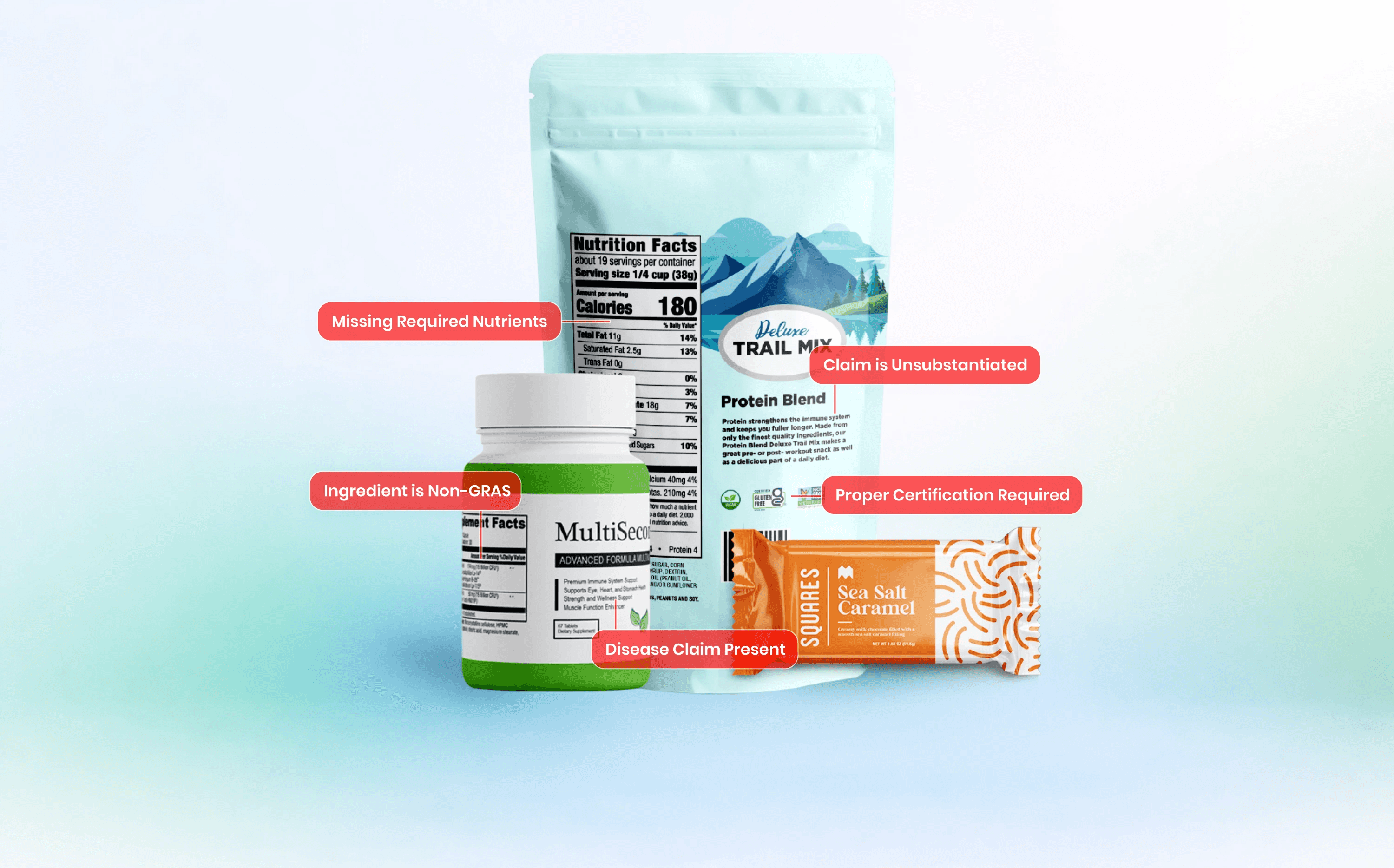
Truli is an AI compliance platform for food, beverage, and supplement brands. Automate FDA/FTC label reviews, claims validation, and post-market monitoring — 10x faster.


Platform
See Truli in action
If regulatory delays are consuming months and thousands in fees, see how Truli delivers fast and continuous compliance coverage at a fraction of the cost.