FTC Health Claims in Advertising — What Supplement and Food Brands Must Know
The FTC governs health claims in advertising under Section 5 of the FTC Act, which prohibits unfair or deceptive acts or practices. For food and supplement brands, this means every health claim made in an ad, on a website, in social media, or through influencers must be substantiated by competent and reliable scientific evidence — and the substantiation must exist before the claim is made.

Catherine Zhou
| Co-founder at Truli

The Federal Trade Commission regulates advertising for food and dietary supplement products under Section 5 of the FTC Act (15 U.S.C. 45), which prohibits unfair or deceptive acts or practices in commerce. For health-related claims in advertising, the FTC's standard is that claims must be substantiated by competent and reliable scientific evidence.
While the FDA regulates what appears on product labels, the FTC regulates what appears in advertising — including digital ads, websites, email campaigns, social media posts, and influencer-generated content. The two agencies coordinate on enforcement against the same brands, and FTC-FDA joint enforcement actions are not uncommon.
The Substantiation Standard
The FTC requires that health claims in advertising be supported by competent and reliable scientific evidence. According to FTC guidance and enforcement precedent, this means:
Tests, studies, or research conducted and evaluated by experts in the relevant field
Using procedures generally accepted in the field to yield accurate and reliable results
Sufficient in quality and quantity to support the claim being made
For claims that a supplement treats, prevents, or cures a disease, the FTC has consistently required randomized controlled clinical trials (RCTs) as the substantiation standard — the same level of evidence required for FDA-approved drug claims. For more general structure/function type claims in advertising, the standard may be lower, but some scientific backing is always required.
High-Risk Advertising Phrases
The FTC has taken action against supplement and food brands for the following types of claims, among others:
"Clinically proven to..."
"Scientifically proven to..."
"Doctor recommended"
"Studies show..."
"Cures," "treats," or "reverses" any named disease or condition
"As effective as [prescription drug]"
Weight loss claims with specific numbers ("lose 30 pounds in 30 days")
Claims that a product will work for everyone, or within a specific timeframe
The use of "studies show" or "clinically proven" without the actual studies to back the claim is one of the fastest paths to an FTC civil investigative demand.
Advertising Channels Covered
The FTC's advertising authority applies to all channels:
Television and radio commercials
Digital display and search advertising
Website copy — including product pages, landing pages, and blog content
Email marketing
Social media posts — including brand-owned accounts and paid influencer posts
Amazon and other marketplace listings
Infomercials and direct response TV
Print advertising
If the communication is commercial in nature and reaches consumers, FTC's substantiation requirement applies regardless of the medium.
FTC Enforcement: Civil Penalties and Remedies
FTC enforcement actions against supplement and food brands can result in:
Consent orders requiring the company to stop making specific claims and to have substantiation for future claims
Civil penalties — up to $51,744 per violation per day for violations of consent orders
Disgorgement of profits — the FTC has sought disgorgement of revenues derived from deceptive advertising
Notice to consumers — some orders require brands to notify customers who purchased products based on deceptive claims
Monitoring periods — FTC consent orders typically include multi-year compliance monitoring requirements
FTC enforcement is public record. Warning letters, complaints, and consent orders are published on the FTC website and can damage brand reputation with retailers, investors, and consumers.
FTC and FDA Coordination
The FTC and FDA have a memorandum of understanding governing how they coordinate on health claims enforcement. In practice:
FDA takes primary jurisdiction over label claims
FTC takes primary jurisdiction over advertising claims
When the same brand violates both, both agencies may act simultaneously or in sequence
FDA warning letters about label claims frequently precede or accompany FTC investigations into advertising claims
How Truli Helps with FTC Advertising Compliance
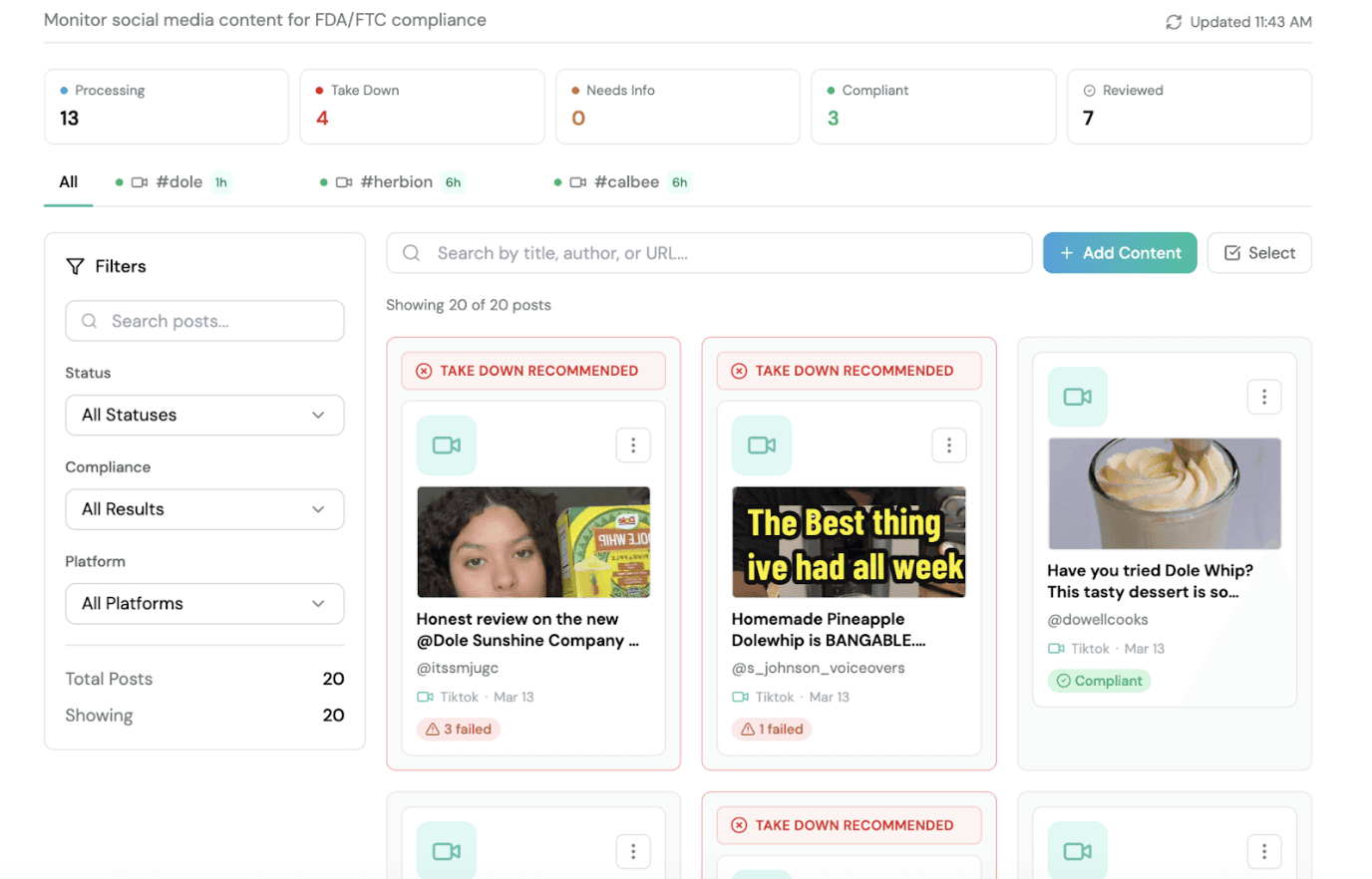
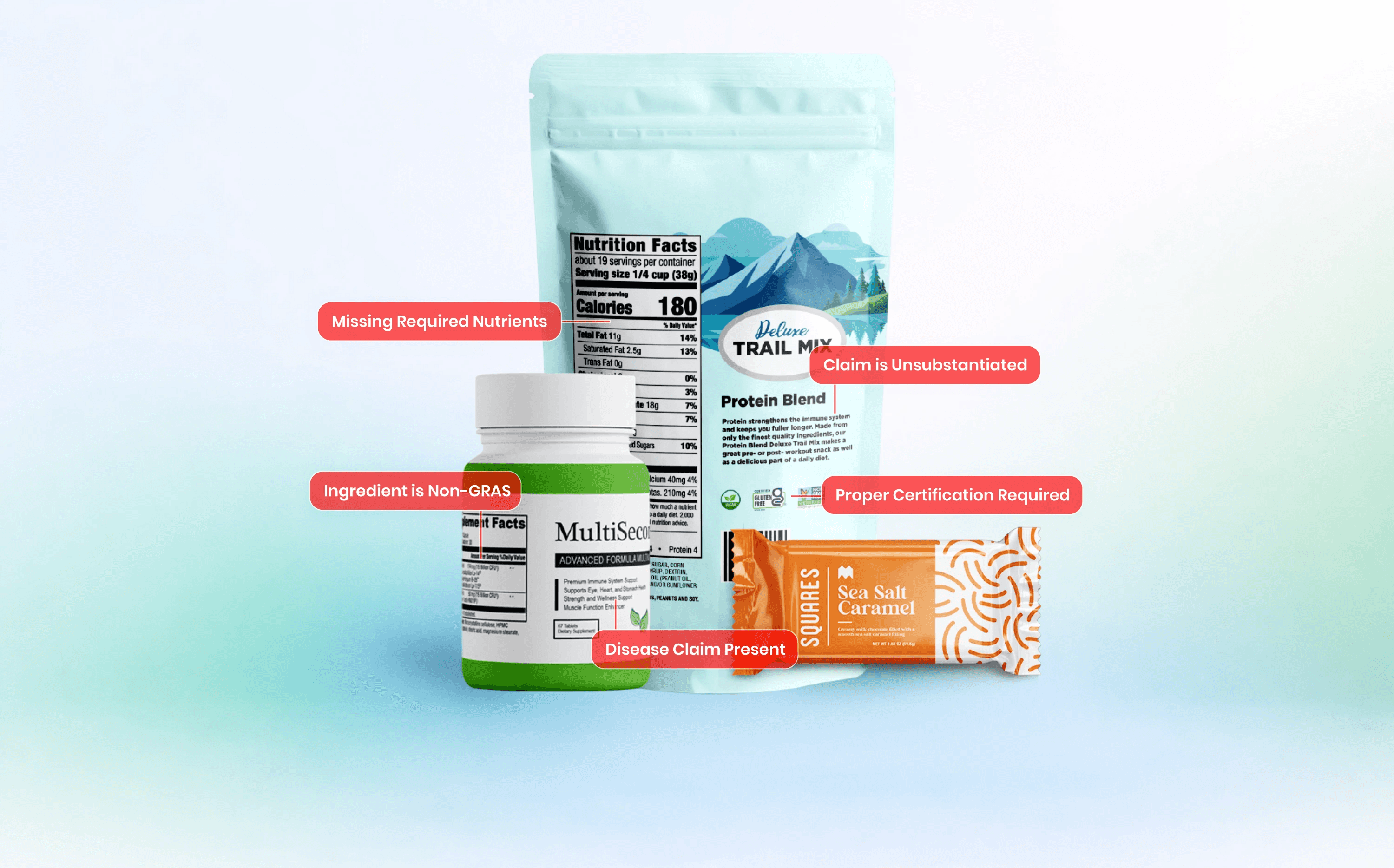
Claim scanning: Truli scans website copy, ad copy, social media posts, and marketplace listings for FTC high-risk phrases and unsubstantiated health claims
Cross-channel monitoring: Truli monitors influencer content, affiliate marketing, and paid media for claims that expose the brand to FTC liability
Substantiation gap identification: Truli flags claims that are likely to require clinical substantiation and flags where that substantiation may be insufficient
Related Regulations
FTC Endorsement Guides — Disclosure requirements for testimonials and influencer marketing
FTC Made in USA Labeling Rule — Requirements for origin claims in advertising
DSHEA — FDA's framework for supplement health claims on labels
Frequently Asked Questions
Can I use customer testimonials to support a health claim?
Testimonials do not satisfy the FTC's substantiation requirement for health claims. If you use a testimonial claiming a product cured a disease or produced dramatic results, you must have competent and reliable scientific evidence that the product produces those results for consumers generally — or the ad must disclose that results are not typical.
Does the FTC's substantiation standard apply to my website?
Yes. Website copy, including product descriptions, FAQs, and blog posts that make health claims about your products, is considered advertising under FTC standards.
What's the difference between what FDA requires on the label and what FTC requires in advertising?
FDA regulates what claims appear on the physical label and labeling (materials accompanying the product). FTC regulates claims in advertising, which includes everything from TV commercials to social media. Both agencies apply similar substantiation standards, but their enforcement mechanisms are different.
A note from Truli: Truli is not a law firm, and this article does not constitute or contain legal advice or create an attorney-client relationship. When determining your obligations and compliance with respect to relevant laws and regulations, you should consult a licensed attorney.
Last updated: April 2026. FTC enforcement priorities shift regularly — Truli monitors FTC actions against food and supplement brands. Book a demo to see how.
About

Truli is an AI compliance platform for food, beverage, and supplement brands. Automate FDA/FTC label reviews, claims validation, and post-market monitoring — 10x faster.

Platform
See Truli in action
If regulatory delays are consuming months and thousands in fees, see how Truli delivers fast and continuous compliance coverage at a fraction of the cost.