FDA Adverse Event Reporting for Dietary Supplements — SAER Requirements
The Dietary Supplement and Nonprescription Drug Consumer Protection Act of 2006 (Public Law 109-462) requires dietary supplement manufacturers, packers, and distributors to report serious adverse events (SAEs) associated with their products to FDA within 15 business days. This is not a voluntary program — it is a mandatory post-market safety surveillance requirement with recordkeeping obligations and potential enforcement consequences for non-compliance.

Catherine Zhou
| Co-founder at Truli

The Dietary Supplement and Nonprescription Drug Consumer Protection Act (Pub. L. 109-462), effective December 22, 2007, amended the FD&C Act to require mandatory adverse event reporting for dietary supplements. The implementing regulations are codified at 21 CFR Part 111, Subpart P, and the submission system uses FDA's MedWatch platform via Form FDA 3500A.
Adverse event reporting is separate from the cGMP obligations under 21 CFR Part 111. A supplement brand that receives and ignores a serious adverse event report — or fails to file within the required timeframe — is in violation regardless of how well its manufacturing facility operates.
Who Must Report
Under the Act and 21 CFR 111.570, mandatory serious adverse event reporting applies to:
Manufacturers of dietary supplements distributed in the United States
Packers — companies that package or label products they did not manufacture
Distributors — companies whose name appears on the product label as the distributor
If a contract manufacturer produces the product and the brand's name appears on the label, the brand (as the labeled distributor) holds the reporting obligation. Contract manufacturers may also hold independent reporting obligations if their name appears on the label or if they received the adverse event report directly.
What Is a Serious Adverse Event
Under 21 U.S.C. 343-1 (incorporated by the Act), a serious adverse event is an adverse event that results in any of the following outcomes:
Death
A life-threatening experience
Inpatient hospitalization
A persistent or significant disability or incapacity
A congenital anomaly or birth defect
Requires medical or surgical intervention to prevent one of the above outcomes
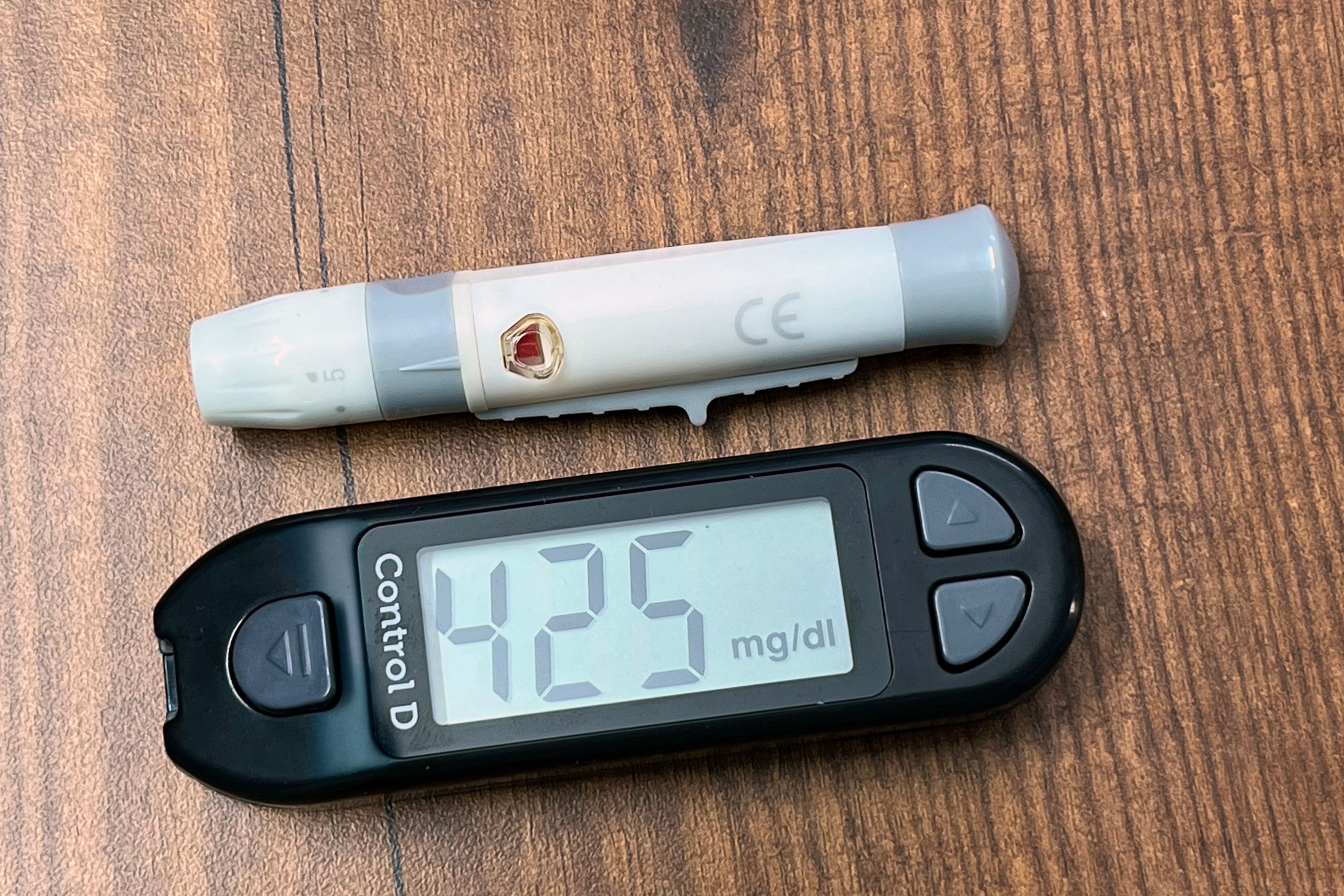
Non-serious adverse events — mild gastrointestinal upset, temporary headache, minor skin reactions that resolve without medical intervention — are not required to be reported, but must be retained in the brand's consumer complaint files under 21 CFR Part 111.
The 15 Business Day Reporting Window
Under 21 CFR 111.570(b), a serious adverse event report must be submitted to FDA within 15 business days of receiving a report of the event from a consumer, healthcare provider, or other person.
The clock starts when the brand receives the adverse event report — not when it conducts an internal investigation or concludes the event is related to the product. Brands may submit a follow-up report within 15 business days if new information becomes available after the initial report.
How to Submit: MedWatch Form FDA 3500A
Serious adverse event reports are submitted using FDA Form 3500A (the mandatory reporter version of MedWatch). Reports may be submitted:
Online: through FDA's MedWatch online voluntary reporting portal (selecting the mandatory reporter pathway)
By mail or fax: to the address provided on Form 3500A
The report must include:
The product name and any available lot or batch number
A description of the adverse event
The reporter's information (name, contact details)
The patient's information (age, sex, weight if available)
Any concomitant products (other supplements or medications) the patient was taking
The outcome of the adverse event
Brands are not required to conclude that their product caused the adverse event — a report is required when there is a reasonable possibility the event is associated with the supplement.
Recordkeeping Requirements
Under 21 CFR 111.575, supplement manufacturers, packers, and distributors must:
Maintain records of all adverse event reports received — both serious and non-serious
Retain records for 6 years after the date of submission (for serious adverse events) or 6 years after the date of receipt (for all adverse events)
Make records available to FDA upon request during an inspection
The 6-year recordkeeping requirement for adverse events is longer than the 1-year general cGMP recordkeeping period under 21 CFR Part 111.
Consumer Complaint Handling and Triage
Adverse event reporting starts with effective consumer complaint handling. Brands need systems to:
Capture all consumer contacts — phone, email, social media, Amazon reviews — that mention health effects
Triage each report — does the described effect meet the definition of a serious adverse event?
Collect sufficient information — contact the reporter to obtain the information needed for Form 3500A
Escalate appropriately — ensure the 15 business day clock is tracked from receipt
Document everything — retain records of all reports regardless of severity classification
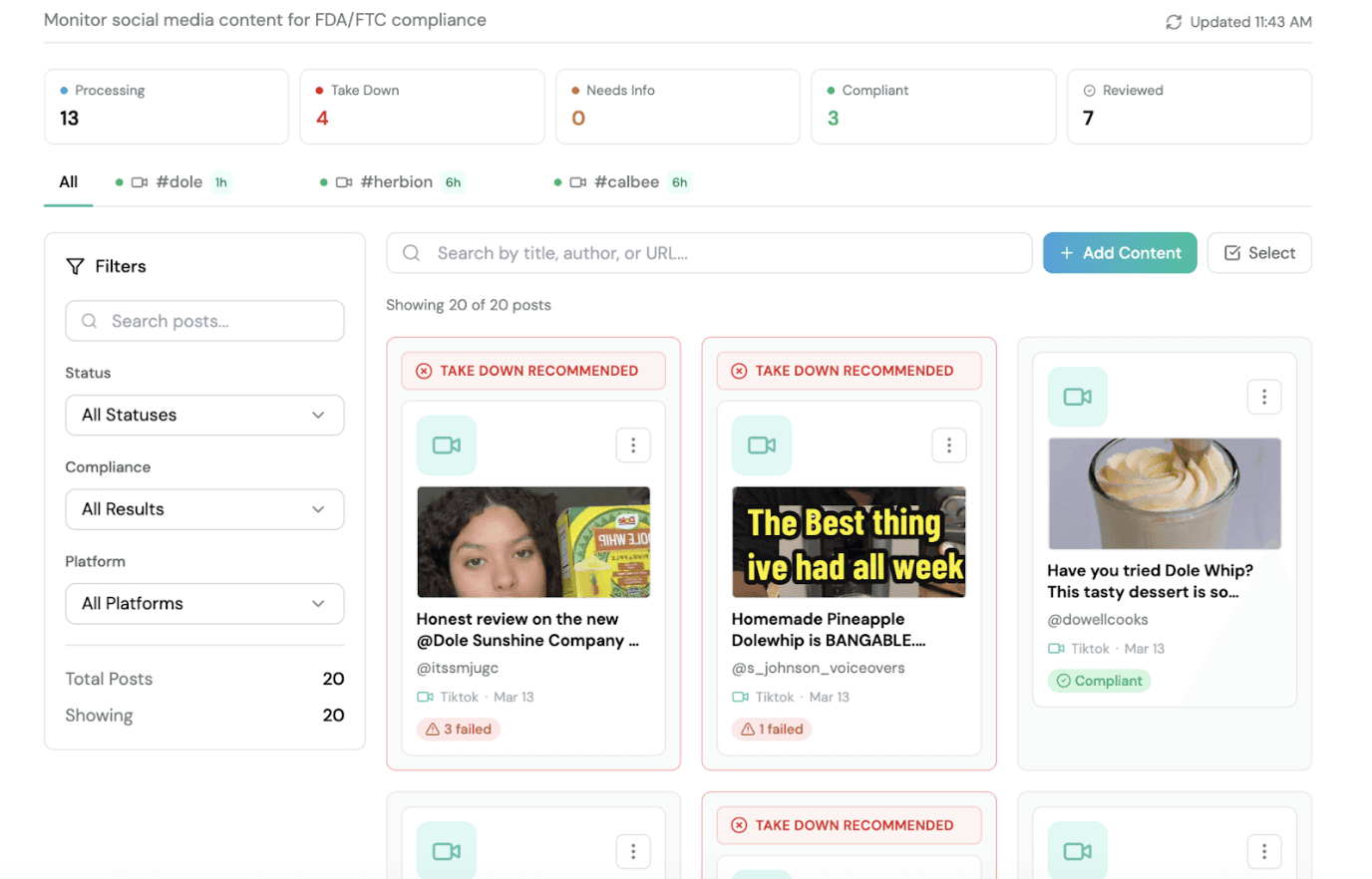
Social media and marketplace reviews present a particular challenge: a customer who posts on Instagram about being hospitalized after taking a supplement has potentially submitted an adverse event report. Brands with active social media monitoring should have a triage protocol for these reports.
Confidentiality of Reporter Information
Under the Act, FDA is required to keep the identity of the individual who reported the adverse event confidential — FDA may not disclose the reporter's identity. However, the product name, lot number, and nature of the adverse event may be disclosed by FDA in aggregate safety reporting.
How Truli Helps with Adverse Event Compliance
Consumer contact monitoring: Truli monitors brand social media mentions, email channels, and marketplace reviews for language indicating potential adverse events
SAE triage flagging: Truli surfaces consumer communications describing serious outcomes (hospitalization, medical intervention, serious injury) for immediate compliance team review
Complaint file management: Truli helps brands maintain organized adverse event records meeting the 6-year retention requirement
Reporting window tracking: Truli tracks the 15 business day window from initial receipt of each potential SAE report
Related Regulations
21 CFR Part 111 — Supplement cGMP — Manufacturing quality requirements that interact with adverse event investigation
DSHEA — The statutory framework under which dietary supplement post-market safety obligations operate
FDA Drug-Supplement Boundary — Product classification issues that affect reporting obligations
Frequently Asked Questions
Do I have to report if I'm not sure the supplement caused the event?
Yes. The standard is whether there is a "reasonable possibility" that the serious adverse event is associated with the use of the supplement. You do not need to conclude causation — uncertainty does not excuse non-reporting. If a consumer says they were hospitalized after taking your supplement, you have a reporting obligation.
What if a consumer reports the event to Amazon, not to us?
If Amazon forwards the adverse event information to you, your 15 business day clock begins upon receipt of that information. You should have a protocol for receiving and triaging adverse events that originate in marketplace channels. If you become aware through your own marketplace monitoring, the same clock applies.
Are adverse event reports FDA makes about our product public?
FDA publishes aggregate information about supplement adverse events and uses SAE data in its safety surveillance program. Individual reports are not publicly disclosed with the reporter's identity. However, if FDA initiates an enforcement action related to a pattern of adverse events, the enforcement action itself (warning letter, recall request) is public.
A note from Truli: Truli is not a law firm, and this article does not constitute or contain legal advice or create an attorney-client relationship. When determining your obligations and compliance with respect to relevant laws and regulations, you should consult a licensed attorney.
Last updated: April 2026. Truli monitors FDA guidance and enforcement on supplement adverse event reporting. Book a demo to see how.
About

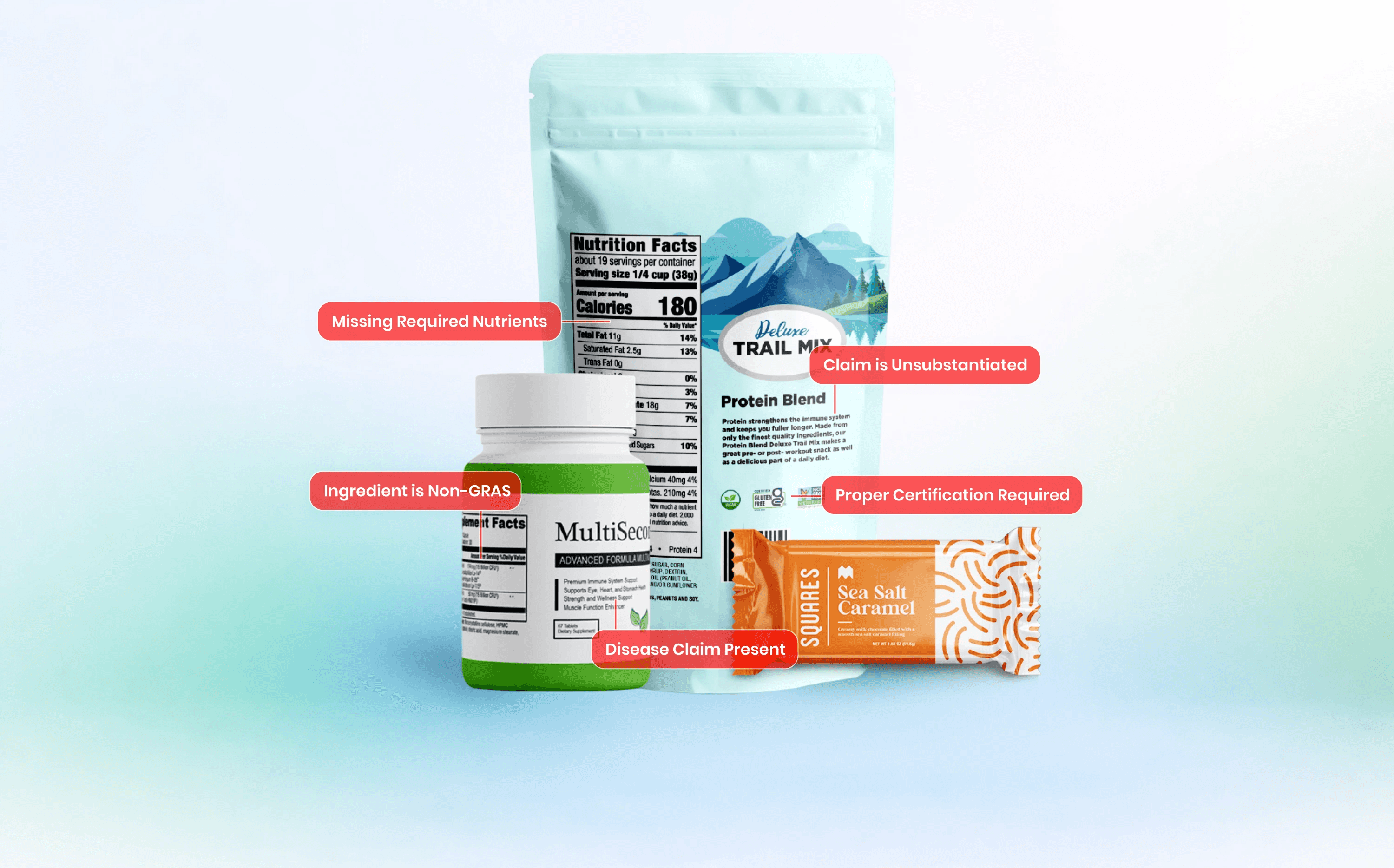
Truli is an AI compliance platform for food, beverage, and supplement brands. Automate FDA/FTC label reviews, claims validation, and post-market monitoring — 10x faster.

Platform
See Truli in action
If regulatory delays are consuming months and thousands in fees, see how Truli delivers fast and continuous compliance coverage at a fraction of the cost.