21 CFR 101.65 — The 'Healthy' Claim for Food Labels
FDA updated the definition of 'healthy' as a nutrient content claim in September 2024 (effective February 25, 2025), replacing criteria that dated to 1994. The old rules famously disqualified avocados, nuts, and olive oil from 'healthy' claims due to their total fat content — despite their recognized health benefits. The new definition is based on food group representation and limits on added sugars, sodium, and saturated fat, reflecting current dietary science.

Catherine Zhou
| Co-founder at Truli
21 CFR 101.65(d) governs the use of "healthy" and related terms ("healthful," "health," "healthier," "healthiest," "healthily," "healthiness") as implied nutrient content claims on food labels. FDA issued a final rule updating the definition in September 2024, effective February 25, 2025, under the authority of 21 U.S.C. 343(r).
The claim is voluntary — brands are not required to use "healthy" — but when the term appears on a food label, it must comply with the regulatory definition. Using "healthy" on a product that does not meet the criteria is a misbranding violation.
The 2024 Updated Definition: What Changed
The prior definition, established in 1994, evaluated "healthy" primarily based on total fat content — a product could not be "healthy" if it exceeded certain fat thresholds. This created the well-known anomaly where whole almonds, salmon, and avocados could not bear a "healthy" claim because of their naturally high fat content.
The 2024 final rule replaced the fat-focused approach with a food group-based framework aligned with the 2020–2025 Dietary Guidelines for Americans:
Old Criteria (pre-2025) | New Criteria (effective Feb 25, 2025) |
|---|---|
Low total fat threshold | Food group requirements (must contribute to a food group) |
Low saturated fat threshold | Saturated fat limits still apply (modified) |
Low sodium threshold | Sodium limits still apply |
Low cholesterol threshold | Cholesterol threshold removed |
Some % DV for beneficial nutrients | Added sugars limits added |
The New "Healthy" Criteria
Under the updated 21 CFR 101.65(d), a food may bear a "healthy" claim if it meets all of the following:
1. Food Group Requirement
The food must contain a meaningful amount of food from at least one of the following food groups (amounts vary by food category):
Vegetables (including legumes/beans)
Fruits
Grains (at least half of which are whole grains for grain products)
Dairy
Protein foods (meat, poultry, eggs, seafood, nuts, seeds, soy products, legumes/beans)
The specific amount required from each food group depends on the product category and serving size, as specified in the regulation's lookup tables.
2. Limits on Nutrients to Limit
The food must stay within the per-serving thresholds in the regulation's lookup tables, which vary by food category. Key limits for the most common individual food categories:
Food Category | Added Sugars Limit | Sodium Limit | Saturated Fat Limit |
|---|---|---|---|
Vegetable products | ≤ 2% DV | ≤ 10% DV | ≤ 5% DV |
Fruit products | ≤ 2% DV | ≤ 10% DV | ≤ 5% DV |
Grain products | ≤ 10% DV | ≤ 10% DV | ≤ 5% DV |
Dairy products | ≤ 5% DV | ≤ 10% DV | ≤ 10% DV |
Seafood | ≤ 2% DV | ≤ 10% DV | ≤ 5% DV (excl. inherent sat fat) |
Eggs | ≤ 2% DV | ≤ 10% DV | ≤ 10% DV |
Beans, peas, lentils | ≤ 2% DV | ≤ 10% DV | ≤ 5% DV |
Nuts, seeds, soy | ≤ 2% DV | ≤ 10% DV | ≤ 5% DV (excl. inherent sat fat) |
Oils (100%) | 0% DV | 0% DV | ≤ 20% of total fat |
Mixed products, main dish products, and meal products have their own thresholds (generally higher sodium and saturated fat limits). Cholesterol is no longer a disqualifying nutrient under the 2024 update.
3. Nutrition Labeling
The food must bear nutrition labeling in accordance with 21 CFR 101.9.
Food-Category-Specific Requirements
The updated rule includes category-specific food group and nutrient thresholds. Key categories for food brands:
Individual foods (RACC > 50 g): Must contain the food group equivalent specified in the regulation lookup tables per RACC. Thresholds vary by category — see the table above for nutrient limits.
Individual foods (RACC ≤ 50 g): Same food group equivalent requirements but applied per 50 g of food rather than per RACC.
Mixed products: Must contain at least one total food group equivalent with no less than 1/4 food group equivalent from at least two food groups per RACC. Sodium limit: ≤ 15% DV. Saturated fat limit: ≤ 10% DV (excluding inherent sat fat from seafood, nuts, seeds, soybeans).
Main dish products: At least two total food group equivalents from at least two food groups per labeled serving. Sodium limit: ≤ 20% DV. Added sugars: ≤ 15% DV.
Meal products: At least three total food group equivalents from at least three food groups per labeled serving. Sodium limit: ≤ 30% DV. Added sugars: ≤ 20% DV.
Water, tea, coffee: Qualifies as "healthy" if it contains less than 5 calories per RACC and per labeled serving — no food group contribution required.
Raw fruits and vegetables: May qualify under 21 CFR 101.65(d)(3)(i) as whole foods that are the foundation of a healthy dietary pattern, with no other added ingredients except water.
Nuts, seeds, and higher-fat seafood: Previously disqualified by the old fat threshold, these may now qualify under the food group–based framework, provided they meet the added sugars, sodium, and saturated fat limits for their category (noting that saturated fat inherent in nuts, seeds, soybeans, and seafood is excluded from the saturated fat calculation).
Safe Harbor Period
FDA established a safe harbor period from the effective date (February 25, 2025) through February 24, 2028 during which products that met the prior "healthy" criteria and are already on the market may continue using the "healthy" claim while manufacturers transition to the new framework.
Additionally, FDA has indicated it will exercise enforcement discretion regarding the "healthy" claim on certain whole foods (fruits, vegetables, whole grain products, seafood, eggs, nuts, seeds, legumes) that clearly align with current dietary guidance, even if they do not technically meet every element of the pre-2025 criteria.
"Healthy" vs. Other Related Terms
The FDA definition at 21 CFR 101.65(d) covers:
"healthy," "healthful," "healthier," "healthiest," "healthily," "healthiness"
Implied "healthy" claims — product positioning that implies overall health benefit without using the word directly
The term "wholesome" is not covered by the "healthy" definition but may be subject to general FTC and FDA misbranding standards if used to imply nutritional benefits.
How Truli Helps with "Healthy" Claim Compliance
Claim eligibility check: Truli evaluates product nutritional data against the updated 21 CFR 101.65(d) food group and nutrient limit requirements to determine whether a "healthy" claim is supportable
Added sugars monitoring: Truli flags "healthy" claims on products where added sugars exceed the 5% DV threshold
Sodium and saturated fat thresholds: Truli identifies products bearing "healthy" claims where sodium or saturated fat per serving exceeds the qualifying limits
Implied claim detection: Truli scans label and advertising copy for language or imagery that may convey an implied "healthy" claim
Related Regulations
21 CFR Part 101 — FDA food labeling requirements
21 CFR 101.13 — Nutrient Content Claims — General principles governing all nutrient content claims including "healthy"
21 CFR 101.9 — Nutrition Facts Panel — Required panel that provides the nutritional data underlying "healthy" claim eligibility
Frequently Asked Questions
Does the 2024 update mean nuts and avocados can now claim "healthy"?
Yes, if they meet the other criteria. The removal of the total fat threshold means that nuts, seeds, avocados, and higher-fat seafood like salmon are no longer categorically disqualified from "healthy" claims. They still must meet the added sugars, saturated fat, and sodium limits — which most whole food versions of these products do.
My product has been labeled "healthy" under the old criteria. Do I need to re-evaluate immediately?
Not immediately — FDA established a safe harbor through February 24, 2028 for products that qualified under the prior criteria. However, you should plan your label transition so that new production after February 2028 complies with the updated definition.
Can a dietary supplement bear a "healthy" claim?
The 21 CFR 101.65(d) definition is framed around food group composition, which makes it difficult to apply to most dietary supplements (which are not whole food equivalents). Supplements bearing "healthy" claims would need to meet the nutrient limits and food group requirements — most supplements cannot satisfy the food group component. Practically, "healthy" as a product-level claim is uncommon on supplements and carries significant compliance risk.
A note from Truli: Truli is not a law firm, and this article does not constitute or contain legal advice or create an attorney-client relationship. When determining your obligations and compliance with respect to relevant laws and regulations, you should consult a licensed attorney.
Last updated: April 2026. Reflects the final rule updating 21 CFR 101.65, effective February 25, 2025. Truli monitors FDA updates to the "healthy" claim definition. Book a demo to see how.
About

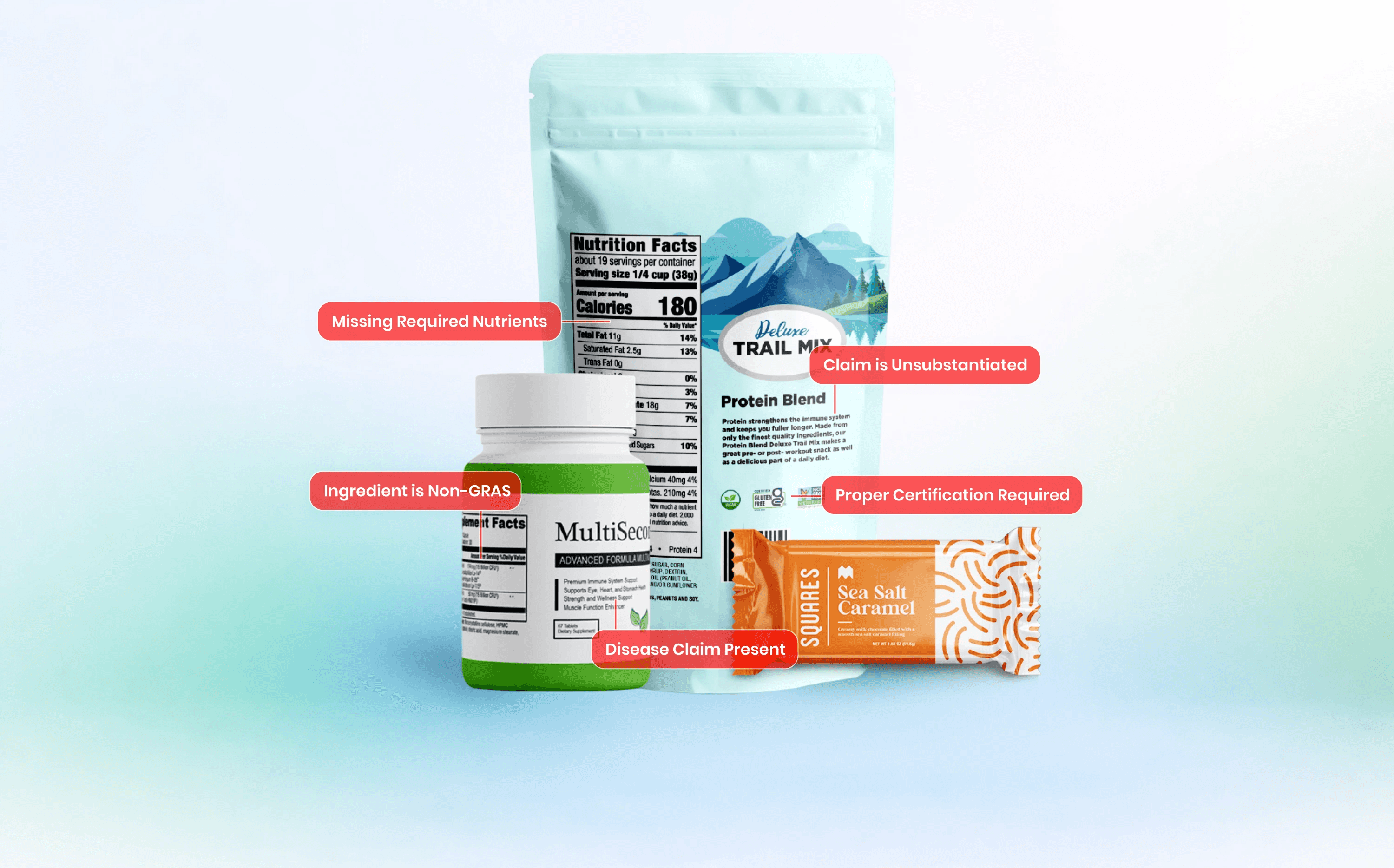
Truli is an AI compliance platform for food, beverage, and supplement brands. Automate FDA/FTC label reviews, claims validation, and post-market monitoring — 10x faster.
Platform
See Truli in action
If regulatory delays are consuming months and thousands in fees, see how Truli delivers fast and continuous compliance coverage at a fraction of the cost.