Beverage Label Requirements — FDA Compliance for Drinks
Beverage labels carry more compliance landmines per square inch than almost any other food format. Serving size rules that don't match how people drink. Juice percentage disclosures that most brands get wrong. Sugar claims on drinks sweetened with fruit juice concentrate. Health claims that cross into disease territory. FDA compliance for beverages requires category-specific knowledge — and most of the common mistakes are preventable.

Catherine Zhou
| Co-founder at Truli
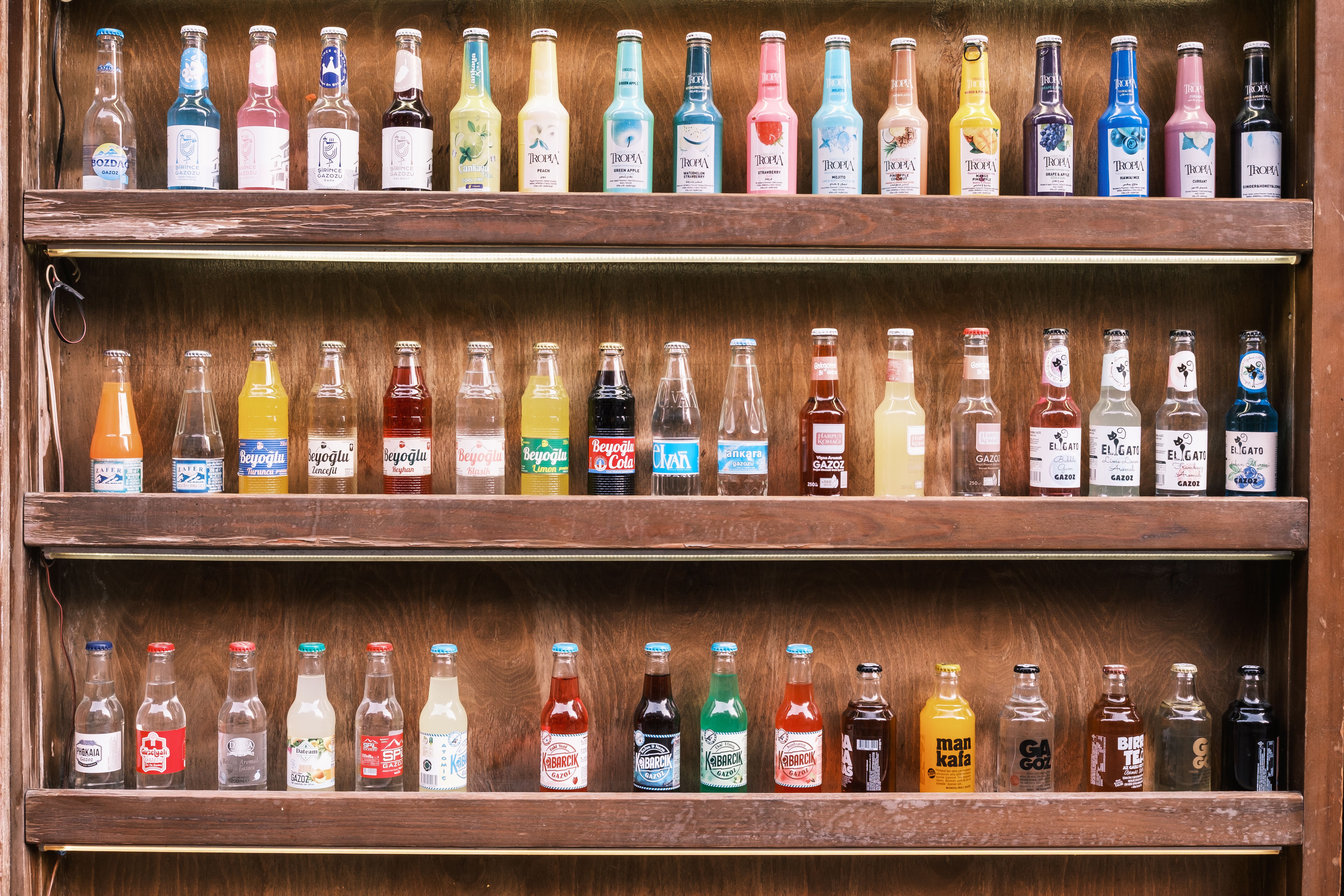
Packaged beverages regulated by FDA — juices, waters, functional drinks, energy drinks, kombucha, plant-based milks, teas, and non-alcoholic ready-to-drink products — are subject to the same labeling requirements as other packaged foods under 21 CFR Part 101, plus several category-specific rules. Here's what beverage brands need to get right.
Serving Size: The Most Commonly Wrong Element on Beverage Labels
Serving sizes for beverages must be based on the Reference Amount Customarily Consumed (RACC) for the product category under 21 CFR 101.12. For most beverages, the RACC is 240mL (8 fl oz).
This creates a compliance problem for many brands: a 20 fl oz bottle is not a single serving under the RACC framework — it's 2.5 servings. A 12 fl oz can is 1.5 servings. A 16 fl oz energy drink is 2 servings.
The multi-serving container rules under 21 CFR 101.9(b)(6) require that if the container holds between 200% and 300% of the RACC, the label must use a dual-column format showing per-serving and per-container nutrition. If the container holds more than 300% of the RACC, a single-serving declaration at the RACC is required.
The violation that appears most often: a 16 fl oz functional beverage declaring a "1 serving per container" label with all the nutrition listed as if the entire bottle is one serving — when the RACC requires declaring it as 2 servings. This manipulates how the sugar, calorie, and caffeine content appear on the label, and FDA evaluates nutrient content claim eligibility against the RACC, not the declared serving.
Exception: If a container holds less than 200% of the RACC AND is reasonably expected to be consumed in a single sitting, it may be declared as a single serving. A 355mL (12 fl oz) can of a typical beverage may qualify as a single serving under this standard, since 355mL is less than 200% of the 240mL RACC.
Juice: When Percentage Disclosure Is Required
Under 21 CFR 101.30, any beverage that contains juice but is not 100% juice must declare the total percentage of juice by volume on the label. This applies to:
Juice blends that include water, sweeteners, or non-juice ingredients
Juice-flavored drinks with a small juice component
Kombucha and fermented beverages with juice
Sparkling waters with juice added
The declaration must appear on the principal display panel or information panel, prominently and conspicuously, stating the percentage of juice: "Contains __% juice" or "__% juice."
Beverages that are 100% juice are exempt from the percentage disclosure requirement, but only if they actually contain only juice — no added water, sweeteners, or flavorings that aren't from juice sources.
A common violation: a "fruit punch" or "fruit drink" that contains 5% juice from concentrate but doesn't display the juice percentage. Another: a "green juice" that contains mostly water and vegetable juice diluted to a low percentage, with no percentage disclosure.
Importantly, the juice percentage declaration is separate from the ingredient list. Even if the label says "apple juice" in the ingredient list, it must also prominently state the percentage of juice on the front of the label if it's not 100% juice.
Sugar and Calorie Claims on Beverages
Beverages are a high-enforcement area for sugar and calorie claims because the category has attracted significant consumer and FTC attention. The requirements under 21 CFR 101.60:
"Zero sugar" / "sugar free": <0.5g total sugars per 240mL serving. A 240mL serving with 0.4g of sugar qualifies. If the beverage is sweetened with non-caloric sweeteners, the calorie disclosure may also apply: "not a reduced calorie beverage" if the total calories from the non-sugar ingredients aren't low.
"No sugar added": No sugars added during processing, and no ingredients containing added sugars. This is where fruit juice concentrate creates problems. Fruit juice concentrate used as a sweetening ingredient is a form of added sugar — even if it's "natural." A beverage sweetened with date syrup, agave, honey, or fruit juice concentrate cannot claim "no sugar added."
"Low calorie": ≤40 calories per 240mL serving and per 50g. A 240mL serving of a beverage with 45 calories doesn't qualify. Importantly, the calorie level must be within the threshold for the RACC serving size, not a manipulated smaller serving.
"Calorie free" / "zero calories": <5 calories per 240mL serving.
Caffeine: Required Disclosures and Prohibited Claims
Caffeine is not a separately declared nutrient on the standard Nutrition Facts panel. However, beverage brands have specific compliance obligations around caffeine:
Energy drinks: FDA has not established a specific regulatory limit for caffeine in beverages, but has issued warning letters to energy drink brands for claims that their products provide "safe" energy or that caffeine quantities are appropriate for children. FDA's attention is on both the caffeine level and the marketing claims.
Caffeine source declaration: If caffeine is added as a separate ingredient (caffeine anhydrous, guarana extract, green tea extract providing caffeine), it must appear in the ingredient list. Caffeine naturally present in tea or coffee bases is part of those ingredients.
"Natural caffeine" claims: FDA has not defined "natural caffeine" as a regulated claim. Using "naturally caffeinated" for a product that contains caffeine from guarana extract alongside tea may be permissible if the characterization is accurate, but claims suggesting caffeine from "natural sources" is inherently safer than other caffeine forms are not supported by evidence and draw FTC attention.
Children's beverages with caffeine: Products marketed to children with added caffeine create significant regulatory risk. FDA has indicated concern about caffeine in foods marketed to children and has authority to take action under the general adulteration and misbranding provisions of the FCA.
Functional and Enhanced Beverage Claims
The functional beverage category — drinks positioned for immunity, energy, focus, hydration, gut health, beauty, or sleep — generates a high volume of FDA and FTC compliance issues because brands often use disease-adjacent language to communicate functional benefits.
Permissible structure/function claims on conventional food beverages:
"Supports hydration" — permissible
"Promotes immune function" — permissible with substantiation
"Supports healthy gut function" — permissible for beverages with prebiotics or probiotics, with substantiation
Disease claims on beverages — prohibited:
"Prevents colds and flu" — disease claim
"Reduces inflammation" — disease claim
"Lowers blood pressure" — disease claim
"Helps with anxiety" — disease claim
Beverages are conventional foods, not dietary supplements. Structure/function claims on conventional food beverages don't require a DSHEA disclaimer, but they must be substantiated and must not imply disease treatment.
Electrolyte beverages marketed for post-illness rehydration should not claim to "treat dehydration" in a clinical sense — dehydration is a medical condition. "Replenishes electrolytes" and "supports hydration" are permissible; "treats or prevents clinical dehydration" is not.
Plant-Based Milks: Identity and Nutrient Comparison Claims
Plant-based milk alternatives — oat milk, almond milk, soy milk, coconut milk — face a specific set of label compliance issues around product identity and nutrient comparisons to dairy milk.
Statement of identity: "Oat milk" and "almond milk" are established common or usual names for these products. FDA's 2023 draft guidance confirmed that "oat milk" and similar plant-based milk names are acceptable as statements of identity, despite dairy industry challenges.
Nutrient comparison to dairy milk: If a plant-based milk makes a comparison to dairy milk on the label or in advertising — "equivalent to dairy in calcium," "as much protein as milk" — those claims must be accurate and meet the applicable nutrient content claim thresholds. Most oat milks do not have equivalent protein to dairy milk. A claim suggesting protein equivalence on a product with 3g protein per serving vs. dairy's 8g is a misbranding violation.
Fortification: Plant-based milks are frequently fortified with calcium, vitamin D, and vitamin B12 to approach dairy's nutrient profile. Fortified nutrients must be listed in the Supplement Facts panel at their actual levels; DV percentages must be accurate.
Kombucha: The Alcohol Threshold
Kombucha presents a specific compliance issue outside the typical label framework: alcohol content. Naturally fermented kombucha can exceed 0.5% alcohol by volume, which triggers TTB (Alcohol and Tobacco Tax and Trade Bureau) jurisdiction. Products exceeding 0.5% ABV must be labeled and taxed as an alcoholic beverage.
Brands that sell kombucha must either validate that their product consistently stays below 0.5% ABV through testing, or comply with TTB labeling requirements. Post-production fermentation can push kombucha above the threshold even if production values were below it — temperature, packaging, and shelf time all affect final ABV.
Beverage Compliance Spans Multiple Claim Types Simultaneously
A single beverage label routinely needs to address serving size, juice percentage, sugar claims, functional claims, allergen declarations (dairy, soy, tree nuts), and ingredient identity simultaneously. Each element has its own regulatory framework.
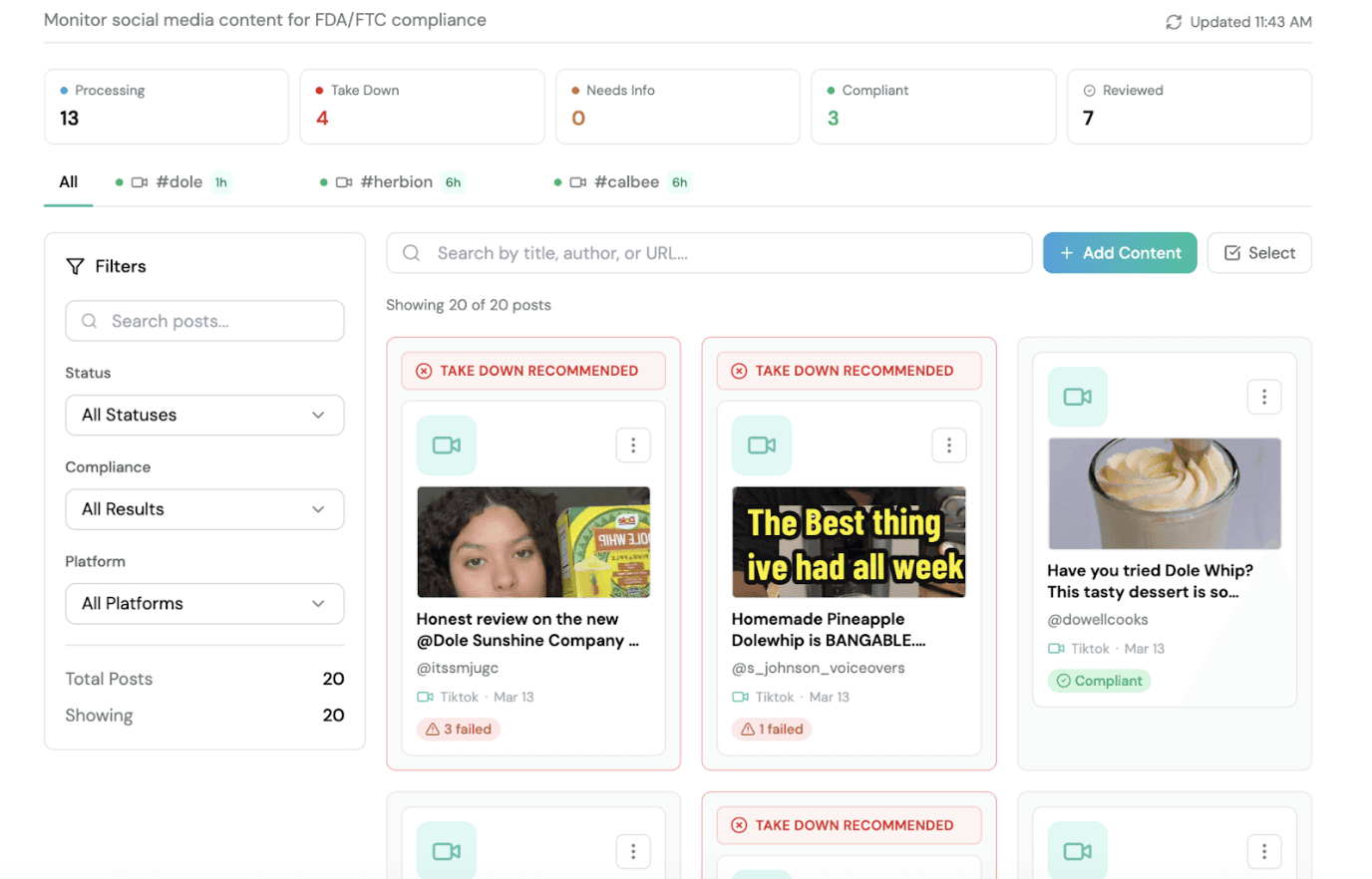
Truli's AI compliance platform audits beverage labels against current FDA regulations — verifying serving size against the 240mL RACC, checking juice percentage disclosure requirements, validating sugar and calorie claim thresholds, and evaluating functional claims against the structure/function versus disease claim boundary. Book a demo to see how Truli handles beverage label compliance.
About

Truli is an AI compliance platform for food, beverage, and supplement brands. Automate FDA/FTC label reviews, claims validation, and post-market monitoring — 10x faster.
Platform
See Truli in action
If regulatory delays are consuming months and thousands in fees, see how Truli delivers fast and continuous compliance coverage at a fraction of the cost.